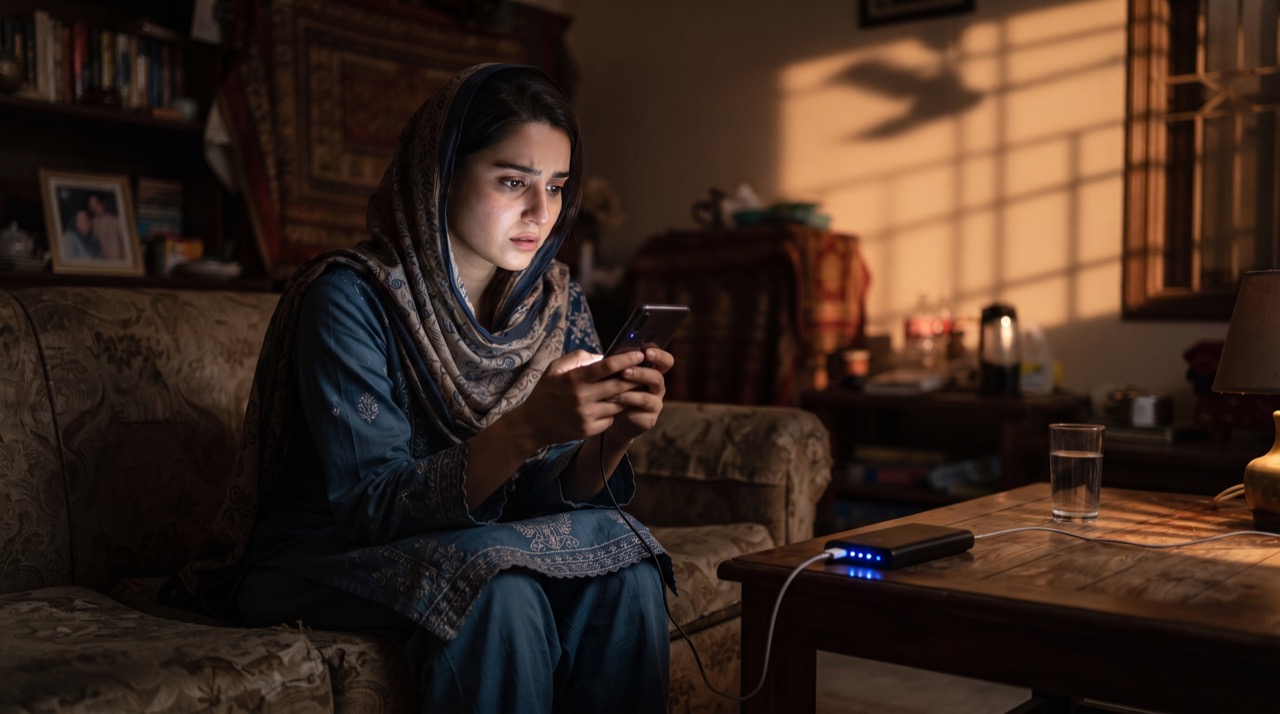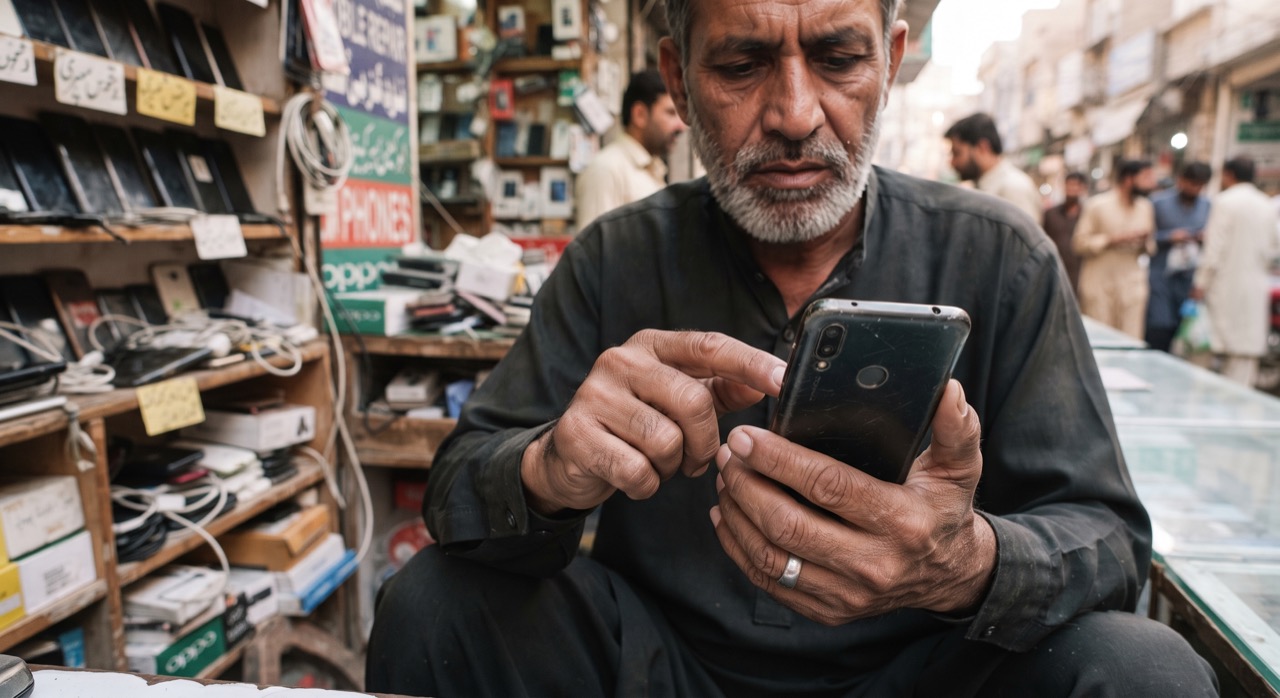
A cousin's wedding photo circulates with someone's face swapped in. A "video statement" from a politician turns out to be entirely generated. A woman's normal Instagram picture is turned into something she never posted. In Pakistan, where WhatsApp and Facebook groups move faster than fact-checkers, deepfakes and AI-manipulated images aren't a distant tech problem — they're already showing up in family group chats and local news feeds. The good news is that spotting fakes and protecting your own photos both come down to a handful of habits anyone can learn, no technical background required.
How to Spot a Manipulated Photo or Video
AI image and video generators have gotten very good, but they still leave traces most of the time. Train your eye to check these spots first:
- Hands, teeth, and ears. These remain the weakest points for AI generators — count the fingers, look for oddly smooth or asymmetric teeth, and check if ears match on both sides of the face.
- Lighting and shadows. If the light source on the face doesn't match the light source in the background (e.g., shadows falling the wrong way), the image is likely composited or generated.
- Edges around the face or hair. Face-swap deepfakes often show a faint blur, mismatched skin tone, or a "waxy" texture right at the hairline and jaw.
- Blinking and mouth sync in videos. Deepfake videos often show unnatural blink rates, or lips that don't quite match the audio, especially on words with hard consonants.
- Jewellery, text, and background details. AI still struggles with small repeated patterns — earrings, necklace chains, signage text, and patterned fabric often look warped or nonsensical up close.
- The account posting it. A brand-new account, a page with no history, or a forward with no original source is a strong red flag regardless of how convincing the image looks.
Free Tools to Verify an Image
You don't need expensive software — a few free, well-known tools cover most situations:
- Reverse image search. Use Google Images or TinEye to check if the picture existed earlier online, under a different name or context.
- Google's About This Image / Search Labs tools can sometimes show when an image was first indexed, which helps you judge if it's freshly generated content being passed off as news.
- Fact-checking sites. For anything political or news-related circulating in Pakistan, check whether outlets like AFP Fact Check have already covered it before you share it forward.
- Metadata check. On a computer, right-click an image file and check its properties/details — genuine phone photos usually carry camera and date metadata; a screenshot or re-saved image often has that stripped, which is a clue (not proof) of tampering.
Protecting Your Own Photos From Misuse
Prevention matters as much as detection, especially for anyone — particularly women and public-facing professionals — worried about their photos being lifted and altered.
- Lock down public reach. Set personal albums and profile photos to friends-only on Facebook and Instagram rather than public, since scrapers and bad actors mainly target openly accessible images.
- Avoid high-resolution face-forward uploads when possible for casual posts; a slightly compressed or watermarked version is harder to feed cleanly into a face-swap tool.
- Search yourself periodically. Run your own name and a reverse image search on your profile photo every few months to catch misuse early.
- Report immediately if you find misuse. Pakistan's FIA Cyber Crime Wing handles complaints under the Prevention of Electronic Crimes Act (PECA) for exactly this kind of image-based abuse — file a report rather than trying to fight it alone online.
- Report to the platform too. Facebook, Instagram, and TikTok all have direct reporting flows for impersonation and non-consensual manipulated imagery; use them alongside, not instead of, the FIA complaint.
- Tell close contacts you know. If a fake image or "video call" of you is circulating, alert family and close friends directly so they don't get fooled by scam accounts pretending to be you.
The safest habit is simple: pause before you forward. A ten-second reverse image search can stop a fabricated photo or video from spreading further and protect someone's reputation, including your own.
Deepfake technology is only going to get more convincing, but the fundamentals of verification — checking the source, examining the details, and using free tools before believing or sharing — will keep working. Building this habit now, and locking down your own photos today, costs a few minutes and saves a lot of grief later.
Roman Urdu
Aaj kal deepfake aur AI se bani fake tasveerein WhatsApp aur Facebook groups mein tezi se phail rahi hain. Kisi ki shaadi ki photo mein face swap ho jata hai, ya koi "video statement" bilkul AI-generated nikalta hai. Achi baat yeh hai ke fake pehchanna aur apni tasveerein mehfooz rakhna dono mushkil nahi — bas kuch aadatein seekhni hain.
Fake tasveer pehchanne ke liye pehle hath, daant aur kaan ghaur se dekhein — AI abhi bhi in cheezon mein galtiyan karta hai. Chehre ki roshni aur background ke shadows match kar rahe hain ya nahi, yeh bhi check karein. Video mein agar aankhon ka jhapakna ajeeb lage ya lips awaaz ke sath match na ho rahe hon, to shak karein. Jo account tasveer post kar raha hai agar naya hai ya uski history nahi hai, to bhi savdhaan rahein. Verify karne ke liye Google Images ya TinEye par reverse image search karein — pata chal jayega ke tasveer pehle kahin aur to nahi thi. News ya siyasi tasveeron ke liye AFP Fact Check jaisi fact-checking sites check karein forward karne se pehle.
Apni tasveerein mehfooz rakhne ke liye profile aur albums ko "friends only" par set karein, public na rakhein. Apna naam aur profile photo kabhi kabhi khud reverse-search karein taake pata chale agar koi misuse ho raha hai. Agar apki tasveer ka galat istemal ho raha hai, to FIA Cyber Crime Wing mein PECA ke tehat report zaroor karein, aur sath sath Facebook/Instagram par bhi report karein. Apne qareebi doston aur ghar walon ko bhi bata dein taake wo kisi fake account ke dhoke mein na aayein.
Sabse zaroori aadat yeh hai: forward karne se pehle rukein aur check karein. Das second ka reverse search kisi ki izzat bachane ke liye kaafi ho sakta hai — chahe wo koi aur ho ya aap khud.