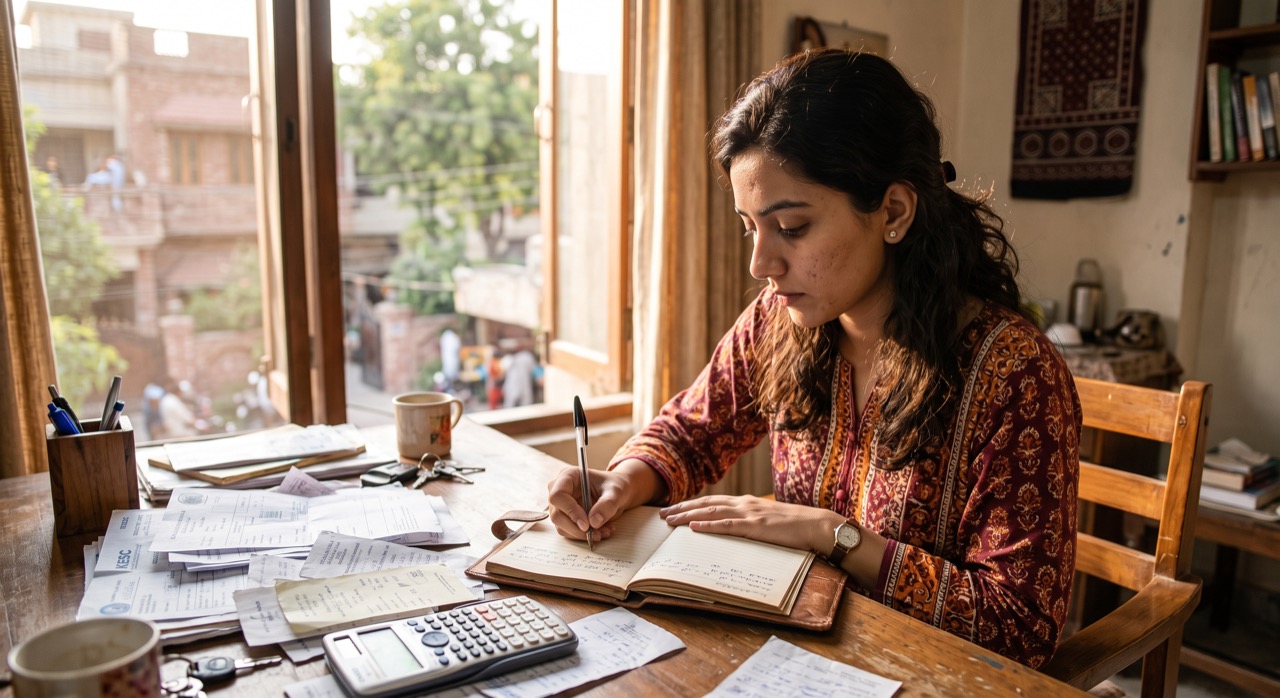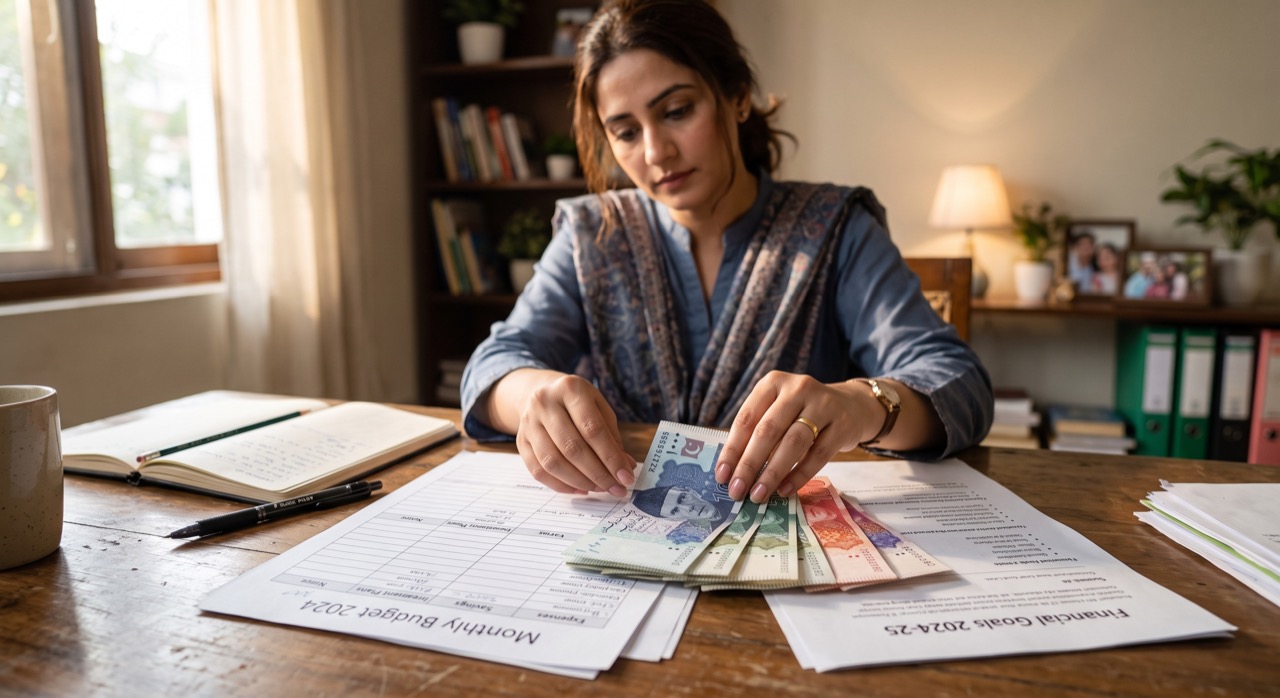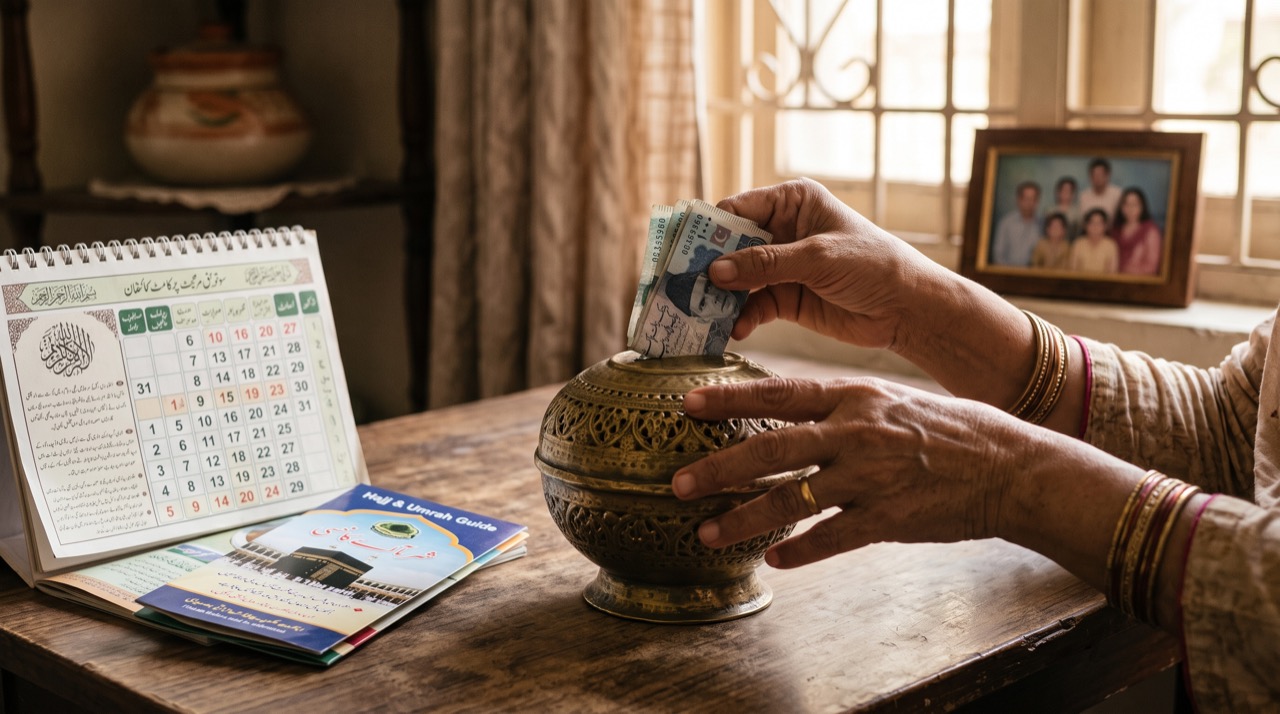
For most Pakistani households, Hajj is the single largest planned expense of a lifetime — bigger than a wedding, often bigger than a car. The good news is that the cost is predictable enough, and the timeline long enough, that it can be saved for methodically rather than scrambled for at the last minute. This is a step-by-step framework for turning "someday" into an actual number, an actual monthly deposit, and an actual date.
Start With the Real Number, Not a Guess
You cannot build a savings plan around a vague idea of "it's expensive." Pakistan's Hajj costs are set annually by the Ministry of Religious Affairs for the government scheme, and by individual tour operators for the private scheme. Both packages typically fall into two categories:
- Government Hajj Scheme — generally the more affordable route, split into "Short Duration" and "Long Duration" packages, with cost driven heavily by the PKR-to-Saudi-Riyal exchange rate and international airfare that year.
- Private Hajj Scheme (Group Organizers) — usually costs more but offers better hotel proximity to Haram, shorter duration, and more flexible group sizes.
- Costs move every year with currency depreciation, so treat last year's published figure as a floor, not a ceiling. Build in a 10-15% cushion for the year you actually plan to travel.
Before you set a target, check the current year's official cost breakdown on the Ministry's portal or your bank's Hajj desk, then add your cushion. That adjusted figure is your real target — not the round number floating in your head.
Reverse-Engineer Your Monthly Deposit
Once you have a target and a travel year, the math is simple division, not guesswork:
- Target cost (with cushion) ÷ months remaining = required monthly saving.
- Example: if your adjusted target is PKR 1,300,000 and you're giving yourself 5 years (60 months), you need roughly PKR 21,700/month.
- Same target over 3 years (36 months) jumps to about PKR 36,100/month — which is why starting early is the single biggest lever you control.
- Round your monthly figure up, not down. A PKR 22,000 target that becomes PKR 25,000 in practice builds in room for the years the exchange rate moves against you.
Write this number down somewhere you'll actually see it — a recurring calendar reminder, a note on the fridge, whatever forces the habit rather than relying on willpower alone.
Where to Actually Keep the Money
Since Hajj savings should stay free of riba, conventional interest-bearing savings accounts are not the right home for this fund. Better options commonly used in Pakistan:
- Dedicated Islamic bank Hajj/Umrah savings accounts — several Pakistani Islamic banks and Islamic windows of conventional banks offer profit-and-loss-sharing Hajj savings certificates specifically designed for this purpose, often with a fixed maturity aligned to a travel year.
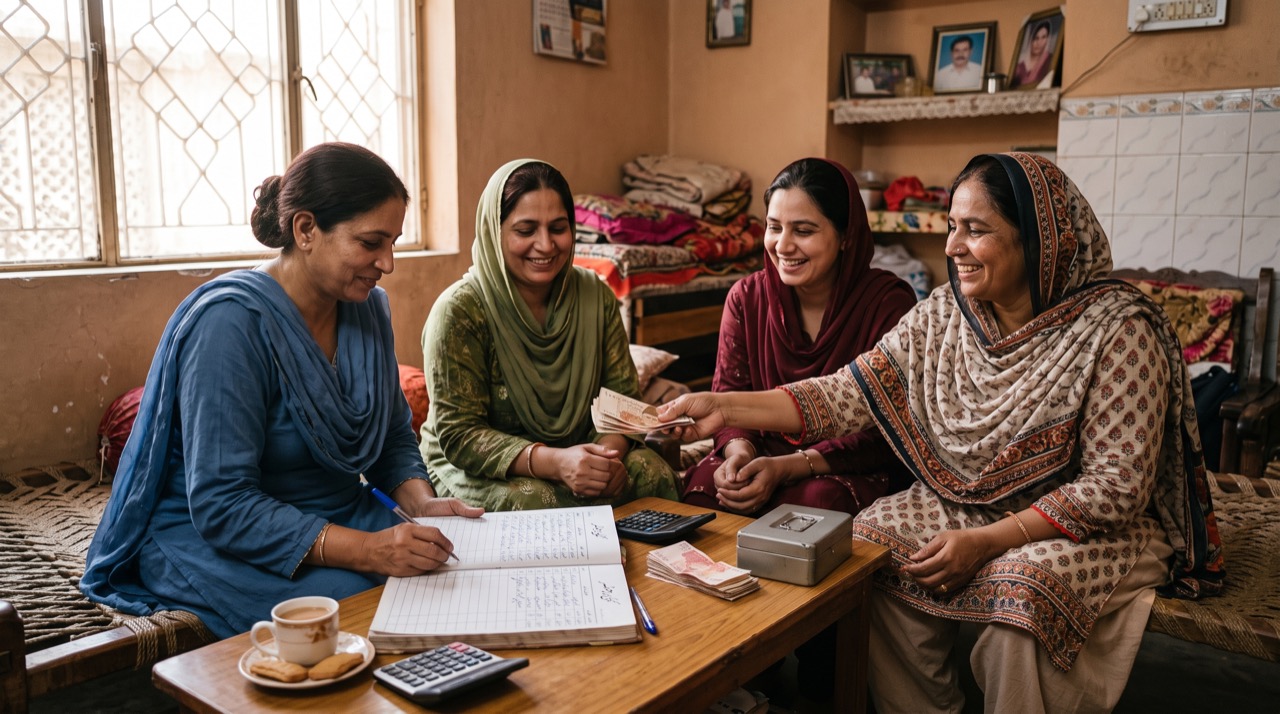
- Committee (Bisi) systems — a rotating savings group among trusted family or colleagues can work for shorter horizons, though it carries counterparty risk if a member drops out — only join one with people you'd trust with far more than money.
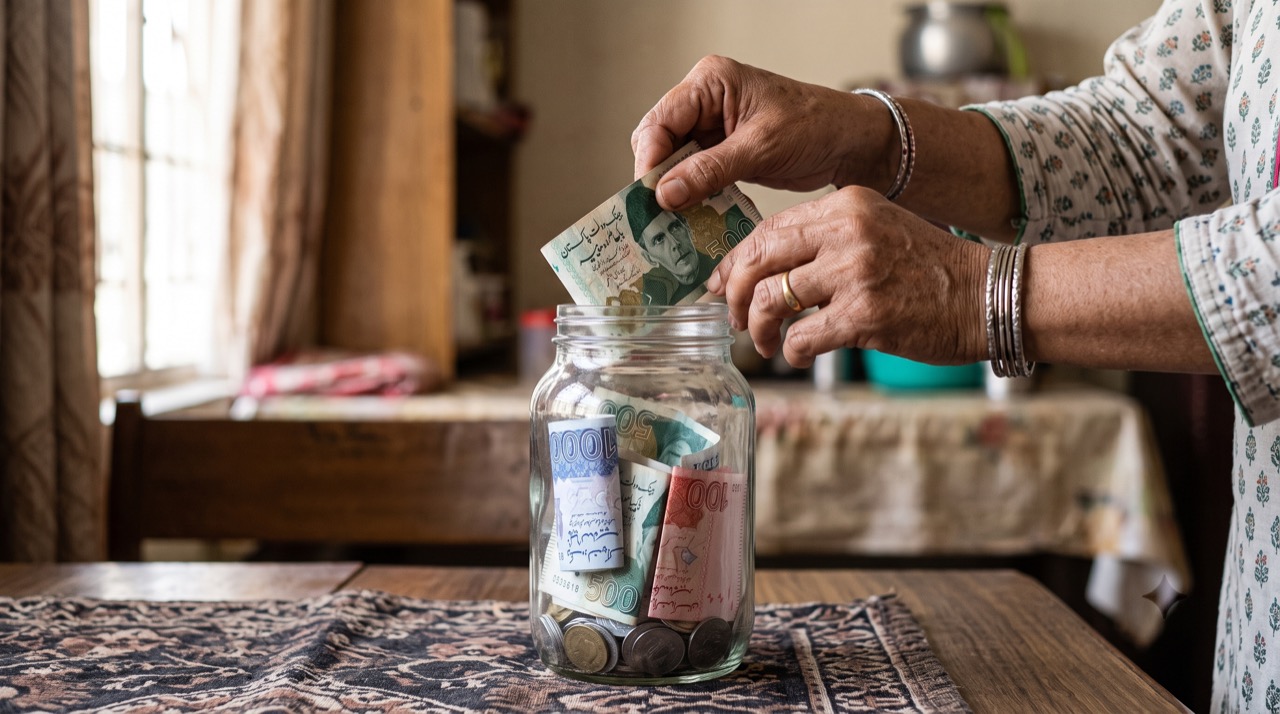
- A separate, named account — even without a formal Islamic Hajj product, simply isolating the money in an account you don't touch for anything else prevents it from quietly leaking into everyday spending.
Whichever vehicle you choose, confirm with your bank's Islamic banking desk — the State Bank of Pakistan maintains oversight of Islamic banking windows — that the structure is genuinely Shariah-compliant rather than interest dressed up in different packaging.
Protect the Fund From Life's Detours
- Automate the transfer the day your salary lands, before the money has a chance to feel "available" for anything else.
- Treat medical emergencies and Hajj savings as two separate funds — raiding one for the other just delays both goals.
- Review your target every year against the newly published Hajj cost, and adjust the monthly deposit up if the gap has widened.
- If a bonus, tax refund, or Eidi windfall comes in, route a portion straight into the Hajj fund instead of letting it absorb into general spending.
"And Hajj to the House is a duty owed to Allah by mankind, for those who can afford the journey." — Quran, Surah Aal-e-Imran (3:97)
That verse is precisely why a savings plan matters: Hajj is only obligatory once you have the means, so building those means deliberately — rather than borrowing or straining your household — is itself part of doing it right.
Roman Urdu
Hajj Pakistani ghar ke liye zindagi ka sabse bara planned kharcha hota hai — shadi se bhi zyada, gari se bhi zyada. Lekin agar aap sahi tareeke se plan karein to ye mushkil nahi rehta.
Sahi Number Maloom Karein
Andaza lagane ki bajaye Ministry of Religious Affairs ki official website se is saal ka Hajj package cost check karein — Government Scheme aur Private Scheme dono ke rates har saal riyal ke exchange rate aur airfare ki wajah se badalte hain. Jis saal aap jana chahte hain us mein 10-15% cushion zaroor add karein, kyunke cost har saal barhta hai.
Monthly Saving Nikalein
Target amount ko jitne mahine baaki hain un se divide kar dein. Misal ke tor par agar target PKR 1,300,000 hai aur 5 saal (60 mahine) baaki hain, to har mahine tقریباً PKR 21,700 bachane hongay. Agar sirf 3 saal hain to ye figure barh kar PKR 36,000 se upar chala jata hai — isi liye jitni jaldi shuru karein utna acha.
Paisa Kahan Rakhein
Hajj ke paise sood (riba) wale saving account mein na rakhein. Islamic bank ka dedicated Hajj savings account behtareen option hai. Committee system bhi chal sakta hai lekin sirf un logon ke sath jin par aap poora bharosa karte hain. Sab se zaroori baat ye hai ke Hajj fund ko ek alag account mein rakhein jise aap kisi aur kharche ke liye touch na karein.
Fund Ko Mehfooz Rakhein
- Salary aate hi automatic transfer set kar dein.
- Emergency fund aur Hajj fund ko hamesha alag rakhein.
- Har saal naye official rates ke hisab se apna monthly target update karein.
- Bonus ya Eidi mile to us ka kuch hissa seedha Hajj fund mein dalein.
Yaad rakhein — Hajj sirf un logon par farz hai jo is ka kharcha uthane ki sakat rakhte hon. Is liye systematic saving hi sahi rasta hai, na ke qarza lena ya ghar ka budget bigaarna.