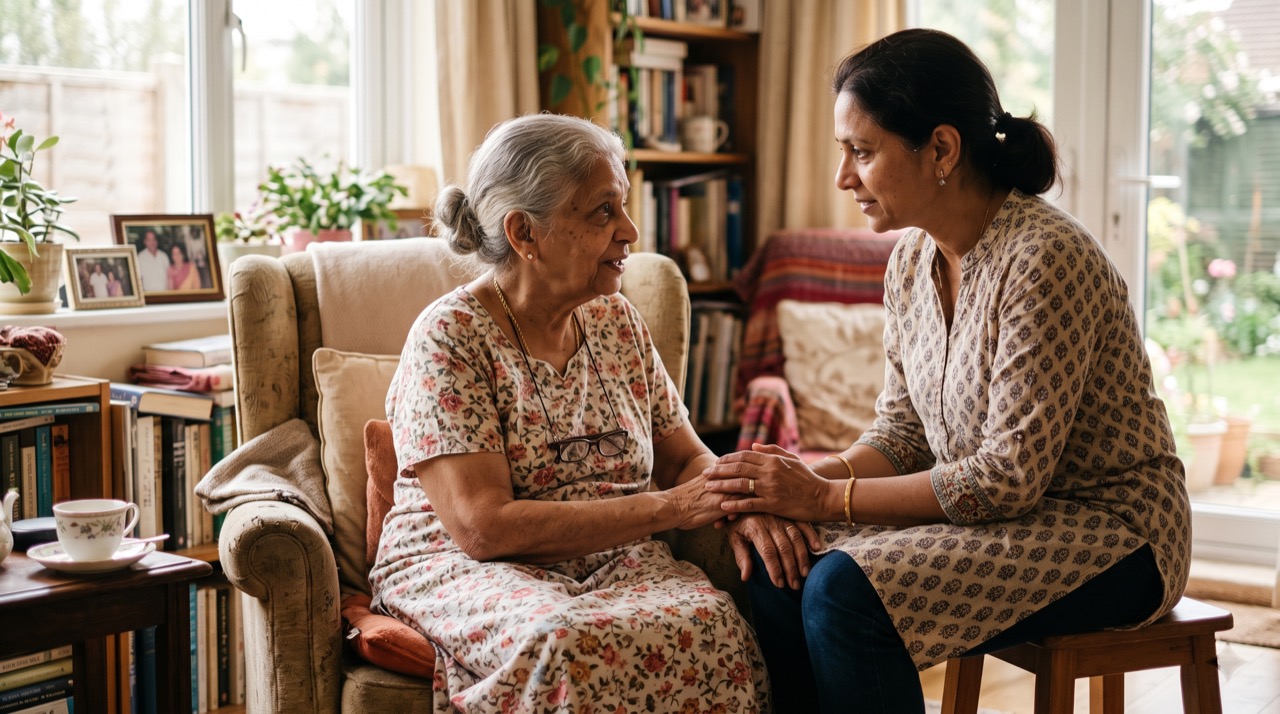
Bringing up health with an aging parent is one of the hardest conversations in Pakistani family life. Many of our elders grew up associating hospitals with emergencies, not maintenance, and they may see a gentle question about their blood pressure medicine as an accusation that they can no longer manage their own life. The goal is not a single big talk but a series of small, respectful check-ins that build trust over time. Below are practical ways to approach medicines, checkups and daily support without turning every visit into a confrontation.
Start With Listening, Not Advice
Before offering any suggestion, ask open questions and actually listen to the answer. "Ammi, how have you been sleeping this week?" invites conversation far better than "You need to see a doctor." Elders often resist advice that feels imposed, but they respond well to being asked their opinion first.
- Ask about their day-to-day comfort before asking about diagnoses — "Are your knees giving you trouble on the stairs?" rather than "Do you have arthritis?"
- Let them explain their own understanding of a condition before correcting anything. Many older adults have decades of self-management experience that deserves acknowledgment.
- Pick a calm, private moment — after a meal or during a quiet evening — rather than in front of guests or younger grandchildren.
Make Medicines a Shared System, Not a Test
Missed doses and confused schedules are extremely common once a parent is managing three or four prescriptions. Rather than quizzing them ("Did you take your sugar medicine?"), build a simple shared routine together.
- Use a labeled weekly pill organizer (widely available at any pharmacy) and fill it together once a week — this turns oversight into a joint task rather than surveillance.
- Keep one updated list of all medicines, doses and timings on the fridge or in a notebook by the bed, and bring it to every doctor visit.
- Set phone reminders or ask a domestic helper or younger family member to gently prompt at mealtimes, since many medicines are timed with food.
- Ask the family doctor directly whether any medicines can be simplified — combination pills or once-daily dosing reduce confusion significantly.
Frame Checkups as Routine Care, Not a Crisis Response
Many elders only go to a doctor when something is visibly wrong, which means preventive checkups feel unfamiliar or even alarming. Reframe regular visits as maintenance, similar to servicing a car before it breaks down.
- Tie checkups to something they already value: "Since we're getting your eyes checked before Eid shopping, let's also get your blood pressure looked at."
- Offer to go along, not to take over — sit in the waiting room, or join the consultation only if they want you there.
- For basic screenings like blood pressure, blood sugar and cholesterol, many labs across Pakistan now offer home sample collection, which can lower the resistance to "going to a hospital."
- If a specific worry exists (a fall, chest pain, unexplained weight loss), name it plainly and calmly rather than hinting, since minimizing real symptoms can delay necessary care.
Offer Daily Support Without Undermining Independence
Loss of independence is often the deeper fear behind resistance to help. Frame support as making their life easier, not as taking control away from them.
- Ask what specific tasks feel harder lately rather than assuming — for one parent it might be grocery-carrying, for another it might be night-time bathroom trips.
- Introduce one small change at a time: a grab bar in the bathroom, a nightlight in the hallway, or a walking stick, rather than rearranging the whole house at once.
- Involve siblings so the responsibility and the credit for caregiving are shared, which reduces both burnout and resentment within the family.
- If your parent is in Pakistan and you are abroad, a scheduled weekly video call focused specifically on health and daily needs (separate from general family chat) helps catch problems early.
Respect the person your parent has always been, and the conversation about their health will go further than any argument about compliance ever could.
These conversations rarely go perfectly on the first attempt, and that is normal. What matters is returning to the topic gently and consistently, so your parent experiences your concern as love rather than control. Over months, small routines — a filled pill box, a scheduled checkup, a labeled medicine list — do more for their health than any single dramatic conversation ever could.
Roman Urdu
Buzurg walidain se sehat ke baray mein baat karna Pakistani gharon mein aksar mushkil hota hai, kyun ke unhein lagta hai ke hum unki azaadi cheen rahe hain. Behtareen tareeqa yeh hai ke ek hi lambi baat karne ke bajaye, thoray thoray waqfon mein narmi se baat cheet ki jaye taake bharosa qaim ho.
Sabse pehle sirf sunein, foran mashwara na dein. "Ammi, is hafte neend kaisi rahi?" jaisa sawal, seedha "Aapko doctor ke paas jana chahiye" kehne se zyada behtar kaam karta hai. Unki apni samajh ko pehle sunein, phir dhire se apni baat rakhein.
Dawaiyon ka nizam mil kar banayein, imtihan ki tarah sawal na karein. Ek pharmacy se milne wala weekly pill organizer istemal karein aur usay mil kar bharen — is se yeh nigrani nahi, mushtarka zimmedari lagti hai. Tamam dawaiyon, doses aur waqt ki ek list fridge ya bedside notebook mein likh kar rakhein, aur har doctor visit par sath le jayen. Mobile par reminders laga dein ya ghar ke kisi chhotay fard se narmi se yaad dilwayein.
Checkups ko "emergency" ke bajaye routine care ki tarah pesh karein — jaise gaari ki regular service hoti hai. Kisi pehle se tay kaam ke sath jor dein, jaise "Eid shopping se pehle ankhon ka checkup bhi karwa lete hain, sath blood pressure bhi dekhwa lein." Agar koi khaas fiqar ho — gir jana, seenay mein dard, achanak wazan kam hona — to seedhay lafzon mein narmi se bata dein, taal-matol na karein.
Rozana ki madad is tarah pesh karein ke unki azaadi mehsoos na ho ke chheeni ja rahi hai. Ek waqt mein ek chhoti tabdeeli karein — bathroom mein grab bar, raat ko roshni ke liye nightlight — poora ghar ek sath na badlein. Bhai-behno ko bhi shamil karein taake zimmedari sab par barabar taqseem ho.
Apne walidain ki izzat ko qaim rakhtay huay baat karein, tabhi sehat ki guftagu asar dikhayegi.
Yeh baat cheet pehli dafa mein kamyab na bhi ho, to fikar na karein — yeh aam baat hai. Ahem yeh hai ke narmi aur musalsal andaz mein is mauzu par wapas atay rahein, taake walidain ko yeh mohabbat mehsoos ho, control nahi.