From May to August, large parts of Pakistan regularly cross 40°C, and cities like Jacobabad, Sibi, and even Karachi with its humid air push the "feels like" temperature even higher. Most of us know we should "drink more water," but few people actually have a plan. The result is the same every year: headaches by noon, fatigue that coffee can't fix, and in the worst cases, heat exhaustion that lands someone in the emergency room. You don't need an expensive gadget or a fancy app to fix this — you need a routine you'll actually stick to. Here's one built around how Pakistanis actually spend their day.
How Much Water Do You Actually Need
A commonly used baseline is about 30-35ml of water per kilogram of body weight per day in normal conditions — for a 65kg adult, that's roughly 2-2.3 litres. But that number is for a mild climate and a sedentary day indoors. In Pakistan's summer, especially if you're outdoors or without reliable air conditioning, you need meaningfully more:
- Office worker in AC, mostly indoors: 2.5-3 litres a day
- Student or homemaker, some outdoor errands: 3-3.5 litres a day
- Outdoor laborer, driver, or vendor: 4-5 litres a day, spread through the day, not all at once
- Anyone exercising or doing physical labor at midday: add an extra 500ml-1 litre per hour of activity
Tea, lassi, and juice count toward fluid intake, but plain water should still be the majority of it — sugary drinks and excess caffeine can actually increase how much fluid your body loses through urine.
Warning Signs of Dehydration You Shouldn't Ignore
Dehydration builds up gradually, and by the time you feel very thirsty, you're already behind. Watch for these signs in yourself, your kids, and elderly family members:
- Urine that is dark yellow instead of pale straw-colored
- Dry mouth, cracked lips, or a headache that won't go away
- Dizziness or light-headedness when standing up quickly
- Unusual tiredness or difficulty concentrating in the afternoon
- Muscle cramps, especially in the legs, after outdoor work
- In children and the elderly: fewer trips to the bathroom, sunken eyes, or unusual irritability
If someone stops sweating, has hot dry skin, a rapid pulse, confusion, or loses consciousness in the heat, treat it as a medical emergency — move them to shade immediately, cool the body with water and a fan, and get them to a hospital. This is heat stroke, not ordinary dehydration.
For general heat-safety alerts during Pakistan's peak summer months, the Pakistan Meteorological Department issues heatwave advisories worth checking, and the CDC's guide on heat-related illness is a clear, practical reference for recognizing symptoms early.
A Daily Water Schedule Built Around Your Routine
Instead of trying to remember to "drink more," anchor water breaks to things you already do every day:
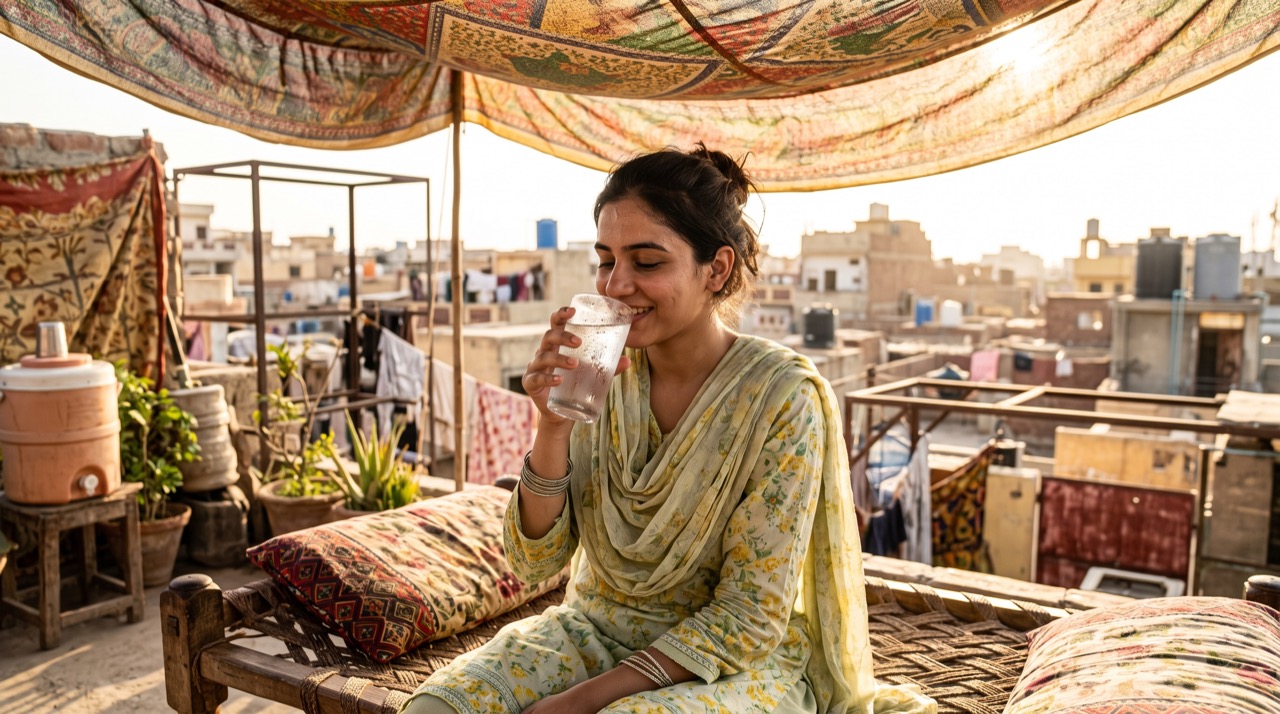
- On waking, before chai: one full glass of water on an empty stomach
- Before each of the five daily prayers: a glass of water before wudu is an easy, built-in reminder that works for almost everyone
- Before every meal, not during: a glass 20-30 minutes before eating aids digestion and prevents overeating
- Every hour during work if you're outdoors or in a hot kitchen: a few sips, not a race to chug one bottle
- Mid-afternoon slump (around 4-5pm): water instead of another cup of tea if you're feeling foggy
Carry a marked 1-litre bottle and refill it twice — seeing the level drop is a far better reminder than any phone notification. Add a pinch of salt and sugar or an ORS sachet to your water if you're sweating heavily outdoors for hours; plain water alone won't replace lost electrolytes. Water-rich fruit like watermelon, cucumber, and oranges also count toward your daily total and are easy to eat during a break.
Extra Care for Outdoor Workers and Commuters
Rickshaw and bike-taxi drivers, construction workers, and street vendors face the highest risk. If this is you or someone you employ:
- Take a 10-15 minute shade break every hour between 12pm and 4pm, the hottest window
- Wear light-colored, loose cotton clothing and a wet cloth or cap on the head
- Keep an ORS sachet or a pinch of salt in your water bag — it's cheap and prevents cramps
- Never wait until you feel very thirsty to drink — sip on a fixed schedule instead
Roman Urdu
Pakistan ki garmi mein, khaas kar May se August tak, jab temperature 40°C se upar chala jata hai, hydration koi luxury nahi balke zaroorat hai. Aam tor par ek healthy adult ko roughly 2.5 se 3 litre paani chahiye agar woh AC mein office mein baitha hai, lekin agar aap bahar dhoop mein kaam karte hain — driver, laborer, ya vendor — to yeh zaroorat 4 se 5 litre tak badh jati hai, poore din mein thora thora karke piyein, ek dam nahi.
Dehydration ki alamaat pehchanna zaroori hai: peshab ka rang dark yellow ho jana, sar dard, chakkar aana, muhh khushk hona, ya bewajah thakawat mehsoos hona — yeh sab jism mein paani ki kami ki nishaniyan hain. Agar kisi ko pasina aana band ho jaye, jild garam aur khushk ho, dil ki dharkan tez ho jaye ya woh confuse ho jaye, to yeh heat stroke hai aur foran medical emergency samjh kar shade mein le jayein, paani se thanda karein aur hospital le jayein. Aik simple tareeqa yeh hai ke paani peene ko apni routine ke sath jor dein: subah uthte hi ek glass, har namaz se pehle wudu se pehle ek glass, khane se 20-30 minute pehle ek glass, aur agar bahar kaam kar rahe hain to har ghantay thori si sips. Ek marked bottle sath rakhein taake pata chale kitna paani piya. Agar bahut pasina aa raha hai to paani mein thori si namak-cheeni ya ORS ka ghol mila lein, sirf plain paani electrolytes ki kami poori nahi karta. Tarbooz, kheera aur santra jaise phal bhi hydration mein madad karte hain aur break ke dauran asaani se khaye ja sakte hain. Outdoor workers dopeher 12 se 4 baje tak har ghantay shade mein 10-15 minute ka break zaroor lein — yeh choti si aadat garmi ki bimariyon se bacha sakti hai.