Almost every Pakistani household has faced this: fresh, soft rotis straight off the tawa turn stiff and leathery within an hour, especially once the sabzi or daal has cooled too. The good news is that roti going hard isn't bad luck or "weak atta" — it's almost always a science problem: not enough water in the dough, wrong kneading, or wrong storage after cooking. Fix those three things and your roti will stay soft for hours, even in a hot Karachi kitchen or a cold Murree evening.
Get the Dough Hydration Right
Most homes under-hydrate their atta because wet dough feels harder to handle. But a drier dough is the single biggest reason roti hardens fast — there simply isn't enough moisture in the gluten network to keep it flexible after cooking.
- Use roughly 65-70% water to atta by weight (about 3/4 cup lukewarm water for every 2 cups of whole wheat atta), adjusted slightly for the atta brand since absorption varies.
- Always use lukewarm water, not cold. Warm water relaxes the gluten faster and gives a softer, more pliable dough.
- Add the water gradually while mixing — pour in stages and stop when the dough is soft and slightly tacky, not dry and stiff like a chapati that cracks at the edges when rolled.
- If you're using fine atta (like Sunridge or National), it usually needs a touch more water than coarser chakki atta.
Knead Longer Than You Think You Need To
Hydration alone won't save you if the dough isn't kneaded properly — kneading is what develops the gluten strands that trap steam and keep the roti pillowy.
- Knead for a full 8-10 minutes by hand (or 4-5 minutes in a stand mixer with a dough hook). Most people stop at 2-3 minutes, which isn't enough.
- The dough should turn smooth, elastic, and slightly glossy — press a finger in and it should spring back slowly rather than staying dented.
- Rest the dough, covered with a damp cloth or under an upturned bowl, for at least 20-30 minutes before rolling. This resting time lets the gluten relax and the water fully absorb into the flour, which is often the step people skip entirely.
- Add a teaspoon of oil or ghee to the dough while kneading — it coats the gluten strands, keeps the roti softer for longer, and makes rolling easier.
Cook It Right — Don't Over-Char It
Overcooking is a quiet culprit. A roti left too long on the tawa or over direct flame loses moisture fast and turns papery.
- Cook on a well-preheated tawa on medium-high heat — a cold tawa makes the roti sit longer and dry out before it puffs.
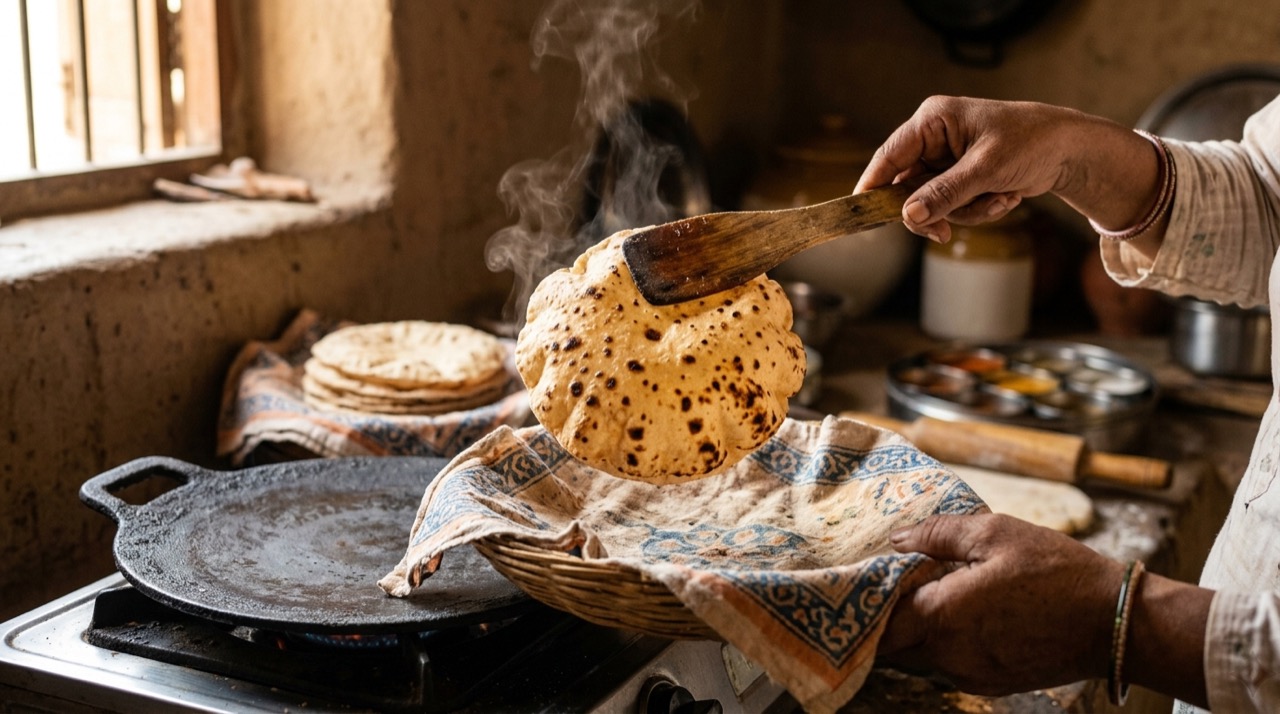
- Flip only twice: once on the tawa each side, then finish the puff briefly over direct flame or by pressing gently with a cloth on the tawa. Don't leave it over flame longer than needed to puff.
- The moment it comes off the heat, apply a light brushing of ghee or butter — this seals in surface moisture immediately.
Storage Is Where Most People Lose the Battle
Even a perfectly made roti will turn hard within the hour if stored wrong. The goal is to trap steam without letting condensation turn it soggy.
- Stack rotis in a clean cotton cloth (a "roti basket" cloth or plain dupatta works) inside a casserole or hot-pot — the cloth absorbs excess steam while the insulated container keeps warmth in.
- Avoid stacking directly in an open steel plate uncovered — that's the fastest way to dry them out as steam escapes instantly.
- Don't seal hot rotis in an airtight plastic box or bag straight away — trapped steam with no cloth to absorb it turns them soggy on the outside and rubbery once cooled, which many people mistake for "hardness."
- If reheating later, sprinkle a few drops of water on the roti before warming it on a tawa or in a pan — this restores lost moisture far better than a dry microwave zap.
A soft roti isn't about the atta brand — it's about enough water in the dough, enough kneading time, and a cloth-lined hot-pot instead of an open plate.
If you get hydration, kneading, and storage right, you genuinely won't need to reach for extra ghee or reheat rotis every twenty minutes. It's a small daily habit change that makes a noticeable difference in how food feels at the table, especially for family dinners where rotis sit out for a while before everyone eats.
Roman Urdu
Bohat se gharon mein yeh masla aam hai: garam garam tawe se utri roti ghante bhar mein hi sakht ho jati hai. Iski wajah "kharab atta" nahi hoti, balke teen cheezen — kam pani, adhoori guthai, aur ghalat storage.
Pani sahi rakhein: Atta mein pani hamesha halka garam istemal karein, thanda nahi. Zyada tar log pani kam dalte hain kyunke geela dough handle karna mushkil lagta hai, lekin yehi sabse badi wajah hai roti ke sakht hone ki. Dough thora nam aur soft mehsoos hona chahiye, sookha ya sakht nahi.
Achi tarah guthein: Kam se kam 8-10 minute haath se guthna zaroori hai taake gluten sahi tarah banay jo roti ko narm rakhta hai. Guthne ke baad dough ko gile kapre se dhak kar 20-30 minute ke liye rakh dein — yeh step aksar log skip kar dete hain jabke yeh sabse zaroori hai. Guthte waqt thora ghee ya tel bhi mila lein.
Pakane ka tarika: Tawa pehle se achi tarah garam hona chahiye. Roti ko zyada der tawe ya seedhi aanch par na rakhein, warna moisture nikal jata hai aur roti kaghaz jaisi sakht ho jati hai. Tawe se utarte hi ghee ya makhan laga dein — is se upar ki nami mehfooz rehti hai.
Storage sabse zaroori hai: Rotiyon ko hamesha saaf sooti kapre mein lapet kar casserole ya hot-pot mein rakhein — kapra extra bhaap sokh leta hai aur hot-pot garmi qaim rakhta hai. Khuli plate mein rakhne se bhaap foran nikal jati hai aur roti sakht ho jati hai. Garam roti ko foran airtight box ya plastic bag mein band na karein — bhaap wapas roti par jam kar use rubbery bana deti hai. Dobara garam karte waqt roti par thora pani ke chinte laga kar tawe par garam karein — microwave se behtar nateeja milega.
Agar pani, guthai, aur storage teenon sahi ho jayein, to roti ghanton tak narm rahegi aur baar baar garam karne ki zaroorat nahi paray gi.