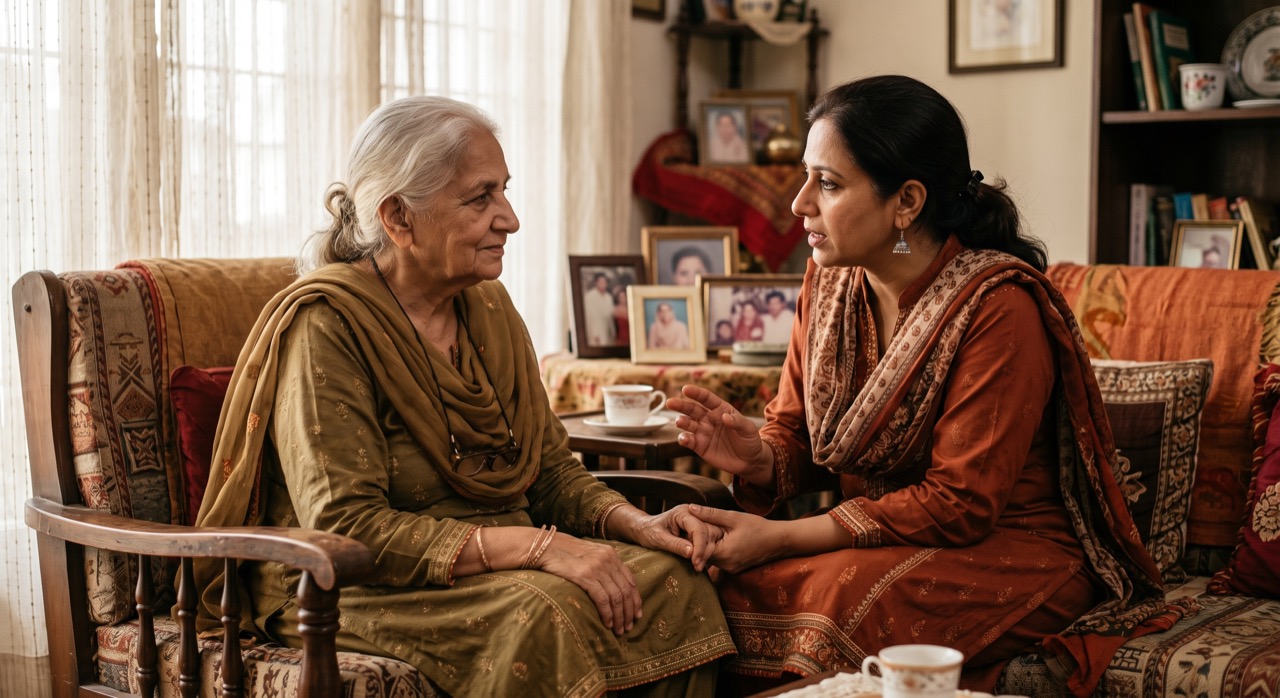
In most Pakistani households, family isn't just people you love—it's a whole ecosystem of chachas, khalas, phuppos, and their opinions on your career, your weight, your marriage timeline, and your parenting. Boundaries can feel like a Western import that doesn't translate here, as if protecting your peace automatically means disrespecting your elders. It doesn't. You can hold a line and still bring the salan to your Nani's house every Sunday. The trick is doing it in a way that respects the relationship while quietly training people on what you will and won't accept.
Why This Feels So Hard Here
Unlike nuclear-family cultures where "no" needs no explanation, our social fabric runs on interdependence—shared homes, shared finances, shared reputations. Saying no to a relative can feel like saying no to the whole biradari. Add in the deep value placed on izzat (honour) and the fear of being called "burha ho gaya hai, ab hum se baat nahi karta," and most people simply absorb the discomfort instead of naming it. The result: burnout, resentment, and relationships that survive on politeness rather than honesty.
Scripts for the Most Common Flashpoints
- Unannounced visits: "Aunty, aap zaroor aayen, bas ek call kar dein taake main chai theek se laga sakoon" frames the ask as hospitality, not rejection.
- Marriage or baby pressure: Don't argue the merits—just close the topic. "Jab Allah ki marzi hogi, aap sab se pehle bataenge" ends the conversation without inviting debate.
- Money requests you can't (or won't) fulfil: Be specific and final in one line rather than vague and repeatedly renegotiated: "Is waqt mumkin nahi hai, lekin dua zaroor hai." Vagueness invites a second and third ask; a clear no, said once and kindly, usually doesn't.
- Unsolicited advice on your kids, job, or spouse: "Aap ka tajurba qadar ki baat hai, hum is par ghar mein baat karenge" acknowledges them without committing you to act on it.
- Being volunteered for family duties without consent: Correct it in the moment, calmly: "Mujhe pehle bata dete to main plan kar leta/leti."
Use the Culture Instead of Fighting It
Directness isn't the only tool available to you—indirection is a legitimate, deeply South Asian skill. Route sensitive boundaries through a respected elder who can relay them softly. Use humour to deflect repeat questions ("Aap poochh poochh kar mujhe embarrass kar rahe hain"). Anchor boundaries in something unimpeachable—health, work, prayer times, children's routine—rather than personal preference, since "I need rest" lands better as "Doctor ne araam ka bola hai" in some households, even if the underlying need is identical.
Boundaries are not walls that shut relatives out—they are gates that let you choose when the door opens, and for how long.
When to Hold Firm Anyway
Some boundaries shouldn't be softened for anyone's comfort: physical or emotional abuse, financial exploitation disguised as "family duty," or relatives who consistently badmouth your spouse or children. In these cases, politeness is still worth attempting once, but repetition of the same violation justifies reduced contact—fewer visits, shorter calls, more physical distance—even if it draws criticism. Protecting your peace is not selfishness; it is what lets you show up for family in the ways that actually matter, instead of running on resentment. Consistency matters more than eloquence: a soft "no" repeated calmly every single time trains relatives faster than one dramatic confrontation ever will.
Roman Urdu
Pakistani gharon mein family sirf log nahi, poora nizaam hoti hai—chacha, khala, phuppo, sab ki apni raye hoti hai aapki job, shaadi, ya bachon ki tarbiyat par. Boundary banana iska matlab yeh nahi ke aap bezati kar rahe hain—bas itna hai ke aap pyar bhi rakhein aur apna waqt aur sukoon bhi mehfooz rakhein.
Achanak ghar aane walon ko piyar se ek call ka bol dein: "Aap zaroor aayen, bas thoda batayen taake chai theek se lag jaye." Shaadi ya bachon ke sawalon par behas na karein, bas topic band kar dein: "Jab Allah ki marzi hogi, sab se pehle aap ko hi pata chalega." Paison ke maamle mein saaf aur ek hi dafa jawab dein—baar baar taal mataal se log dobara zaroor poochtay hain. Ghar ke elders ke zariye bhi apni baat naram andaz mein pohncha sakte hain, aur health ya kaam ka bahana istemal karna bhi koi buri baat nahi.
Lekin agar koi rishtedaar baar baar be-izzati karta hai, paise ka nazayaz faida uthata hai, ya aapke bacchon/spouse ke baare mein ghalat baatein karta hai—wahan naram rawaiya chorna zaroori ho jata hai. Milna kam kar dein, calls chhoti rakhein, aur zaroorat par doori bana lein, chahe log kuch bhi kahein. Apna sukoon mehfooz rakhna khudgharzi nahi—yeh aapko family ke liye behtar tareeke se maujood rehne ki taqat deta hai, ghussay aur thakan ke bajaye.