Most Pakistani kitchens measure salt "andaza se" — by feel, a pinch here, a fistful there — and it adds up fast. Between namak in the daal, namak in the salan, and a side of achaar or papad, a single thali can quietly cross the World Health Organization's recommended daily sodium limit before dinner even starts. The good news is that salt isn't actually what makes desi food taste like desi food — the masala base, the tarka, and the souring agents do most of that work. Cut salt the wrong way and food tastes flat; cut it the right way, using the techniques below, and most people can't even tell the difference.
Build the Flavor Before You Reach for Salt
The single biggest lever in desi cooking is bhunai — properly frying out the onion-tomato-masala base until the oil separates. An underdone base tastes raw and bitter no matter how much salt you add, which is exactly why many home cooks over-salt in the first place: they're trying to fix a technique problem with a seasoning fix.
- Cook piyaz (onions) until genuinely golden-brown, not just translucent — this alone adds a natural sweetness that reduces the need for salt.
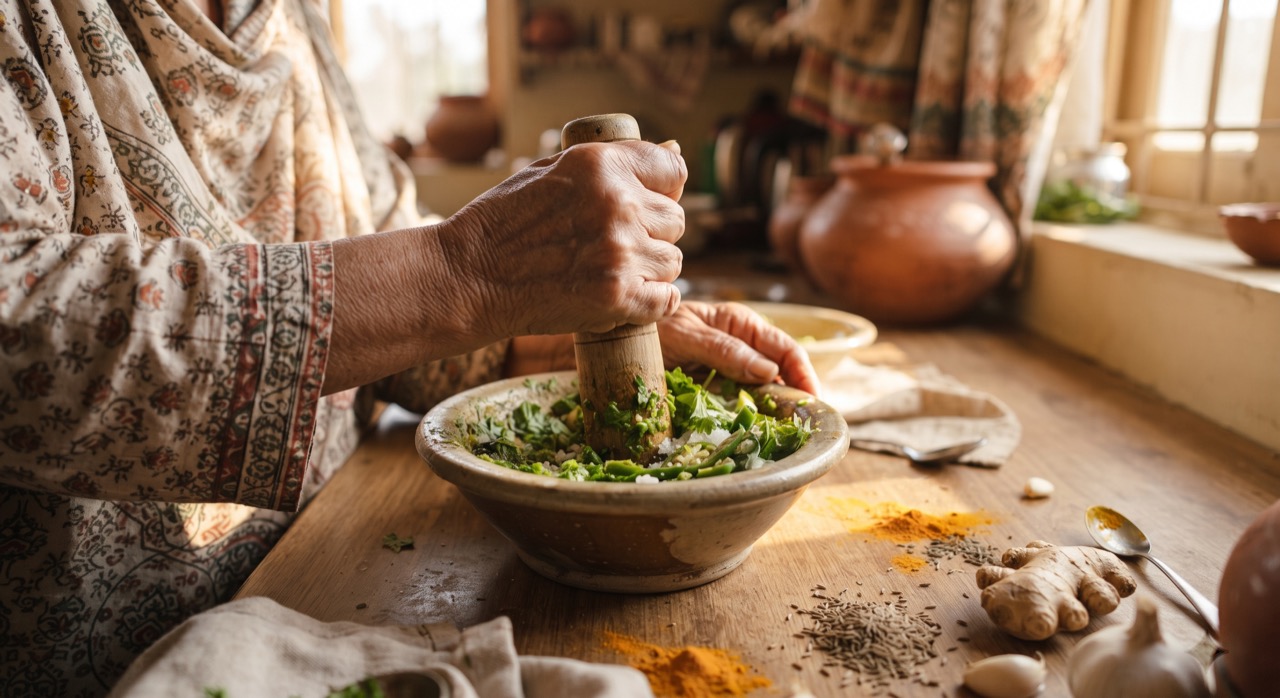
- Bloom whole spices (zeera, dhania seeds, laung, elaichi) in hot oil for 20-30 seconds before adding onions; toasting releases far more aroma than adding the same spices as powder later.
- Use fresh adrak-lehsan paste rather than store-bought jars, which often carry added salt as a preservative.
- Add salt in two stages — a small amount early to help vegetables sweat and release moisture, and the rest right at the end, once you can actually taste the dish. Salting only at the end almost always means using less overall.
Let Sourness and Heat Do the Work Salt Usually Does
Tang and spice trick the tongue into perceiving a dish as more "seasoned," which is why sour and spicy foods often taste satisfying with less salt than mild ones.
- Imli (tamarind) pulp, anardana (dried pomegranate seed) powder, or amchoor (dried mango powder) in daals, chana, and chaats.
- A squeeze of fresh lemon or a splash of sirka (vinegar) stirred in right before serving karahi, nihari, or biryani.
- Plain dahi (yogurt) in curries adds body and a gentle tang, letting you cut salt without the dish feeling thin.
- Kashmiri or deghi mirch gives vivid red color and mild heat without the sodium load of some pre-mixed masala blends, many of which list salt among the top three ingredients.
Watch the Hidden Salt, Not Just the Salt Shaker
For blood-pressure-conscious cooking, the salt you add by hand is often not the main problem — the salt already hiding in packaged ingredients is.
- Maggi-style stock cubes and ready-made yakhni powders are extremely high in sodium; make a simple homemade yakhni from bones, whole spices, and an onion instead, and salt it yourself.
- Achaar, papad, namkeen mixtures, and soy sauce are sodium-dense — treat them as occasional garnish, not a daily side.
- Rock salt (sendha namak) and pink Himalayan salt are not meaningfully lower in sodium than table namak — the health benefit comes from using less quantity, not switching salt type.
- Potassium-based "no-salt" substitutes can genuinely help, but anyone on blood-pressure or kidney medication should check with a doctor first, since they raise potassium intake.
Finish With Fresh Instead of Salty
A generous handful of hara dhania, pudina, julienned adrak, or crushed hari mirch scattered over a finished dish adds a final layer of brightness that the brain reads as "well-seasoned," even when the salt content is modest.
Reducing population salt intake by even a small amount is one of the most cost-effective public health measures for lowering blood pressure and preventing heart disease and stroke, according to the World Health Organization.
None of this means bland roti-salan for the rest of your life. It means shifting where the flavor comes from — technique, acid, aromatics, and fresh herbs instead of an extra half-spoon of namak — so the food still tastes like ghar ka khana, just with a little less strain on the heart.
Roman Urdu
Zyada tar Pakistani gharon mein namak "andaza se" dala jata hai — daal mein bhi, salan mein bhi, upar se achaar aur papad alag. Yeh sab mil kar din bhar ka sodium intake bahut zyada bana deta hai, jo blood pressure ke liye theek nahi. Achi baat yeh hai ke desi khane ka asli maza namak se nahi, bunyadi technique aur khatte-teekhe zaiqon se aata hai.
Sabse pehle bhunai theek se karein — piyaz ko sunehra hone tak bhunein aur sabut masalay (zeera, dhania, elaichi) ko garam tel mein thori der tal lein taake unka poora zaiqa nikle. Namak do martaba dalein: thora shuru mein, baqi aakhir mein jab aap khud zaiqa chakh saken — is tarah kam namak mein bhi khana mazedar lagta hai. Ghar ka adrak-lehsan paste istemal karein, packet wala paste aksar preservative ke taur par namak rakhta hai.
Khatta aur teekha zaiqa zaban ko yeh mehsoos karata hai ke khana "poora seasoned" hai. Imli, anardana, amchoor daal aur chaat mein dalein, aur serve karne se pehle taza lemon ya sirka mila dein. Dahi bhi salan ko gaadha aur halka khatta bana deta hai. Kashmiri ya deghi mirch se rang aur halki tezi mil jati hai, bina zyada namak wale ready-made masalon ke.
Sabse zyada khatarnak wo namak hai jo aap dekh nahi rahe — Maggi jaisi stock cubes aur packet yakhni powder mein sodium bohot zyada hota hai; ghar ki yakhni haddiyon aur sabut masalon se banayein. Achaar, papad aur namkeen ko roz ka hissa nahi, kabhi kabhar ka garnish samjhein. Sendha namak ya pink Himalayan namak, table namak se zyada behtar nahi — faida kam matra istemal karne mein hai, namak badalne mein nahi. Potassium wale "no-salt" substitute kaam ke ho sakte hain, lekin agar aap BP ya kidney ki dawa le rahe hain to pehle doctor se pooch lein.
Aakhir mein taza hara dhania, pudney, adrak aur hari mirch dal dein — yeh dimagh ko "achi tarah seasoned" hone ka ehsaas dilata hai, kam namak ke bawajood. Matlab yeh nahi ke khana pheeka ho jaye, sirf zaiqa ka mansooba badal jata hai — thori kam namak, thori zyada technique.