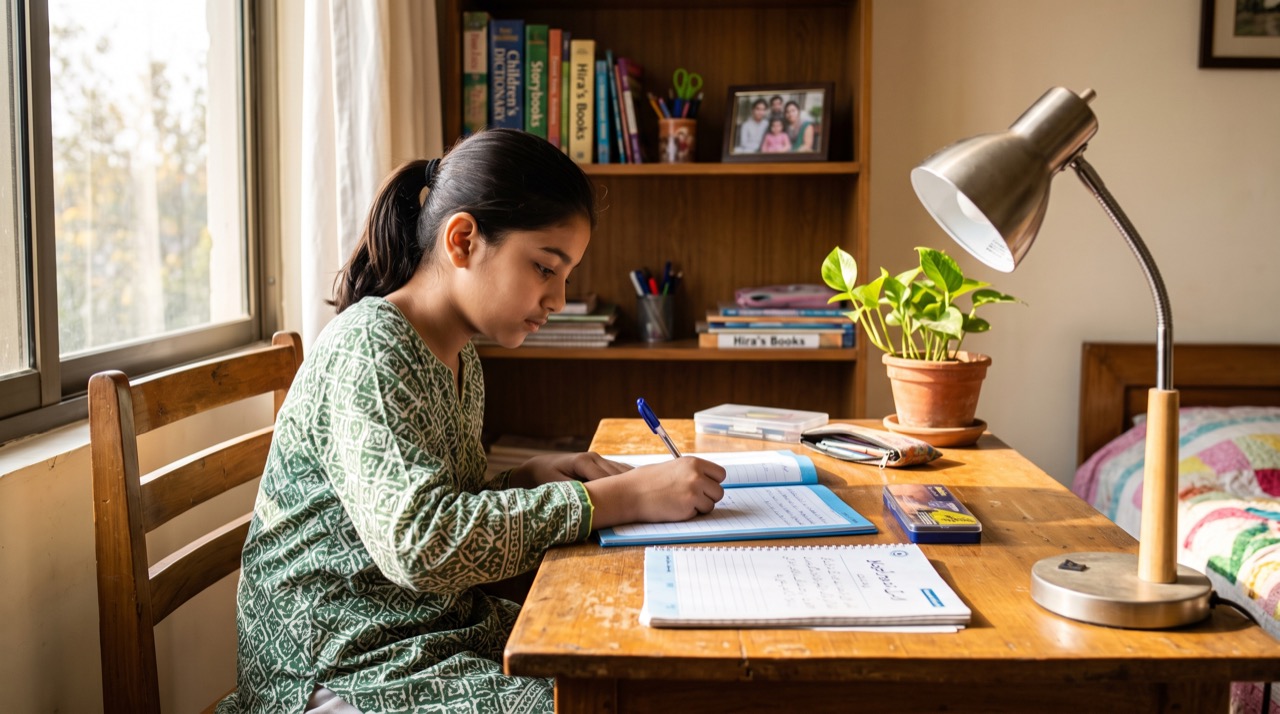
With load-shedding, joint family homes, and one TV blaring in the next room, carving out a proper study space for your child can feel impossible. The good news is that a genuinely effective study corner does not need a separate room or an expensive desk set — it needs the right light, a sensible layout, and a few boundaries that keep distractions out. Here is a practical, low-cost way to build one in almost any Pakistani home, from a single-room flat to a joint family house.
Getting the Lighting Right
Poor lighting is the single biggest reason children get eye strain and lose focus within twenty minutes of sitting down. Most homes rely on one harsh ceiling tube light and nothing else, which creates glare on notebooks and screens. A layered lighting setup fixes this cheaply.
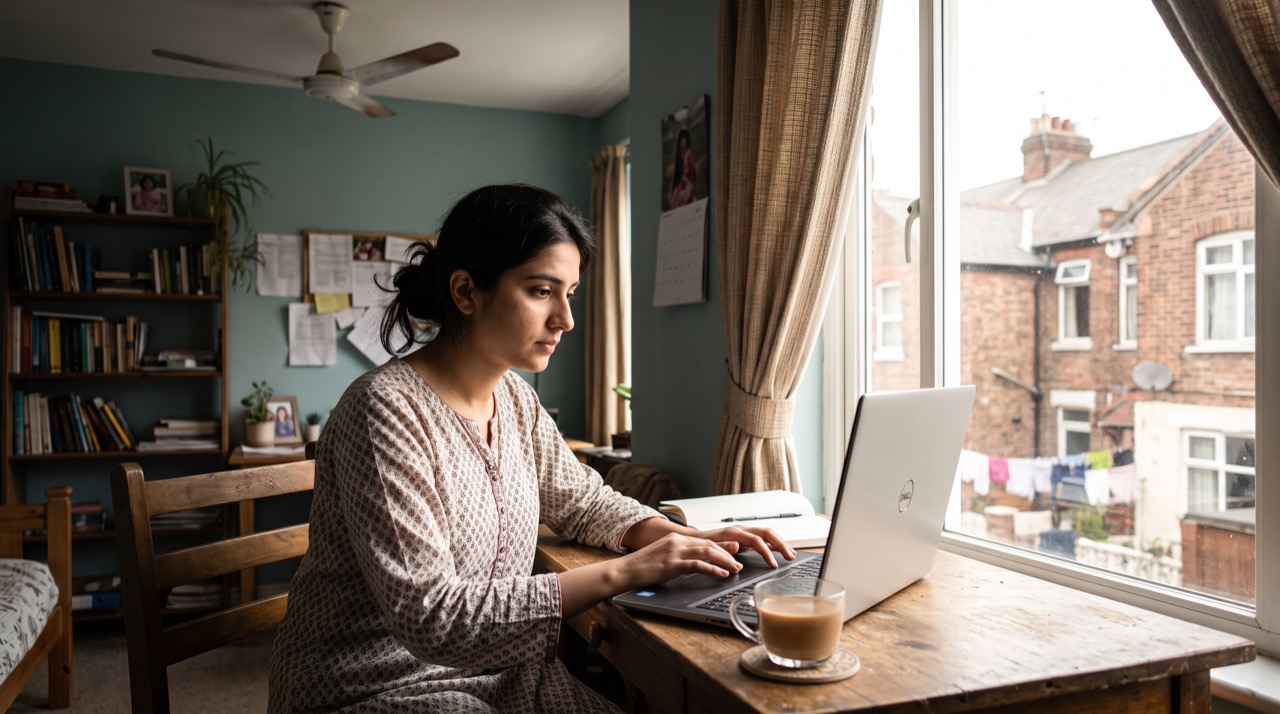
- Position the desk sideways to the window, not facing it or with the child's back to it, so daylight falls across the page without glare or a silhouette effect.
- Add one dedicated desk lamp with a warm-white or daylight LED bulb (4000K–5000K is easiest on the eyes for reading). A basic adjustable-arm lamp costs very little at any electronics or hardware market and matters far more than the desk itself.
- Right-handed children should place the lamp on the left, and left-handed children on the right, so the writing hand doesn't cast a shadow over the page.
- Keep a UPS or a rechargeable LED lamp on hand for load-shedding hours — studying by mobile phone torch strains the eyes badly over time.
- Avoid pure white "cold" bulbs for long study sessions; they tend to cause faster eye fatigue than warm-white daylight tones.
Smart, Budget-Friendly Layout
You don't need a spare room. A corner of a bedroom, a nook under a staircase, or even a curtained-off section of a shared lounge can work if the layout is deliberate.
- Face the desk toward a plain wall rather than toward the door or the main family area — this alone cuts a large share of visual distraction.
- Use vertical space: a simple wall-mounted shelf or a couple of wooden crates above the desk keeps books off the floor without needing a large cupboard.
- Keep the desk height matched to the chair so elbows rest comfortably at roughly a right angle — an old dining chair with a cushion works fine if a proper study chair isn't in the budget.
- A cheap foldable table against a wall is often more practical than a fixed desk in a small home, since it can be tucked away when not in use.
- Room dividers don't have to be furniture — a curtain on a tension rod, or even a tall bookshelf, can visually separate the study corner from the rest of the room.
Controlling Noise and Digital Distractions
In joint family homes especially, noise control matters as much as furniture. A few low-cost habits go a long way.
- Set a fixed "quiet hour" with the household — TV volume down, phone calls taken elsewhere — rather than relying on the child to block out noise through willpower.
- Keep the child's own phone outside the study corner, charging in another room, during study sessions. This one change consistently does more for focus than any lighting or furniture fix.
- Use a simple analogue clock or kitchen timer for the Pomodoro method — 25 minutes focused, 5 minutes break — instead of a phone timer that invites scrolling.
- A cheap rug or a few cushions on a bare floor can noticeably dampen echo and household noise in a small concrete-floor room.
- If internet is needed for homework, consider keeping the router in a common area and using a wired connection or a supervised time window rather than unrestricted Wi-Fi access in the child's corner.
A study corner does not need to be big or beautiful — it needs to be the same corner, every single day, so the child's mind learns to switch into "study mode" the moment they sit down there.
Consistency matters more than any single upgrade. Even with a secondhand table and a single lamp, a child who studies in the same well-lit, distraction-controlled spot every day will build focus far faster than one who moves between the bed, the sofa, and the dining table. Start with lighting and a fixed spot this week, then add the noise and digital boundaries once the routine settles in.
Roman Urdu
Bijli jaane, joint family ghar, aur ek hi kamre mein TV chalna — in sab ke bawajood bacchay ke liye acha study corner banana mushkil nahi hai. Is ke liye alag kamra ya mehnga furniture zaroori nahi, bas sahi roshni, samajhdar layout, aur thori si boundaries chahiye.
Roshni: Desk ko khirki ke saamne ya peeth karke nahi, balkay side mein rakhein taake glare na ho. Ek chhota desk lamp (warm-white ya daylight LED bulb) zaroor lagayein — yeh mehnge furniture se zyada faida deta hai. Right-hand bacche ke liye lamp left taraf, aur left-hand bacche ke liye right taraf rakhein taake hath ka saaya page par na pare. Load-shedding ke waqt ke liye rechargeable LED lamp rakhna behtar hai, mobile ki torch se parhna aankhon ke liye theek nahi.
Layout: Desk ko khaali deewar ki taraf rakhein, darwaze ya TV ki taraf nahi — is se dhyaan bhatakne ka bara hissa kam ho jata hai. Diwar par ek chhota shelf lagayein taake kitabein floor par na parhi rahein. Agar poora kamra nahi mil sakta, ek foldable table bhi kaafi hai jo zaroorat na hone par tah ki ja sakti hai. Curtain ya bookshelf se corner ko baaki kamre se alag kar dein.
Shor aur mobile: Ghar walon ke saath ek fixed "quiet hour" tay karein jab TV ki awaaz kam ho. Bacche ka apna phone study ke waqt doosre kamre mein charge par rakhein — yeh sab se zyada faida deta hai. Phone timer ki bajaye simple clock se Pomodoro method (25 minute parhai, 5 minute break) istemal karein. Bare floor par ek sasta rug bhi awaaz kam karne mein madad karta hai.
Sab se zaroori baat yeh hai ke bacha rozana usi jagah baithe — chahe woh simple table aur ek lamp hi kyun na ho. Isi tarteeb se bacche ka dimagh khud-ba-khud "study mode" mein jaana seekh leta hai.