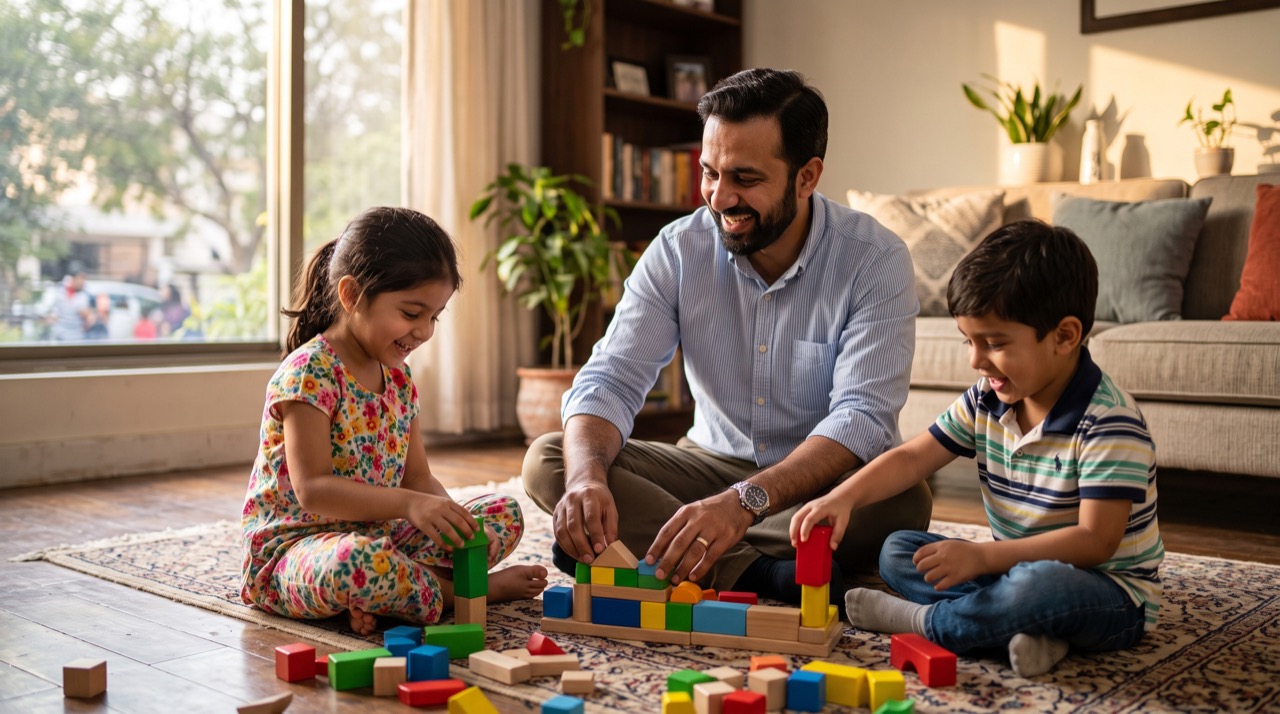
Most working parents in Pakistan carry the same quiet guilt: you leave before the kids are fully awake, you get home after homework is done, and the weekend disappears into errands, family visits, and exhaustion. The good news is that child development research consistently points to one relieving truth — kids do not need hours of your time. They need small, predictable moments of your full attention, repeated often. That distinction changes everything about how you plan your day.
Why Five Minutes Can Beat Five Hours
Children build trust through predictability, not duration. A ten-minute ritual that happens every single day creates more emotional security than an occasional long outing, because the child learns to expect it — and anticipation itself is comforting. This is why bedtime stories, morning drop-offs, and short car rides often become a child's most treasured memories of a parent, not the annual trip to Murree.
- Protect one daily touchpoint — a fixed 10-15 minute window (breakfast, bedtime, or the drive to school) that is non-negotiable, phone-free, and happens rain or shine.
- Let the child lead the conversation — ask open questions like "what was the best and worst part of your day?" instead of yes/no questions that shut things down.
- Keep a consistent sign-off — a specific phrase, handshake, or hug before you leave for work signals "you matter" even on rushed mornings.
Rituals That Fit a Demanding Job
The trick is designing rituals around the schedule you actually have, not the one you wish you had. Pick two or three from this list rather than trying everything at once — consistency with a few beats sporadic effort with many.
- The phone-call check-in — one short call at lunch, even two minutes, where you ask about their day and actually listen.
- Shared chores as bonding — folding laundry together or helping set the dastarkhwan turns a task into conversation time without needing extra hours.
- Bedtime debrief — five minutes sitting on the edge of the bed reviewing the day's highs and lows builds a habit of openness that pays off hugely in the teenage years.
- Weekend "special time" — one hour, once a week, doing something the child picks (cricket in the gali, a walk, a board game). Let them choose so it feels like theirs, not another parent-led activity.
- Written notes — a short note in the lunch box or school bag costs thirty seconds and gets reread for days.
Children rarely remember what you gave them; they remember whether you were fully present when you were with them.
Making the Time You Have Count
Presence matters more than length. A child can tell the difference between a parent who is physically in the room but scrolling on their phone and one who is genuinely engaged, even briefly.
- Put the phone away, visibly — placing it face-down in another room during your ritual removes the temptation and shows the child they have your full attention.
- Get on their level — sitting or kneeling to make eye contact communicates more warmth than talking down from standing height.
- Narrate your care, not just your rules — instead of only correcting behaviour, occasionally say out loud why you're proud of them or what you noticed them do well.
- Involve them in your work world a little — a short, age-appropriate explanation of what you do and why helps children understand your absence rather than resent it.
When Guilt Creeps In
Working long hours to provide for a family is itself an act of love, and children absorb that meaning over time when it's paired with consistent small connections. If you're unsure whether your routines are working, resources like UNICEF's parenting guidance offer practical, age-based tips that translate well to busy households, and the American Academy of Pediatrics publishes accessible research on attachment and daily routines that any parent can apply regardless of schedule.
Roman Urdu
Aksar working parents ko yeh guilt hoti hai ke bachon ke sath waqt nahi guzar paate. Lekin achi baat yeh hai ke bachon ko lambay ghanton ki zaroorat nahi hoti — unhe thoray se lamhay chahiye jo har roz ho aur jin mein aap ka poora dhyaan ho. Yehi cheez asli connection banati hai, na ke saal mein aik dafa lambi trip.
Har roz aik fix waqt nikalen — subah ka nashta, school jaate waqt gaari mein, ya raat ko sone se pehle. Is waqt mein phone door rakhein aur bachay se khuli baat karein, jaise "aaj ka sabse acha aur bura lamha kya tha?" Is se bacha khud batana shuru karega, sirf haan/na mein jawab nahi dega.
- Lunch break mein aik chhota sa call kar ke poochh lein ke din kaisa guzar raha hai.
- Ghar ke kaam sath milkar karein — jaise kapre tehna ya dastarkhwan lagana — isi mein baat cheet ho jati hai.
- Raat ko sone se pehle 5 minute baith kar din ki achi buri baatein sunein.
- Hafte mein aik ghanta bachay ki pasand ka kaam karein — jo wo chunay, aap sirf sath dein.
- School bag ya lunch box mein aik chhota sa note likh dein — bacha isay din bhar yaad rakhta hai.
Sabse zaroori baat yeh hai ke jab bhi sath hon, poora dhyaan wahan ho — phone side mein rakh dein, unki aankhon mein dekhein, aur kabhi kabhi yeh bhi bata dein ke aap unhe kis baat par proud mehsoos karte hain. Lamba kaam karna bhi mohabbat ka izhaar hai, bas chhotay chhotay lamhay is mohabbat ko bachon tak pohanchate rehte hain.