If your basmati rice keeps turning out sticky, clumpy, or mushy no matter how carefully you follow the packet instructions, you are not alone. The good news is that fluffy, separate-grain basmati rice is not about luck or an expensive brand — it comes down to four things almost every beginner skips or rushes: washing, soaking, the correct water ratio, and resting the rice after it cooks. Get these right and you will get restaurant-quality chawal every single time, whether you are making plain rice, pulao, or the base for biryani.
Why Your Rice Turns Out Sticky
Basmati rice grains are coated in surface starch from milling. If that starch is not washed off, it gels in the hot water and glues the grains together, giving you a sticky, clumpy pot instead of long, separate strands. The second most common mistake is using too much water or too high a flame, which overcooks the outer layer of the grain before the inside is done, causing it to break down and turn mushy.
- Skipping the wash: leftover starch is the single biggest cause of sticky rice.
- Skipping the soak: unsoaked grains cook unevenly and often split at the ends.
- Wrong water ratio: too much water = mush, too little = hard, undercooked centres.
- Stirring while cooking: this releases more starch and breaks the grains.
- Serving straight from the pot: rice needs a few minutes to firm up before serving.
Step 1: Washing the Rice Properly
Place your measured basmati rice in a bowl and rinse under cool running water, gently swirling with your fingers. Drain and repeat 3 to 4 times until the water runs mostly clear instead of cloudy white. This single step removes the majority of the surface starch and is the difference between clumpy rice and separate, fluffy grains.
Step 2: Soaking — Do Not Skip This
Soak the washed rice in fresh water for 20 to 30 minutes before cooking. Soaking lets the grains absorb water gradually and evenly, so they cook through without breaking. It also allows basmati's natural length to fully extend during cooking, giving you those long, elegant grains basmati is famous for. After soaking, drain the rice completely — do not add the soaking water to the pot.
Step 3: The Correct Water Ratio
For absorption-method cooking (the most reliable for beginners), use a ratio of 1 cup rice to 1.5 cups water. This is slightly less than many packet instructions suggest, because soaked rice needs less added water than dry rice.
- Add rice, water, a pinch of salt, and optionally a teaspoon of oil or ghee to a heavy-bottomed pot.
- Bring to a boil uncovered on medium-high heat.
- Once it boils, reduce to the lowest possible flame, cover tightly with a lid, and cook undisturbed for 10 to 12 minutes.
- Do not lift the lid or stir during this time — trapped steam is what finishes cooking the grains evenly.
Step 4: The Resting Step Most People Skip
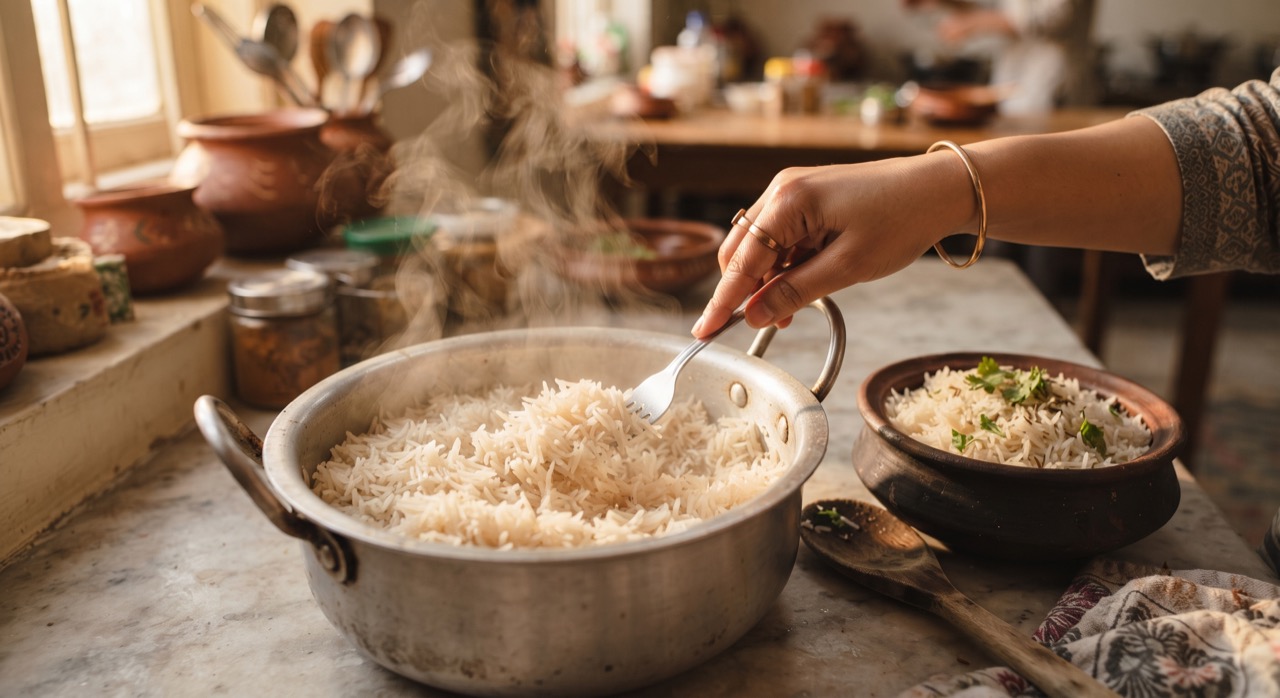
Turn off the heat and let the covered pot rest, untouched, for 10 full minutes. This resting period lets residual steam redistribute moisture through the grains and lets the rice firm up structurally, so it holds its shape instead of collapsing into mush when you serve it. After resting, fluff gently with a fork — never a spoon, which crushes the grains — lifting from the bottom rather than stirring in circles.
The secret to fluffy basmati rice is not a secret ingredient — it is patience at four exact points: washing until the water runs clear, a proper 20-30 minute soak, the right 1:1.5 water ratio, and a full 10-minute rest before you touch the pot again.
Quick Troubleshooting
- Rice too soft/mushy: reduce water slightly next time, and check your flame is truly low during the covered stage.
- Rice too hard in the centre: your grains likely were not soaked long enough, or the flame was too high, cooking the outside faster than the inside.
- Grains clumping: you likely under-washed the rice, or stirred it during cooking.
- Rice tastes bland: salt the cooking water, not the finished rice — it absorbs seasoning far better while cooking.
Once you have this base method down, it becomes the foundation for pulao, biryani, and everyday salan ke sath chawal — the same washing, soaking, ratio, and resting principles apply, you just add spices and layering on top.
Roman Urdu
Agar aap ka basmati chawal har baar sticky ya gilla ban jata hai, to iski wajah aksar chaar cheezon mein se koi ek hoti hai: dhona, bhigona, pani ka ratio, aur pakaane ke baad rest karna.
Chawal Dhona
Chawal ko bowl mein daal kar thande paani se 3-4 dafa dhoiye, jab tak paani saaf na nikle. Yeh upar wala starch nikal deta hai jo chawal ko aapas mein chipka deta hai.
Bhigona Zaroori Hai
Dhoye huye chawal ko 20 se 30 minute tak saaf paani mein bhigo dein. Ismein grains barabar pakte hain aur lambe, alag-alag rehte hain — basmati ki asli khoobsurati yehi hai. Bhigone ke baad paani nitaar dein.
Sahi Pani Ka Ratio
1 cup chawal ke liye 1.5 cup pani rakhein. Namak aur chahein to thoda ghee ya tel daal kar tez aanch par ubaal aane dein, phir aanch bilkul halki kar ke, dhakkan laga kar 10-12 minute tak pakayein. Is dauran dhakkan mat kholein aur na hi chamach se hilayein.
Rest Karna Mat Bhoolein
Aanch band karne ke baad dhakkan lagi hui halat mein 10 minute tak chawal ko yun hi chhod dein. Yeh step bhaap ko andar barabar phailne deta hai aur chawal ko mazboot banata hai. Phir chamach ki jagah fork se halka sa fluff karein, neeche se upar ki taraf, ghumaane ki bajaye.
Yeh basic tareeqa seekh lein to pulao aur biryani banana bhi asaan ho jata hai — same dhona, bhigona, ratio, aur rest ka usool follow hota hai, bas masalay aur layering upar add hoti hai.