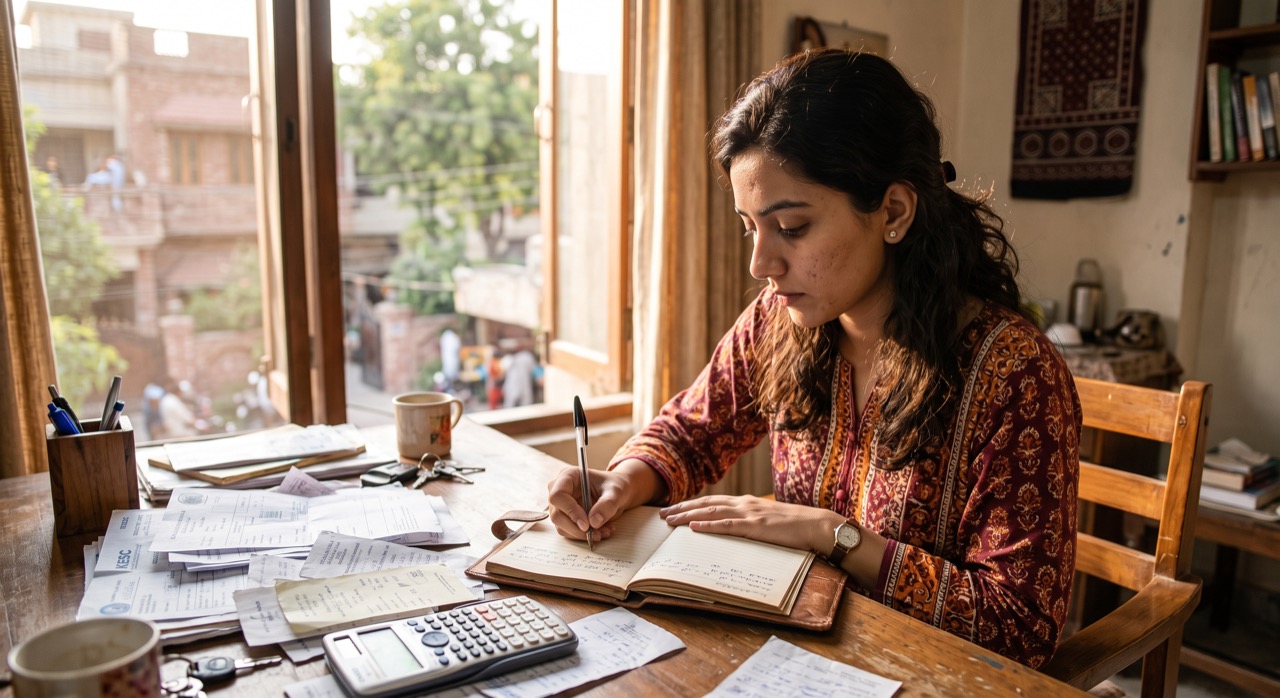
Most decluttering advice assumes you have a free Saturday, an empty house, and the energy to dump everything from your almirah onto the bed at once. For a real household in Lahore, Karachi, or Multan — with guests dropping by, kids underfoot, and a joint family sharing storage — that approach usually ends in a bigger mess than you started with, plus a room you can't use for two days. This is a gentler system: small, timed sessions, one space at a time, with sabr (patience) built into the method instead of fought against.
Start With 15 Minutes, Not the Whole House
The single biggest reason decluttering projects fail is scope. "I'll clean the whole house this weekend" is a plan designed to be abandoned by Sunday afternoon. Instead, set a timer for 15 minutes and pick one drawer, one shelf, or one corner of one room. When the timer ends, stop — even if you want to keep going. This does two things: it makes the task small enough that you'll actually start, and it proves to you that visible progress doesn't require a marathon.
- Pick a fixed time each day — after Fajr, after Asr, or right before Maghrib — so it becomes a habit, not a decision you re-negotiate daily.
- Work on only one zone per session: the top of the fridge, one kitchen drawer, the shoe rack by the door.
- Keep three boxes or bags nearby labelled Keep, Donate, and Bin — sorting is faster when you're not hunting for containers mid-task.
The Four-Question Filter
Decision fatigue, not laziness, is what stalls most people halfway through a drawer. Instead of staring at an object and feeling guilty, run it through four quick questions:
- Have I used this in the last year (across all four seasons)?
- Would I buy this again today at today's price?
- Does it still work, or is it broken beyond a quick, cheap fix?
- Am I keeping it out of obligation — a gift, an inheritance, guilt — rather than genuine use?
If an item fails two or more of these, it goes in the Donate or Bin box without further debate. This filter works especially well for the things that pile up fastest in Pakistani homes: old dupattas, mismatched Tupperware lids, expired dawai in the medicine box, and electronics chargers for phones nobody owns anymore.
Room-by-Room Order That Actually Works
Don't start with the hardest room — you'll burn out before you build momentum. A practical sequence:
- Bathroom cabinet — fastest wins, low emotional attachment, clears in one sitting.
- Kitchen drawers and pantry — check expiry dates on masalas and check for duplicate utensils.
- Entryway and shoe rack — high traffic, so a tidy entrance changes how the whole house feels.
- Bedroom almirah — save for last; clothes carry the most emotional weight and take longest to sort.
- Storage room or store — often the biggest job, so break it into multiple 15-minute sessions across a week rather than one long push.
Keep What Leaves the House
A Donate box that sits in the corner for three months isn't decluttering — it's just relocated clutter. Bag donations immediately and drop them the same week at a trusted local outlet, an Edhi centre, or a mosque collection point. For usable furniture or appliances, ask in your building or mohalla WhatsApp group before assuming no one wants it — someone often does. For anything genuinely broken, bin it the same day rather than storing it "just in case."
Sabr in decluttering isn't about tolerating the mess longer — it's about accepting that a calm home is built in small, steady sessions, not in one exhausting burst.
A clutter-free home isn't a one-time event; it's a light, repeatable habit. Fifteen minutes a day, one shelf at a time, and within a month most homes see a visible difference without a single exhausting weekend lost to it.
Roman Urdu
Ghar ko declutter karne ke liye poore weekend ki zaroorat nahi. Yeh tareeqa asaan aur sabr-friendly hai — roz sirf 15 minute ka waqt lagayein, aik waqt mein sirf aik jaga (aik drawer, aik shelf) par kaam karein. Timer lagayein, jab khatam ho jaye to ruk jayein — chahe dil kare ke aur karein. Isse kaam chhota lagta hai aur aap rozana shuru kar sakte hain.
Har cheez ko check karne ke liye char sawal poochein: kya yeh cheez pichle saal mein istemal hui? Kya main aaj isko dobara khareedta/khareedti? Kya yeh theek kaam karti hai? Kya main isko sirf isliye rakh raha/rahi hoon kyunke kisi ne diya tha, na ke zaroorat ki wajah se? Agar jawab do ya zyada baar "nahi" hai, to woh cheez Donate ya Bin box mein chali jaye — zyada sochne ki zaroorat nahi.
Ghar ke kamron ka tarteeb yeh honi chahiye: pehle bathroom cabinet (sabse asaan), phir kitchen ke drawers aur masalon ki expiry check karein, phir darwaze ke paas joote wali rack, uske baad bedroom ka almirah (kyunke kapron se emotional lagaav hota hai, isliye ise aakhir mein rakhein), aur sabse aakhir mein store room — isko bhi kai chhote sessions mein baante.
Jo cheezein Donate box mein rakhein, unhein ghar mein mahino tak na rakhein — usi hafte kisi bharosemand jagah, Edhi centre ya masjid collection point par de dein. Furniture ya appliances ke liye apni building ya mohalla ke WhatsApp group mein pooch lein, shayad kisi ko zaroorat ho. Jo cheez tooti hui hai aur kaam ki nahi, usay "shayad kabhi kaam aaye" soch kar mat rakhein — usi din bin kar dein.
Sabr ka matlab yeh nahi ke bikhre hue ghar ko zyada dair tak bardasht karein — sabr ka matlab hai ke aap chhote, mustaqil qadmon se aik pursukoon ghar banayein, aik hi thakane wale din mein nahi.
Saaf-sutra ghar koi aik dafa ka kaam nahi, yeh aik halki, dohrayi jaane wali aadat hai. Roz 15 minute, aik waqt mein aik shelf — aur aik mahine mein aap apne ghar mein farq mehsoos karenge, bina kisi thakane wale weekend ke.