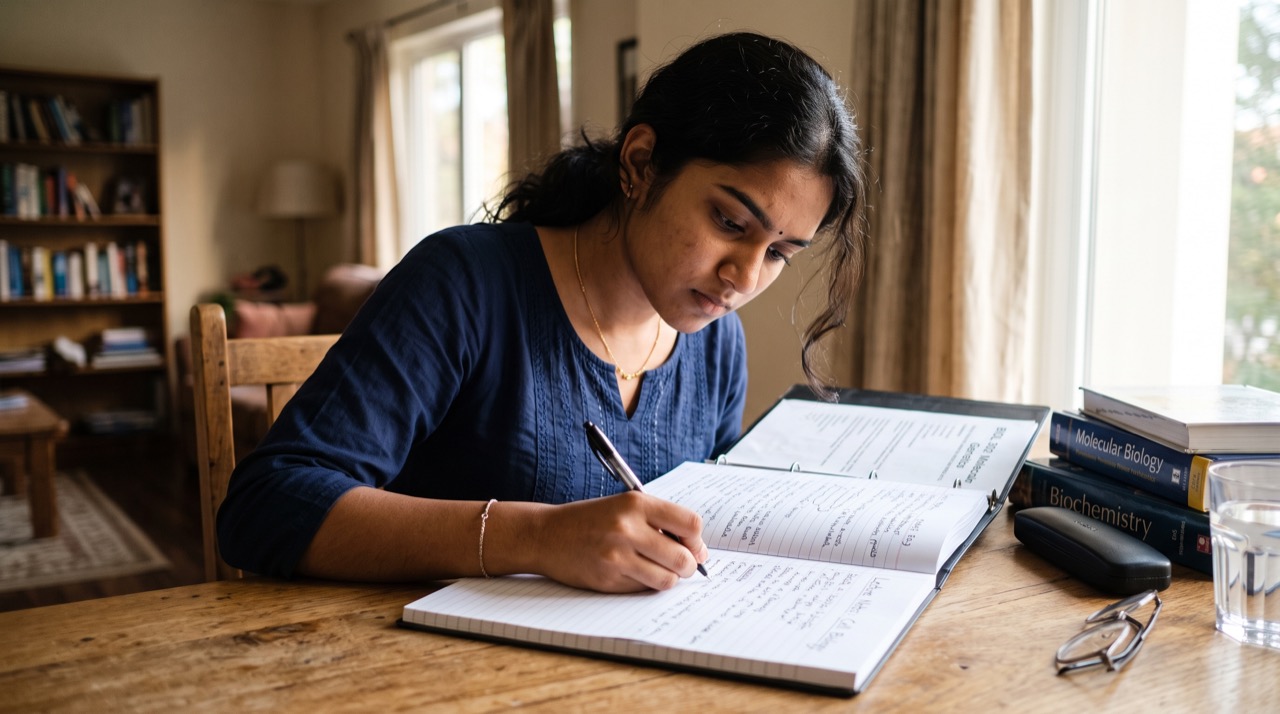
Exam season in Pakistan has a rhythm of its own — board exam notices pinned up weeks in advance, university mid-terms colliding with Ramzan or wedding season, and a phone that buzzes every three minutes with a new group chat message. Procrastination rarely happens because a student is lazy; it happens because there's no system telling them exactly what to do in the next 25 minutes. This guide builds that system: a realistic time-blocking method plus focus techniques that hold up under real exam-season pressure, not just in theory.
Why Procrastination Hits Harder During Exam Season
The closer an exam gets, the bigger the syllabus feels, and the brain's natural response to an overwhelming task is avoidance — scrolling, tidying the room, "just one more video." This is a well-documented pattern, not a character flaw. The fix isn't willpower; it's shrinking the task until it stops feeling overwhelming.
- Break every subject into chapters, then into 25-40 minute sub-topics you can finish in one sitting.
- Never write "study Chemistry" on your plan — write "solve 15 numericals from Chapter 4."
- Keep a visible countdown to the exam date so urgency is calibrated, not vague.
Time-Blocking: Build a Realistic Study Timetable
Time-blocking means assigning a fixed block of time to one specific task instead of keeping an open-ended to-do list. It works better than a general timetable because it forces you to decide, in advance, exactly what you'll be doing at 6pm on Tuesday.
- Plan the night before, not the morning of. A five-minute planning session before bed removes the "what should I study first" decision fatigue in the morning.
- Use your natural energy peaks. Many students focus best right after Fajr or late at night once the house is quiet — block your hardest subject (usually Maths or Physics) into that window, and save lighter revision for low-energy hours.
- Block buffer time. Load-shedding, sudden guests, or a cousin's phone call are normal here — leave 15-20 minute gaps between blocks so one disruption doesn't wreck the whole day.
- Colour-code by subject on a paper planner or phone calendar so a glance at the day shows balance across subjects, not three days of only one topic.
Focus Techniques That Actually Work
Once the block is set, protecting it from distraction is the real battle.
- The Pomodoro Technique: study in focused 25-minute sprints with a 5-minute break, and a longer 15-20 minute break after four sprints. It works because the timer, not motivation, decides when to stop.
- Phone in another room, not just on silent. Silent mode still lets you see notifications; physical distance removes the temptation entirely.
- The two-minute rule: if starting feels impossible, commit to just two minutes of the task. Momentum usually carries you past the resistance point.
- Single-tab, single-subject rule: close every browser tab and app not needed for the current block — multitasking between subjects lowers retention for both.
You don't need more motivation to beat procrastination — you need a smaller next step and a timer that starts before your brain can argue with you.
Handling Distractions and Burnout
A system that burns you out by week two is not a system worth keeping.
- Fix a hard stop each night — even 90 minutes before board exams, sleep protects memory consolidation more than one extra revision round.
- Group study only works for discussion and doubt-clearing; do first-pass reading and practice questions alone, then meet to compare notes.
- Review your week every Sunday: which blocks you actually completed versus planned, and adjust next week's timetable instead of guilt-tripping yourself.
Roman Urdu
Exam season mein procrastination isliye nahi hoti keh student susth hai — asal wajah yeh hoti hai keh agle 25 minute mein kya karna hai, yeh clear nahi hota. Jab syllabus bohot bara lagta hai to dimaagh apne aap avoid karne lagta hai — phone scroll, kamra saaf karna, "bas ek aur video." Iska hal willpower nahi, task ko chhota karna hai.
Time-blocking istemal karein: har subject ko chapters mein, phir 25-40 minute ke sub-topics mein baant dein jo ek hi sitting mein khatam ho sakein. Planner mein "Chemistry parhni hai" mat likhein — likhein "Chapter 4 ke 15 numericals solve karne hain." Raat ko so ne se pehle agle din ka plan bana lein taake subah decision fatigue na ho. Apni energy ke mutabiq subjects rakhein — agar Fajr ke baad ya raat ko ghar khamosh hone par zyada focus hota hai, to wahan sabse mushkil subject (Maths ya Physics) rakh dein. Load-shedding ya achanak mehman aane jaisi cheezein normal hain, isliye har block ke darmiyan 15-20 minute ka buffer zaroor rakhein.
Focus ke liye: Pomodoro Technique try karein — 25 minute focus, 5 minute break, aur har chaar sprints ke baad lamba break. Phone ko silent karne ke bajaye doosre kamre mein rakh dein, kyunke doori waqai mein temptation khatam kar deti hai. Agar shuru karna mushkil lage to sirf do minute ka wada karein — usually momentum khud aage le jata hai. Ek waqt mein sirf ek subject aur ek tab khula rakhein, multitasking dono subjects ki yaadasht kamzor karti hai.
Procrastination khatam karne ke liye zyada motivation nahi chahiye — chhota agla step aur ek timer chahiye jo dimaagh ke bahane sunay bagair shuru ho jaye.
Har raat ek hard stop fix karein — neend memory ko pakka karti hai, khaaskar board exams se pehle. Group study sirf discussion ke liye rakhein, pehli dafa parhna aur practice akele karein. Har Sunday apna hafta review karein: kaunse blocks mukammal huay, kaunse nahi — aur agle hafte ka plan usi hisaab se banayein, khud ko guilt mein daale bagair.