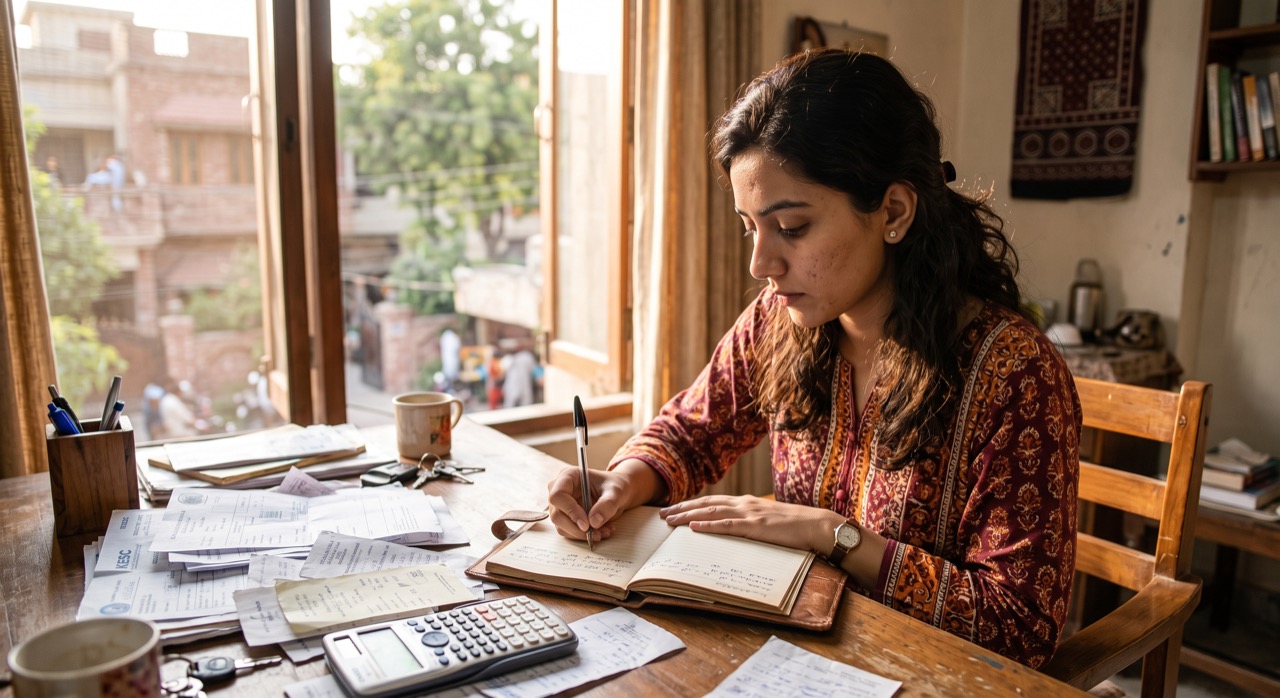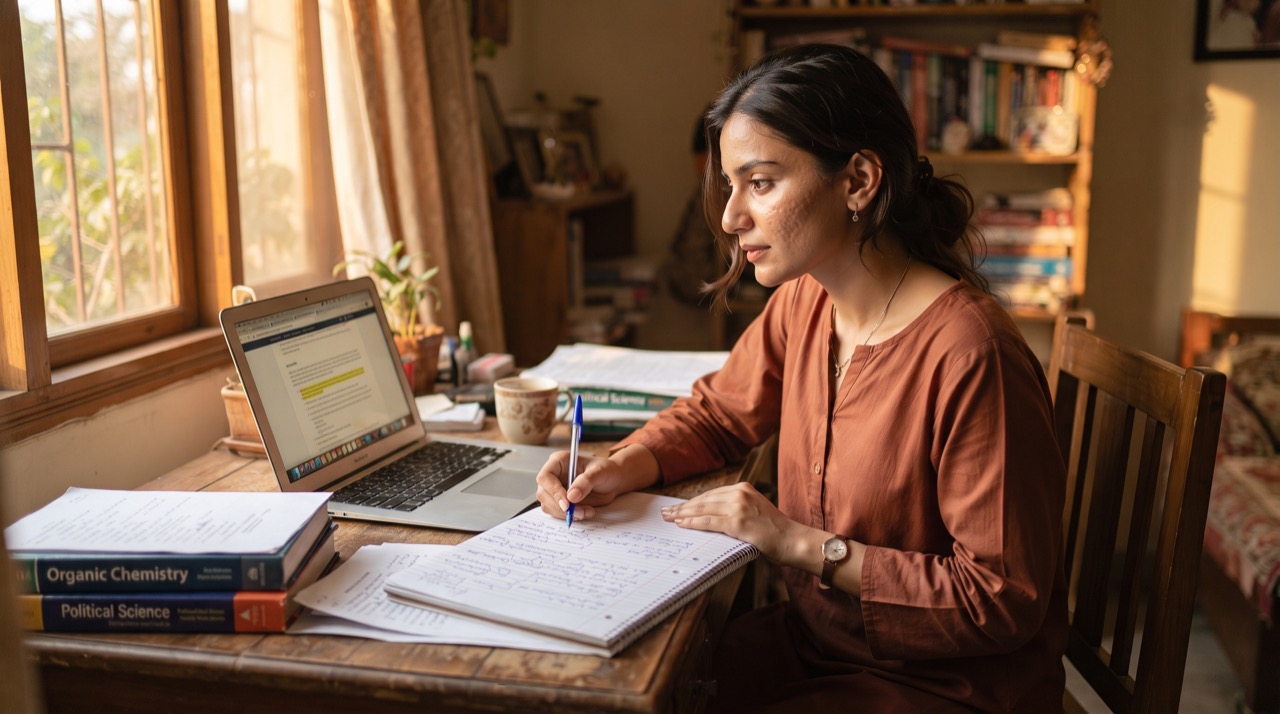
Every year, thousands of talented Pakistani students apply for scholarships like HEC, Fulbright, Chevening, Commonwealth, and university-specific awards — and most of them lose out not because they lack merit, but because their Statement of Purpose (SOP) reads like everyone else's. Committees read hundreds of letters that all say "I have been passionate about this field since childhood" and "your university is the best." A winning SOP does something different: it proves, with specifics, why you and this opportunity are a precise match. Here is a structure that actually works, along with what to avoid.
The Structure That Committees Actually Respond To
Think of your SOP as five connected parts, not a random collection of achievements. Each paragraph should answer a specific question the reader is silently asking.
- Opening hook (1 paragraph): Start with a specific moment, problem, or observation — not a dictionary-style definition of your field or a generic "since I was young" line. Answer: what pulled you toward this path?
- Academic and professional foundation (1-2 paragraphs): Show what you have already done — projects, research, internships, FYP, work experience — and connect each one to a skill or insight, not just a title. Answer: what have you built so far, and what did it teach you?
- Why this program, this university (1 paragraph): Name specific courses, labs, faculty, or research groups. Generic praise ("world-class faculty") is instantly forgettable. Answer: why this exact program and not any other?
- Future plan and impact (1 paragraph): Explain what you intend to do after graduating — ideally tied to a real problem in Pakistan or your community. Scholarship committees, especially government-funded ones like HEC or Fulbright, want to see a return on investment. Answer: what happens after this scholarship ends?
- Closing (2-3 sentences): Reaffirm your fit briefly and end with confidence, not a repeat of your opening line.
Show, Don't Tell — With Real Examples
Committees read fast. Vague claims get skimmed past; specific details get remembered.
- Weak: "I am a hardworking and passionate student who loves solving problems."
- Strong: "During my final-year project, I built a low-cost water-quality sensor for rural Sindh using an Arduino and a turbidity sensor, tested it across three villages, and reduced testing cost by 60% compared to lab sampling."
The second version proves the same qualities — dedication, initiative, technical skill — without ever naming them directly. This is the single biggest shift that separates a forgettable SOP from a memorable one: replace adjectives with evidence.
A good SOP doesn't tell the committee who you are — it lets them conclude it themselves from what you've done.
Common Mistakes That Sink Strong Applicants
- Copying templates line-for-line: Reviewers on committees like Fulbright or Chevening read thousands of essays a season and recognize recycled phrasing instantly.
- Restating your CV: The SOP should interpret your experiences, not list them again. If it's already on your transcript or resume, don't repeat it unless you're adding context.
- Being vague about goals: "I want to make a difference in my country" says nothing. Name the sector, the problem, and roughly how your specific field applies to it.
- Ignoring the word limit: Most scholarships specify 500, 800, or 1000 words for a reason — going over signals poor self-editing, and getting cut off mid-thought looks worse.
- Skipping proofreading by a second person: Grammar mistakes are forgivable in small numbers, but a senior teacher, mentor, or alumnus of the same scholarship can catch structural weaknesses you can't see in your own writing.
Before You Submit
- Read the scholarship's official eligibility and values page again — for example, check the specific program's mission statement on its official site (such as the Fulbright Foreign Student Program or the HEC site for Pakistan-administered awards) so your language mirrors what they actually prioritize.
- Cut every sentence that could apply to literally any other applicant.
- Read it aloud once — awkward phrasing usually reveals itself immediately.
- Confirm the exact word or character count required, and trim ruthlessly rather than padding.
Roman Urdu
Har saal Pakistan ke hazaron talib-e-ilm HEC, Fulbright, Chevening, ya university scholarships ke liye apply karte hain — aur zyada tar sirf is liye reject hote hain kyunke un ka Statement of Purpose (SOP) baaqi sab jaisa hi lagta hai. Committee walay sainkron letters parhte hain jin mein sab yehi likhte hain "mujhe bachpan se is field ka shauq tha." Jeetne wala SOP kuch alag karta hai — wo specific examples se sabit karta hai ke aap is opportunity ke liye sahi fit hain.
SOP Ka Structure
Apna SOP paanch hisson mein likhein: ek dilchasp opening jo koi specific waqia ya masla bayan kare; apni academic aur professional background jo skills ko project/internship se jorray; is exact program aur university ko kyun choose kiya (course, faculty, ya lab ka naam lein); graduation ke baad ka plan jo Pakistan ke kisi masle se juda ho; aur aakhir mein ek confident closing jo pehli line ko dobara na duhrai.
Specific Examples Ka Istemal Karein
Committee walay jaldi parhte hain — is liye vague dawon ki jagah concrete details dein. "Mujhe mehnati aur passionate student hoon" kehne ki bajaye yeh likhein ke aap ne apne final-year project mein kya banaya, kitne logon tak pohnchaya, aur us se kitna faida hua. Numbers aur real results kisi bhi adjective se zyada asar rakhte hain.
Achha SOP committee ko yeh nahi batata ke aap kaun hain — wo unhein khud is nateeje tak pohnchne deta hai aapke kaam se.
Aam Ghaltiyan Jo Bachni Chahiye
- Kisi template ko copy karna — reviewers recycled language turant pehchan lete hain.
- Apna CV dobara likhna bina naye context ke.
- Vague goals likhna jaise "main apne mulk ke liye kuch karna chahta hoon" — sector aur masla specifically batayein.
- Word limit ignore karna — agar 800 words maange hain to strict rahein.
- Kisi senior ya mentor se proofread na karwana — dusri nazar structural ghaltiyan pakar sakti hai jo aap khud nahi dekh sakte.
Submit karne se pehle scholarship ki official website ek baar dobara parhein, har wo sentence hata dein jo kisi bhi aur applicant par bhi fit ho sakta ho, aur apna SOP zor se parh kar sunein — ajeeb lagne wale jumlay foran pata chal jate hain.