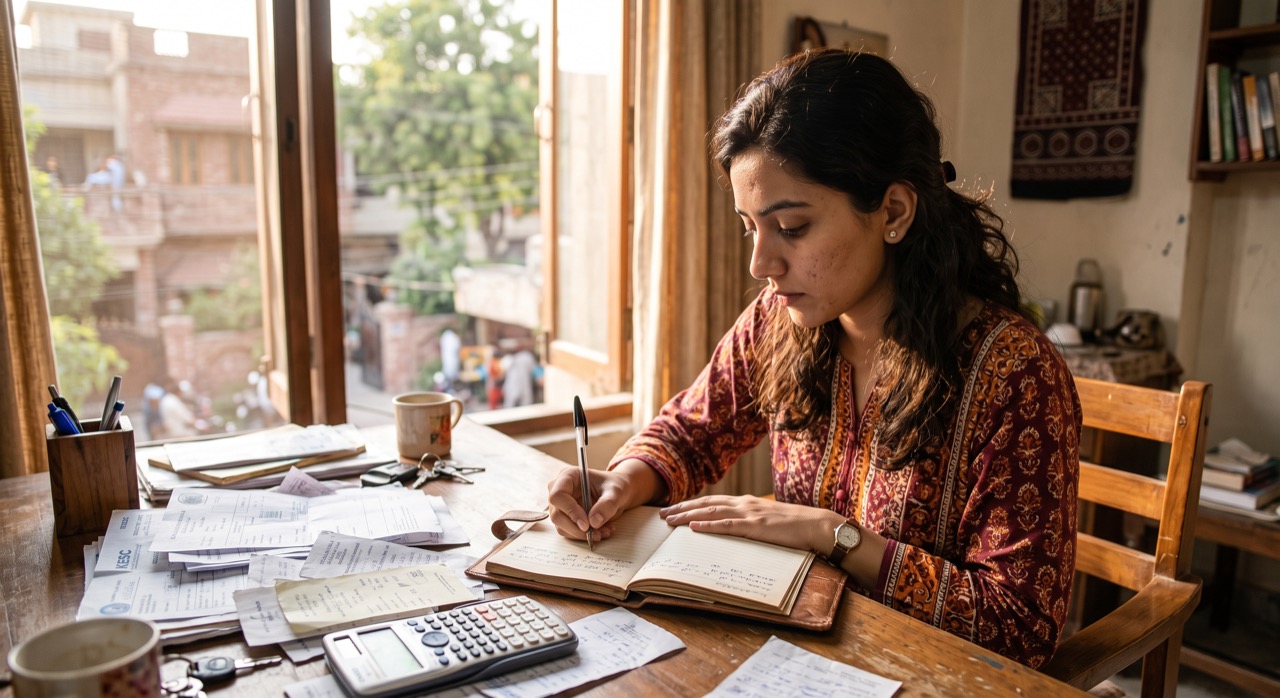
Every year, lakhs of Matric and Inter students make the same mistake: they build a beautiful, color-coded timetable on a Sunday night, follow it perfectly for two days, and then abandon it completely by Thursday. The problem is rarely laziness. The problem is that the timetable was never realistic in the first place. It assumed a version of you that doesn't get tired, doesn't have tuition, and doesn't need to eat dinner with the family. Here is a method that starts from your actual week, not an imaginary one, so it survives contact with real life.
Step 1: Map Your Real Week Before You Plan Anything
Before touching subjects, write down every fixed commitment you already have: school or college hours, tuition/academy timing, Fajr and other prayers, commute, sleep, and family time. Whatever hours are left over are your actual "study budget." Most board students genuinely have 3 to 4 focused hours on a school day and 6 to 7 on a weekend day — not the 10 hours their timetable pretends they have.
- List fixed blocks first (school, tuition, sleep, prayers, meals).
- Count the free hours that remain each day.
- Never plan more than 80% of your free hours — leave slack for fatigue, guests, or a slow day.
Step 2: Use Subject Rotation, Not Subject Blocks
The biggest planning mistake is dedicating an entire day to one subject ("Monday is Physics day"). It feels organized but actually causes two problems: you forget subjects you haven't touched in five days, and one hard chapter can wreck your whole day's plan. Instead, rotate 3 subjects per day in 45–60 minute sessions with 10–15 minute breaks between them (the classic Pomodoro-style rhythm works well for teenagers — you can read more about it from Todoist's guide to the Pomodoro Technique). Pair one difficult subject (Math, Physics, Chemistry) with one lighter one (English, Islamiyat, Pakistan Studies) each day so your brain gets genuine variety.
- 3 subjects/day, 2 sessions each, mixing one tough and one easier subject.
- Over a 6-day week, every subject gets touched at least twice — nothing goes cold.
- Reserve Sunday for past papers and weak-topic revision only, not new content.
A timetable that covers every subject lightly every week beats a timetable that covers one subject deeply once a month — board exams reward consistency, not intensity.
Step 3: Build the Weekly Template
Keep the template dead simple — a 7-row table (Mon–Sun) with 3 columns: Time Slot, Subject, and a small checkbox for "Done." Photocopy it or redraw it in a notebook every Sunday evening for the coming week. The physical act of rewriting it each week takes five minutes and forces you to review what got skipped and adjust — which is exactly what a printed, static timetable never lets you do.
- Weekday slot: 2 sessions × 50 minutes after Asr or after Maghrib, whichever suits your school timing.
- Weekend slot: 4 sessions across morning and afternoon, with a proper lunch break.
- Buffer slot: one unlabeled hour every week for whatever fell behind — this single line is why the plan won't collapse.
Common Mistakes That Kill a Timetable
- Starting with your weakest subject when you're mentally freshest is fine, but never stack two hard subjects back-to-back.
- Studying past 1 a.m. regularly — it wrecks the next day's entire schedule and memory retention drops sharply on poor sleep.
- Ignoring past papers until the last month; start solving Federal Board or provincial board past papers from your relevant FBISE or BISE board at least 8 weeks before exams so the format stops feeling unfamiliar.
- Copying a topper's timetable exactly — their fixed commitments, strengths, and stamina are not yours.
A realistic timetable isn't the one that looks most impressive on paper. It's the one you can still be following in week six.
Roman Urdu
Har saal Matric aur Inter ke students ek hi ghalti karte hain: Sunday raat ko ek bohat khubsurat timetable bana lete hain, do din follow karte hain, aur phir Thursday tak chhor dete hain. Wajah aalasi nahi hoti — wajah yeh hai ke timetable hi ghair-haqeeqi tha. Is liye pehle apna asal hafta dekhein, farzi nahi.
Step 1: Pehle Apna Real Week Likhein
Subjects pe aane se pehle likhein ke aap ke fixed commitments kya hain — school/college timing, tuition, namaz, so’na, aur ghar wala waqt. Jo hours bachte hain wahi aap ka "study budget" hai. Zyada tar students ke paas school wale din sirf 3-4 ghante hote hain, weekend pe 6-7. Kabhi bhi apne saare free hours plan na karein — hamesha 20% slack rakhein taake thakan ya mehman aane par plan na tootay.
Step 2: Subject Rotation Use Karein, Subject Blocks Nahi
Sab se badi ghalti hai poora din ek hi subject ko dena ("Monday sirf Physics"). Is se doosre subjects bhool jaate hain aur ek mushkil chapter poora din barbad kar sakta hai. Iski jagah roz 3 subjects rotate karein, 45-60 minute ke sessions mein, beech mein 10-15 minute ka break. Ek mushkil subject (Math, Physics, Chemistry) ko ek asaan subject (English, Islamiyat, Pak Studies) ke saath jorein taake dimagh fresh rahe. Poore hafte mein har subject kam az kam do martaba touch ho jaye.
Jo timetable har subject ko halka sa lekin har hafte cover kare, woh us timetable se behtar hai jo sirf ek subject ko mahine mein ek baar gehraayi se parhe — board exams consistency reward karte hain, intensity nahi.
Weekly Template Banayein
Template simple rakhein — 7 din, aur har din mein Time Slot, Subject, aur "Done" ka chota checkbox. Har Sunday shaam ko dobara likhein — sirf 5 minute lagte hain, aur is se pata chalta hai kya reh gaya. Ek buffer hour zaroor rakhein jo kisi bhi reh jaane wale kaam ke liye ho — yehi ek line poore plan ko tootne se bachati hai.
Aam Ghaltiyan Jo Timetable Kharab Karti Hain
- Do mushkil subjects ko saath mein na rakhein.
- Raat 1 baje ke baad regularly parhna neend aur agle din ke schedule ko barbad karta hai.
- Past papers ko last month tak chhorna galat hai — apne relevant board (jaise FBISE ya BISE) ke past papers kam az kam 8 hafte pehle solve karna shuru karein.
- Kisi topper ka timetable hoo-ba-hoo copy na karein — un ke commitments aur stamina aap se mukhtalif hain.
Behtareen timetable wohi hai jo chhati hafte tak bhi follow ho raha ho, sirf kagaz pe khubsurat na ho.