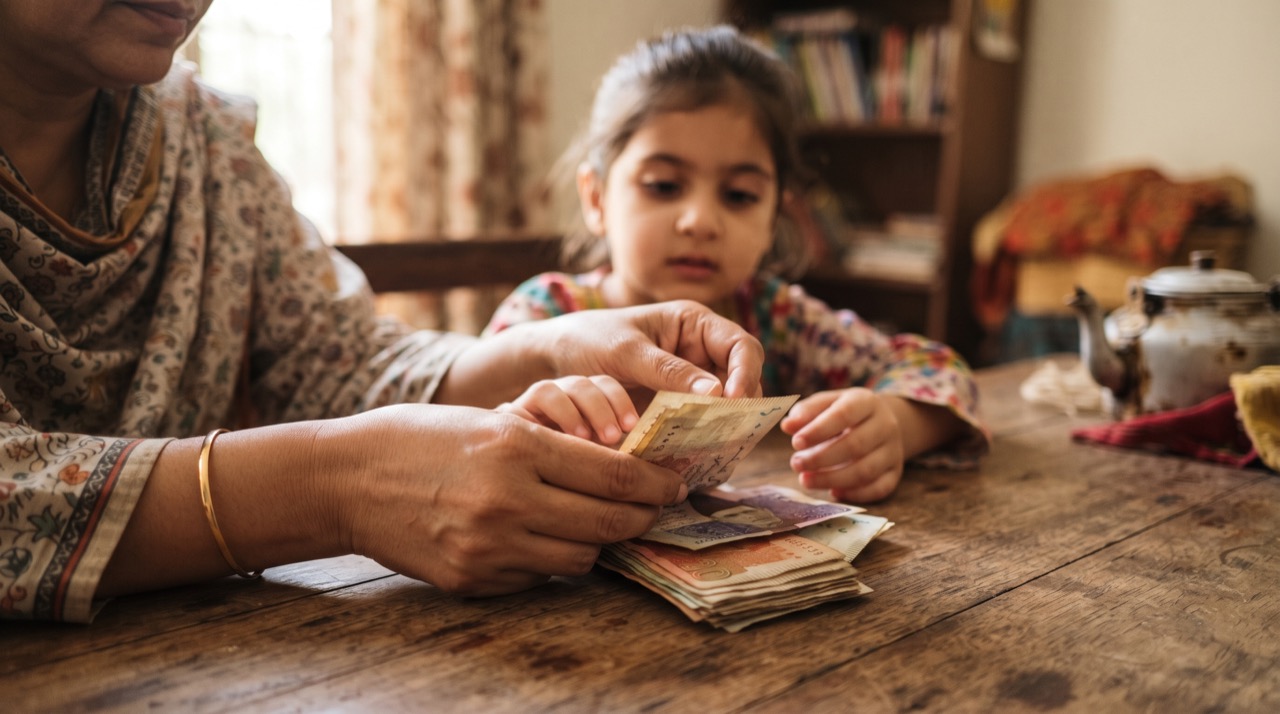
Most of us learned about money the hard way — by making mistakes as adults, with real consequences attached. Pakistani households rarely talk openly about budgeting, saving, or debt in front of children, yet kids absorb money habits from watching parents long before they earn a single rupee themselves. The good news is that financial literacy is a skill, not a talent, and it can be taught deliberately at every age. Here is a practical, age-appropriate roadmap for raising money-smart children.
Ages 4-7: Make Money Visible and Concrete
Young children cannot grasp abstract concepts like bank balances or inflation, but they understand physical objects extremely well. Use cash, not cards, at this stage so they can see money actually leave your hand.
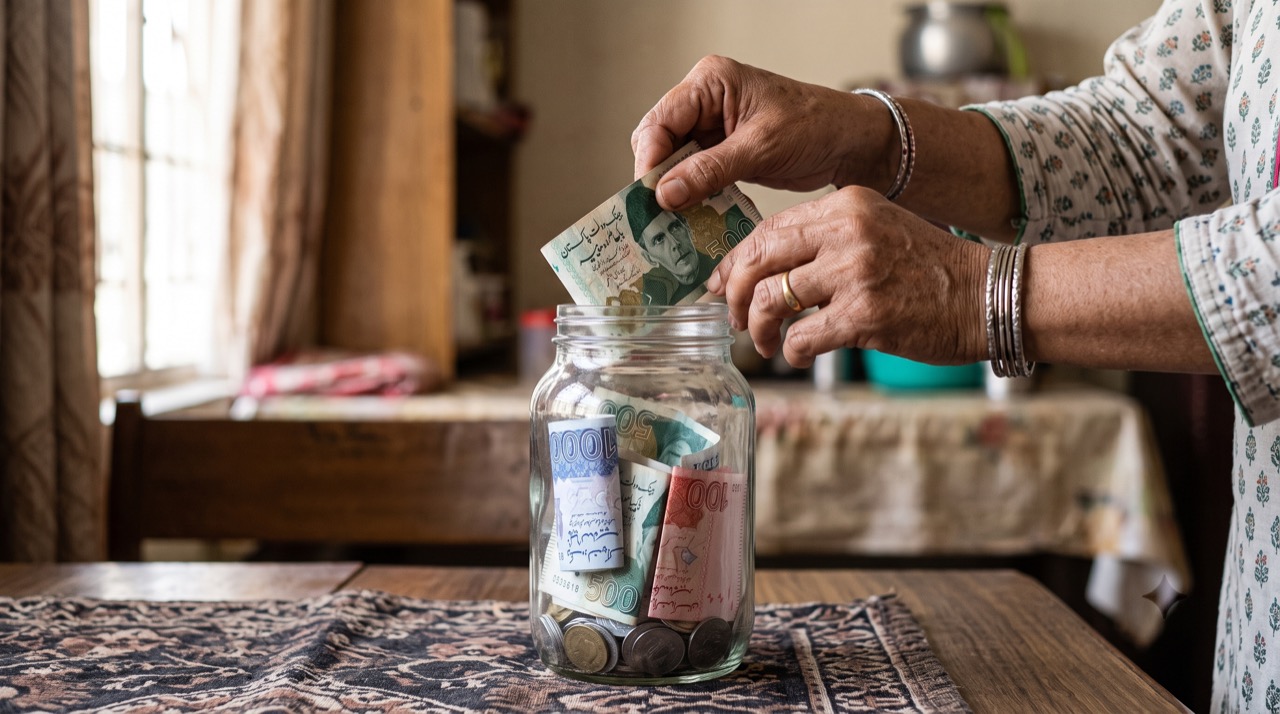
- Use three labelled jars: Save, Spend, and Give. Even a small weekly amount (Rs. 20-50) split across the three jars teaches the habit of division before the habit of saving alone.
- Let them pay at the counter. At the local kiryana store, hand your child the cash and let them give it to the shopkeeper and collect change. This builds real transaction comfort.
- Talk price out loud. "This packet of biscuits costs Rs. 100, and we have Rs. 500 for groceries today" turns an invisible budget into something a child can follow.
- Avoid instant replacement. If a toy breaks, resist buying a new one immediately — this is a child's first lesson in scarcity and patience.
Ages 8-12: Introduce Earning and Budgeting
This is the age to move from receiving money to earning it, and from spending freely to planning ahead.
- Pay for extra chores, not basic responsibilities. Making their own bed is a family duty; washing the car or helping organise a store room can carry a small reward. This distinction matters — children should not think every act of helpfulness has a price tag.
- Set a monthly, not weekly, allowance. A slightly longer cycle forces basic budgeting: if the whole amount is spent on the first day, there is nothing left for three more weeks. That lesson sticks far better than a lecture.
- Open a children's savings account. Several Pakistani banks — including HBL, Meezan Bank, and UBL — offer minor/youth savings accounts with low minimum balances. Taking your child to deposit their own Eidi is more memorable than any classroom lesson on interest or profit.
- Introduce simple goal-setting. Have them save toward one specific item (a football, a book, a game) rather than save "in general." A visible goal with a savings thermometer chart on the wall keeps motivation high.
Ages 13-17: Real Responsibility and Real Trade-offs
Teenagers are ready for genuine financial decisions with real stakes, ideally before they leave home for university or work.
- Give a "total budget" allowance. Instead of separate handouts for transport, food, and outings, give one lump sum and let them allocate it. Running short by mid-month because they overspent on outings is a far better teacher than any warning from a parent.
- Discuss Eidi, gifts, and part-time earnings as income, not windfalls. Encourage tutoring younger students, freelance graphic design, or helping in a family business — and talk about what portion goes to saving versus spending.
- Explain debt honestly. Walk through how credit cards, BNPL apps, and informal borrowing from friends actually work, including markup and the risk of default. Teenagers who understand debt mechanics before they have access to it make far fewer costly mistakes later.
- Introduce basic investing concepts. Even a simple explanation of how a State Bank of Pakistan-regulated savings certificate or a mutual fund grows money over time — versus cash sitting idle and losing value to inflation — sets up healthier habits than waiting until adulthood.
A child who has never held their own money, made their own budgeting mistake, and felt the consequence of an empty wallet will struggle to manage a full salary at twenty-five. The lesson has to be lived, not just heard.
Principles That Apply at Every Age
- Model the behaviour you want. Children copy how parents talk about money far more than what parents say about money. Avoid panicking about bills in front of them, but do not hide budgeting conversations entirely either.
- Normalise saying no. "We can't afford that right now" is a healthier, more honest sentence than deflecting with "maybe next time" when you mean no.
- Celebrate saving milestones, not just spending. A small acknowledgment when a savings goal is hit reinforces delayed gratification as a positive experience, not a sacrifice.
- Keep zakat and charity part of the conversation. The "Give" jar habit from early childhood should evolve into an understanding of zakat obligations and voluntary sadaqah as the child grows — money lessons and values lessons should never be separated in a Pakistani household.
Roman Urdu
Ziyada tar log paise ke baare mein seekhte hain jab bade ho kar khud ghalti karte hain — aur uska nuqsaan bhi bharte hain. Pakistani gharon mein bachon ke saamne budget ya bachat ki baat kam hi hoti hai, lekin bachay walidain ko dekh kar hi paise ke aadaat seekh lete hain, chahe unhe khud kabhi paisa na diya jaye. Achi baat yeh hai ke financial literacy koi khaas talent nahi, yeh sikhayi ja sakti hai — har age ke hisaab se.
4 se 7 saal: Is umar mein bachon ko cash haath mein dena zaroori hai, card nahi, kyunke unhe paisa "dekhna" aata hai, samajhna nahi. Teen jars rakhein — Bachat, Kharch, aur Sadaqah — aur har hafte thora paisa in teenon mein baant kar dein. Unhe dukaan par khud paisa dene dein aur baaqi wapis lene dein. Agar khilona toot jaye to foran naya na lein — yehi sabar ki pehli sabaq hai.
8 se 12 saal: Ab bachon ko kamana sikhayein, sirf lena nahi. Ghar ke bunyadi kaam (bistar theek karna) free hone chahiye, lekin extra kaam (gaari saaf karna) par thora reward dein. Hafta-wari ke bajaye monthly allowance dein — is se budget banana khud aata hai, kyunke agar pehle hi din sab paisa kharch ho gaya to baaqi teen hafte tang guzrenge. HBL, Meezan Bank, ya UBL jaise banks mein minor savings account khulwayein aur Eidi khud jama karwayein.
13 se 17 saal: Teenagers ko asli faislay karne dein. Poora mahine ka lump-sum allowance dein aur unhe khud allocate karne dein — agar galat kharch kar ke tang ho jayein, yeh best sabaq hai. Credit card, BNPL apps, aur udhaar ke bare mein khul kar baat karein, taake wo markup aur qarz ke nuqsaanat samajh sakein. Bachat certificates ya mutual funds ka basic concept bhi samjha dein, taake wo jaanein ke paisa idle rakhna inflation mein qeemat khota hai.
Har age mein ek baat yaad rakhein: bachay wahi seekhte hain jo dekhte hain, sirf jo suntay hain wo nahi. "Abhi hum yeh afford nahi kar sakte" kehna, jhooti tasalli dene se behtar hai. Aur bachat ke sath sath zakat aur sadaqah ki aadat bhi shuru se hi dalein — paisa aur qadrain kabhi alag nahi honi chahiye.