Supporting aging parents is a duty most of us accept without question — but duty without a plan is how good sons and daughters end up resentful, broke, or both. In Pakistan, where formal elder-care services are limited and the responsibility falls almost entirely on the family, the difference between "we manage" and "we're drowning" usually comes down to one thing: whether the costs are budgeted and shared on purpose, or absorbed silently by whoever feels guiltiest.
Work Out the Real Number First
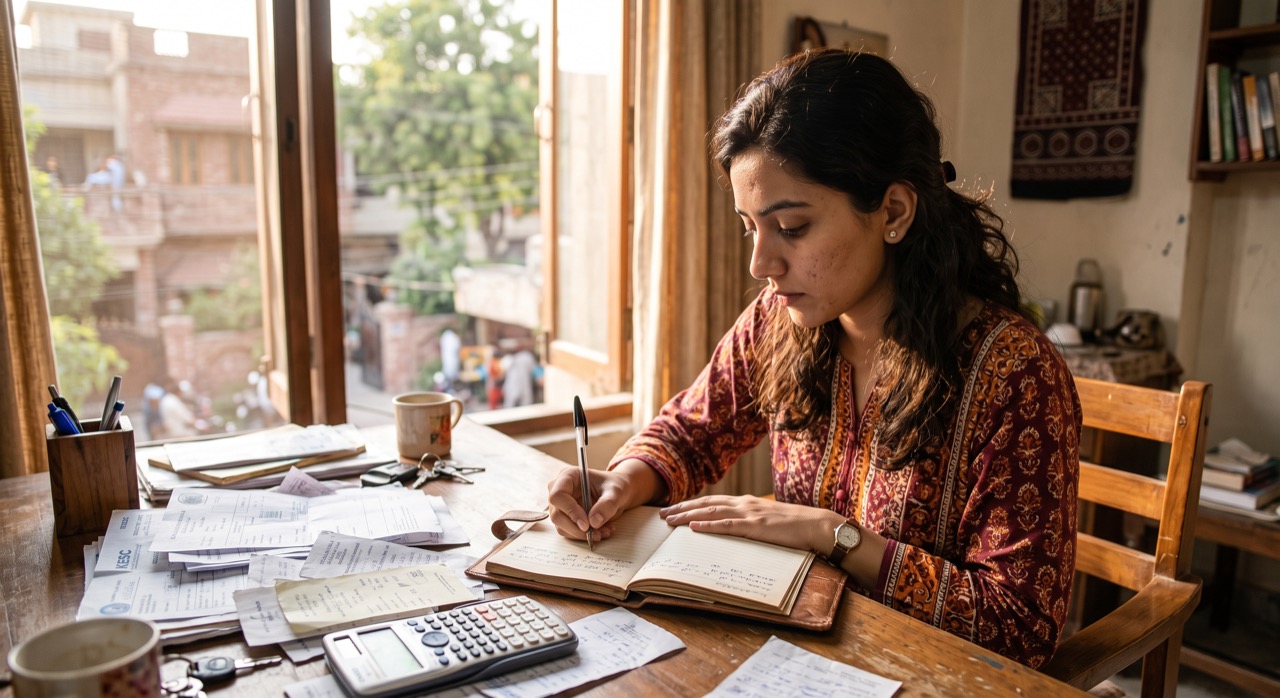
Before anyone can split costs fairly, someone has to write them down. Most families underestimate elder care because it arrives in small, recurring pieces rather than one big bill.
- Recurring costs: medicines, doctor visits, blood tests, a maid or attendant if mobility is an issue, and their share of household utilities if they live with a sibling.
- Irregular but predictable costs: hospital admissions, dental work, eyewear, and seasonal illness spikes (respiratory issues in winter smog season are common and expensive).
- The emergency bucket: a cardiac event or fracture can run into lakhs within days. This is the single biggest reason families go into debt over elder care, so it needs its own line item, not a "we'll figure it out" plan.
Add these up for one full year, not one month — costs like Eid clothes, a hearing aid, or a cataract surgery only show up occasionally but still need to be budgeted for.
Split Costs by Capacity, Not by Headcount
The most common source of sibling conflict is splitting costs equally when incomes aren't equal. A sibling earning three times as much as another should not be contributing the same rupee amount — it isn't fairness, it's arithmetic that ignores reality.
- Set contributions as a percentage of each sibling's income, agreed openly, and revisit it yearly as salaries change.
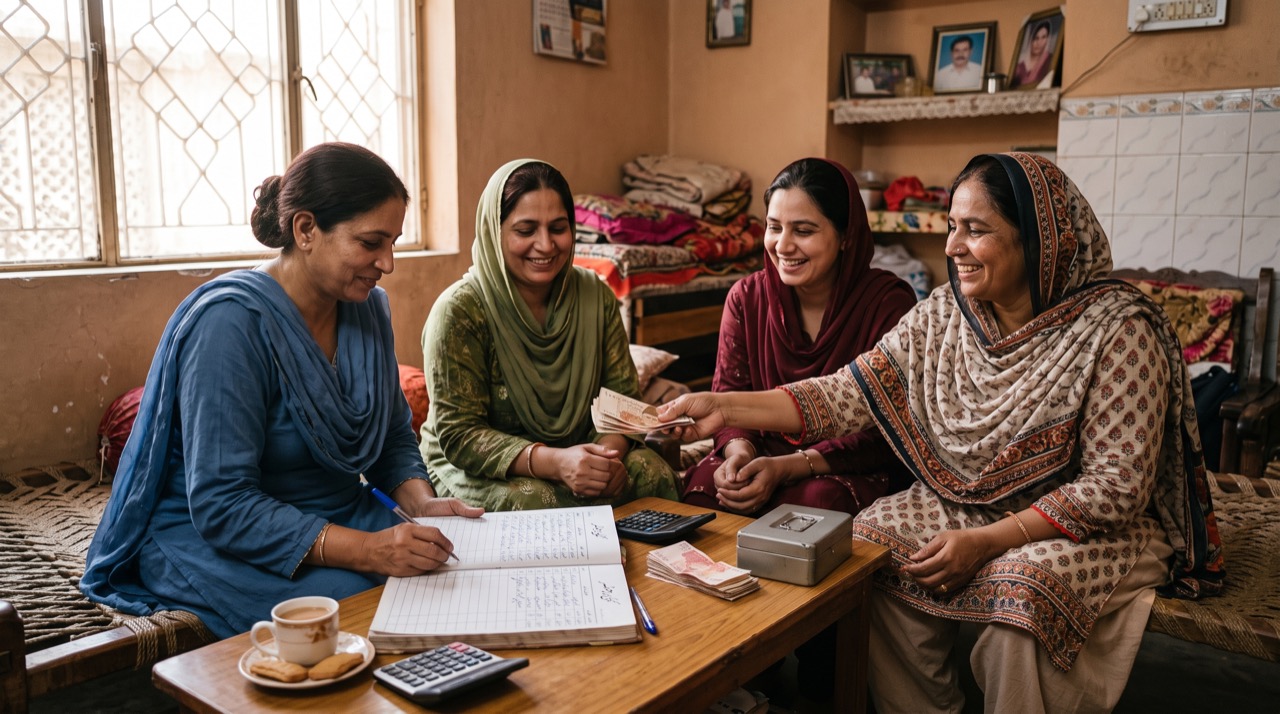
- Open one joint or dedicated bank account just for parents' expenses, with all siblings depositing on the same date each month. This ends the awkward cycle of "who paid the doctor last time."
- Keep a simple shared expense sheet (even a WhatsApp-pinned Excel or Google Sheet works) so every rupee spent is visible to everyone — transparency prevents the quiet resentment that builds when one sibling feels they're carrying more than their share.
- If a sibling lives abroad, they can still contribute their share directly and reliably. The State Bank's Roshan Digital Account lets overseas Pakistanis send money home without the delays and fees of informal channels.
- Non-financial contribution counts too — a sibling who lives with and physically cares for the parents is already paying in time and energy. Factor that into the money split; it is not free labor.
Protect Your Own Financial Future While You Give
It's easy to slide into paying for parents at the cost of your own retirement, your children's education, or your emergency fund — and years later become a financial burden on your own kids. That's not sacrifice, it's just delaying the same problem to the next generation.
- Set a hard cap on what you contribute monthly — a fixed percentage of income, not "whatever's left."
- Keep your own emergency fund separate from your parents' emergency fund. Mixing them means one crisis wipes out your safety net for both.
- Check whether your parents qualify for the government's Sehat Sahulat Program, which covers hospitalization costs for eligible families and can meaningfully cut the size of the emergency bucket you need to save privately.
- If affordable, a health takaful or insurance plan for parents — even a basic hospitalization cover — is usually cheaper over ten years than paying hospital bills in cash as they occur.
Reduce the Emotional Load, Not Just the Financial One
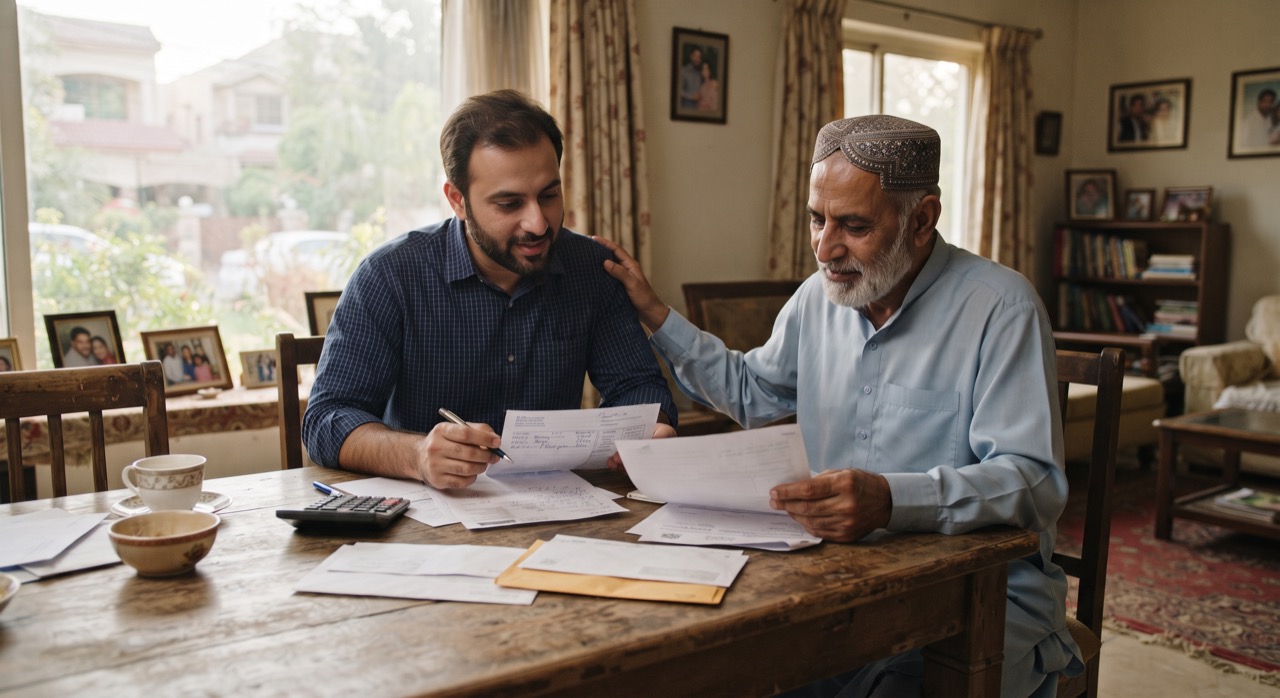
Burnout rarely comes from the money alone — it comes from being the only one who thinks about the money. Schedule a short family call every few months, just to review the shared expense sheet and re-confirm everyone's contribution. Rotate who handles doctor appointments and paperwork if more than one sibling lives nearby. And say plainly when you're stretched — Pakistani families often treat financial strain as something to hide out of pride, which only guarantees it gets worse before anyone helps.
Caring for your parents should come from love, not from silent guilt — a shared plan protects both.
Roman Urdu
Buzurg walidain ki financial madad karna hum sab ki zimmedari hai, lekin bina planning ke ye zimmedari bohat jaldi burnout mein badal jati hai. Pakistan mein chonke formal elder-care services bohat kam hain, is liye sara bojh family par aata hai — aur agar kharche likh kar plan na kiye jayein to ek bhai ya behen chup-chap sab kuch uthata reh jata hai.
Sab se pehle poore saal ke kharche likhein: dawaiyan, doctor ki appointments, ghar ka attendant ya maid, aur emergency fund jo hospital admission ya operation ke liye alag rakha jaye — kyunke yehi sabse zyada log qarz mein daalta hai.
Kharche barabar taqseem karne ki bajaye income ke hisaab se taqseem karein — jo zyada kamata hai wo zyada de, percentage tay kar lein aur har saal review karein. Ek alag joint account khol lein jahan sab bhai-behen mahana paisa jama karein, aur ek shared sheet rakhein taake sab ko pata ho kitna kharch hua. Jo bahar mulk mein hain wo Roshan Digital Account ke zariye apna hissa bhej sakte hain. Jo sibling walidain ke saath reh kar khayal rakhta hai, uska time aur mehnat bhi contribution mein ginein — ye sirf paise ki baat nahi.
Apni khud ki retirement aur emergency fund ko walidain ke kharchon se mix na karein — warna aage chal kar aap khud apne bachon par bojh ban sakte hain. Sehat Sahulat Program check karein ke walidain eligible hain ya nahi, is se hospital ka kharcha kam ho sakta hai. Aur sabse zaroori — har kuch mahine baad family mein baat karein, kharche review karein, aur agar koi tang ho raha hai to khul kar bataye. Khamoshi se sab kuch bardasht karna hi asal burnout ka sabab banta hai.