Most Pakistani families care for their elders at home rather than sending them to a facility, which means the daily habits we build around Ammi and Abu matter enormously. Growing older doesn't have to mean growing weaker. With the right mix of gentle movement, better food choices, and a few safety changes around the house, seniors can stay active, mentally sharp, and independent well into their 70s and 80s. This isn't about gyms or strict diets — it's about small, consistent habits that fit into a normal Pakistani household.
Why Gentle Movement Matters After 60
After 60, the body naturally loses muscle mass — a process called sarcopenia — at a rate of roughly 3-8% per decade if it isn't actively countered. This is what causes the slow shuffle, the difficulty standing up from a low sofa or the floor, and the fear of stairs that many elderly parents develop. The good news is that muscle loss is not inevitable. Regular, low-impact activity preserves strength, keeps joints (especially knees, which suffer from years of squatting for namaz and floor-sitting) mobile, and significantly lowers the risk of falls, which remain one of the leading causes of hospitalisation and loss of independence in older adults.
The biggest threat to an elderly parent's independence usually isn't a disease — it's a fall that could have been prevented with stronger legs, better balance, and a safer home.
A Simple Weekly Routine That Works
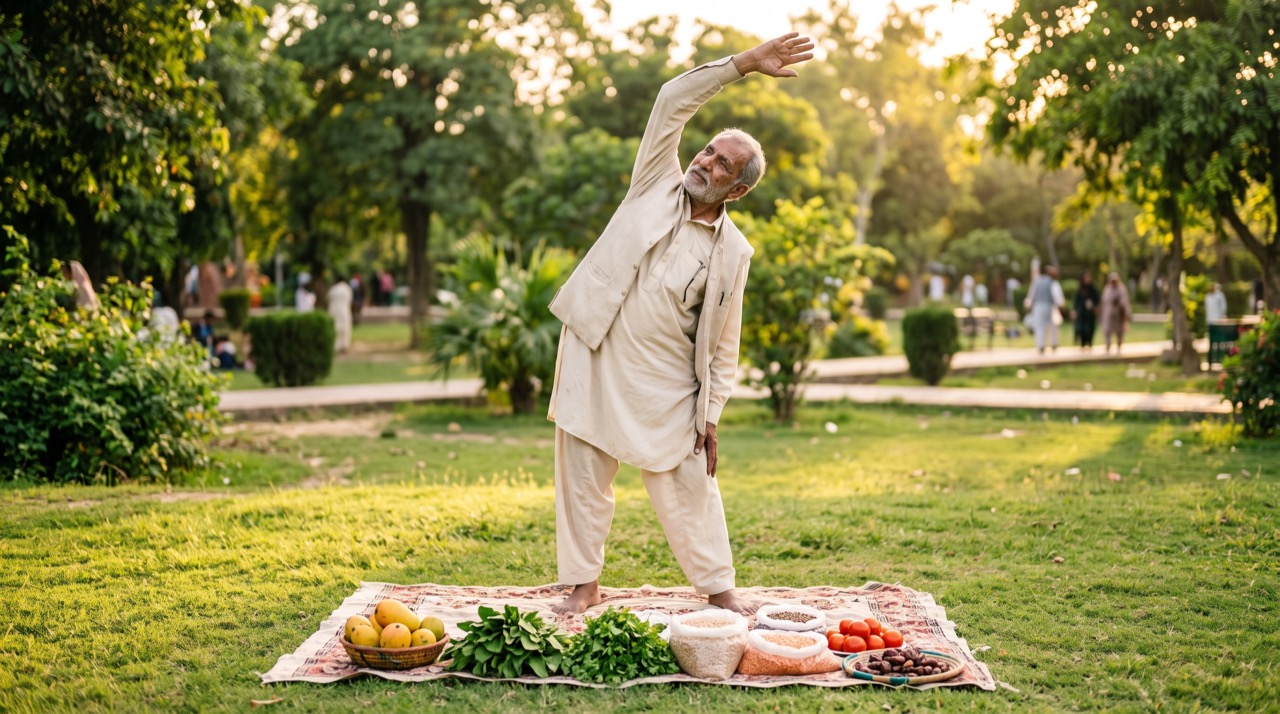
Seniors don't need intense workouts. A mix of walking, light strength work, and balance practice, spread across the week, is enough for most people — always adjusted to what their doctor allows, especially if they have heart disease, arthritis, or diabetes.
- Daily walk, 20-30 minutes: Early morning or after Maghrib, in a nearby park or a flat street, at a pace where they can still talk comfortably.
- Chair-based strength exercises, 2-3 times a week: Sit-to-stand from a firm chair, seated leg lifts, and wall push-ups build the exact muscles needed to get up from the floor or a low sofa safely.
- Balance practice, daily if possible: Standing on one foot near a wall for support, or heel-to-toe walking, cuts fall risk noticeably over a few months.
- Stretching after Fajr: Gentle neck, shoulder, and ankle stretches loosen joints that stiffen overnight, which many elders describe as "ghutno mein jakarhan" (stiffness in the knees).
- One full rest day is fine and often necessary — consistency matters more than intensity.
The World Health Organization's activity guidelines recommend at least 150 minutes of moderate movement a week for older adults, plus balance and strength exercises on 2 or more days — this weekly plan covers both comfortably.
Eating for Strength: Nutrition Priorities
As appetite naturally shrinks with age, every meal needs to work harder nutritionally. The goal is enough protein to protect muscle, enough calcium and vitamin D for bones, and enough fibre and water to keep digestion comfortable.
- Protein at every meal: Daal, eggs, dahi, milk, chicken, and fish like rohu or fresh seer are easy to chew and gentle on digestion. Aim for a palm-sized portion of protein at both main meals.
- Calcium and vitamin D for bone strength: A daily glass of milk, dahi, or lassi supports calcium intake, while 15-20 minutes of morning sunlight (easy in Pakistan's climate) helps the body make vitamin D naturally.
- Fibre from fruit and sabzi: Papaya, guava, karela, palak, and lauki help prevent the constipation that's common with reduced activity and certain medications.
- Less namkeen, fried food, and added salt: Many elders have borderline blood pressure without knowing it; swapping fried snacks for roasted chana or fruit, and going easy on the achar, makes a real difference over months.
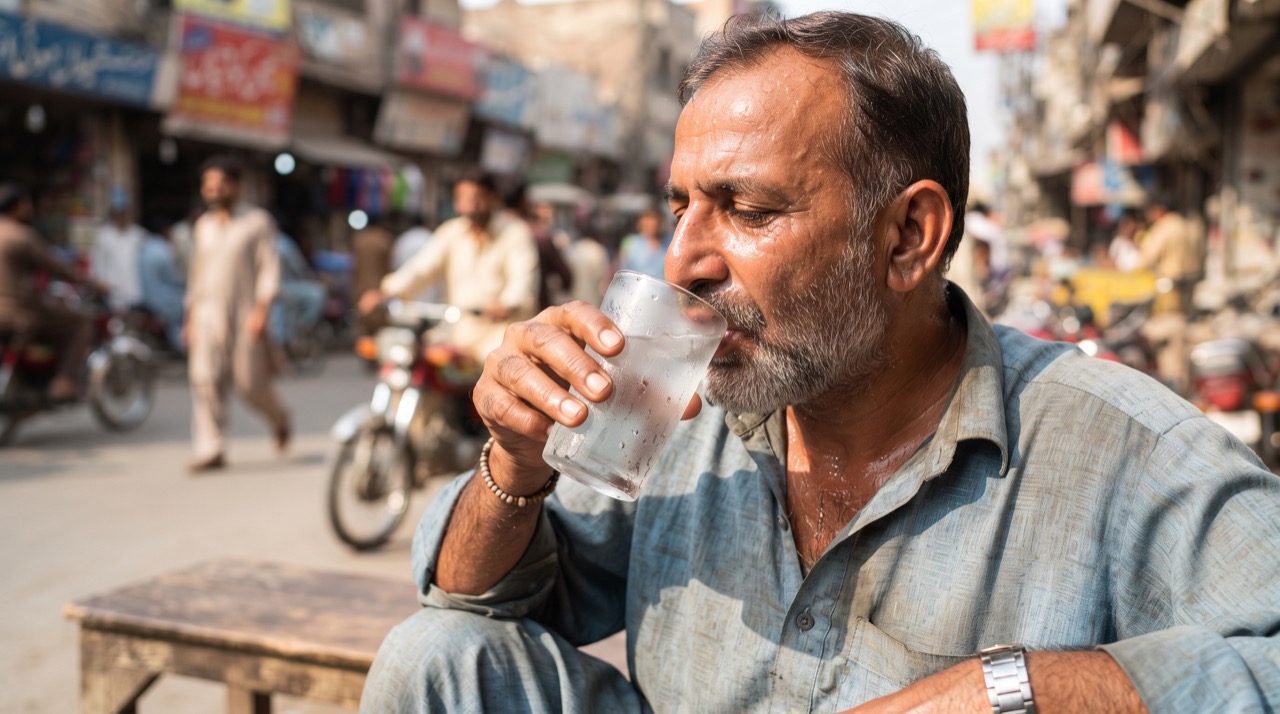
- Hydration: Thirst signals weaken with age, so elders often under-drink. Keep water, nimbu paani, or lassi within easy reach rather than relying on them to ask.
- Smaller, more frequent meals suit a smaller appetite better than three large ones, and help manage blood sugar for those with diabetes.
Small Home Changes That Prevent Falls
No amount of exercise fully protects against a slippery bathroom floor or a loose rug. A few practical fixes prevent most home falls.
- Install a grab rail near the toilet and in the wash area, especially near the wudu spot.
- Use non-slip mats in the bathroom and kitchen, and mop-dry floors immediately after washing.
- Keep a clear, well-lit path to the bathroom for night-time use, with a small night light.
- Remove loose electrical wires and thick rugs from walking paths.
- Choose a firm chair with armrests over low sofas or charpais that are hard to rise from.
Combined with regular movement and better meals, these changes go a long way toward letting elderly parents stay independent, confident, and active in their own homes for as long as possible.
Roman Urdu
Buzurgi mein kamzori aana zaroori nahi — agar hum apne walidain ki daily routine mein thori si activity aur behtar khana shamil kar dein to wo mazeed lambay arsay tak khud-mukhtar aur active reh saktay hain. 60 saal ke baad jism ki muscles kam hona shuru ho jati hain, isi wajah se uthna-baithna mushkil hota hai aur ghutno mein jakarhan mehsoos hoti hai. Lekin yeh process halki activity se kaafi had tak rok ya kam ki ja sakti hai.
Har roz 20-30 minute ki halki walk — subah ya Maghrib ke baad park mein — bohat faida deti hai. Hafte mein 2-3 martaba chair se uth-baith (sit-to-stand) jaisi halki exercises tang aur baazuon ki taqat barhati hain, jo floor ya sofe se uthne mein madad deti hain. Balance ke liye deewar ka sahara lekar ek taang par khare hona bhi girne ka khatra kam karta hai. Fajr ke baad gardan, kandhon aur takhno ki halki stretching bhi jakarhan mein kaafi araam deti hai.
Khane mein har meal mein protein zaroor shamil karein — daal, anda, dahi, doodh, chicken ya machli. Yeh muscles ko mazboot rakhte hain aur chabane mein bhi asaan hain. Haddiyon ki mazbooti ke liye doodh, dahi ya lassi aur subah ki dhoop (15-20 minute) bohat madadgar hai. Phal aur sabziyan — papita, amrood, karela, palak — qabz se bachate hain. Fried aur namkeen cheezon ko kam karein kyunke bohat se buzurgon ka blood pressure bina pata chale barha hota hai. Pani, nimbu paani ya lassi hath ke qareeb rakhein kyunke buzurgon ko pyaas ka ehsaas kam hota hai.
Ghar mein bhi chhoti tabdeeliyan bari madadgar hain — washroom mein grab rail lagwana, gilay floor ko foran khushk karna, raat ko raste mein halki roshni rakhna, aur oonchi armrest wali chair istemal karna girne ke khatray ko kaafi kam kar deta hai. Halki exercise, behtar khana aur ghar ki safety — teeno mil kar walidain ko lambay arsay tak mazboot, khud-mukhtar aur khush rakhte hain.