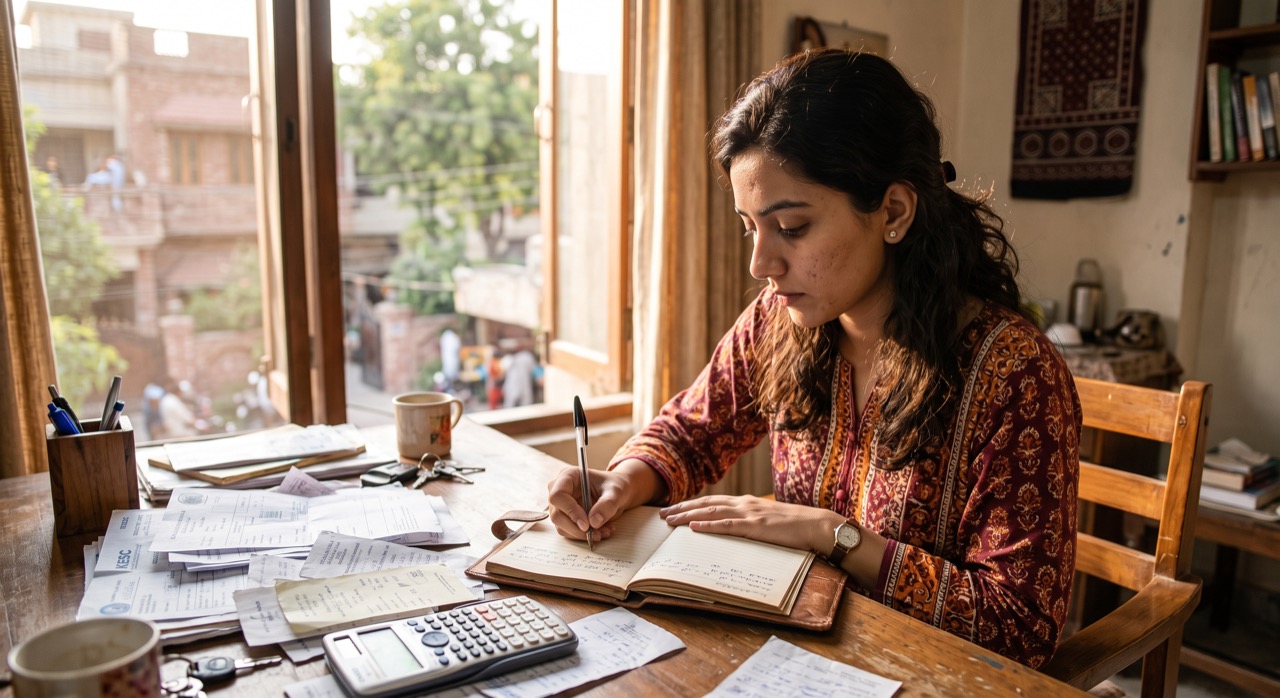
If your eyes feel gritty, tired, or burn by the end of the day, you are not imagining it. Between office laptops, university assignments, and hours of scrolling on the phone in the evening, most of us in Pakistan now spend 8 to 12 hours a day staring at screens. Add in dusty air, air-conditioned or heated rooms, and long power-cut hours spent glued to a phone for light and entertainment, and it is no surprise that dry, strained eyes have become a common complaint at clinics from Karachi to Islamabad. The good news is that digital eye strain is one of the most fixable health problems out there. None of the fixes below need expensive equipment — just a change in daily habits.
Why Screens Tire Your Eyes Out
When you focus on a screen, you blink far less often than normal — studies commonly cited by eye specialists suggest blink rate can drop by half or more during screen use, which means your eyes dry out faster than usual. On top of that, most people unconsciously hold phones too close, hunch toward laptop screens, and work in rooms with glare from windows or harsh tube lights. All of this together is called Computer Vision Syndrome or Digital Eye Strain, and it shows up as:
- Dry, itchy, or burning eyes
- Blurred vision that improves after looking away
- Headaches, especially around the temples or behind the eyes
- Neck and shoulder pain from poor screen posture
- Difficulty focusing at night after a full day of screen use
The 20-20-20 Rule
This is the single most recommended habit by eye doctors worldwide, including guidance echoed by the American Academy of Ophthalmology: every 20 minutes, look at something at least 20 feet (about 6 metres) away for at least 20 seconds. It sounds too simple to work, but it forces your eye muscles to relax from the fixed near-focus position and gives you a natural cue to blink fully a few times. Set a silent timer on your phone, or use a sticky note on your monitor as a reminder until it becomes automatic. Even doing this loosely — glancing out a window or across the room whenever you remember — is far better than nothing.
Daily Habits That Actually Help
- Blink on purpose. Every hour or so, do 10 slow, deliberate full blinks. This spreads tears evenly across the eye and clears away debris that builds up from Karachi or Lahore's dusty air.
- Follow the arm's-length rule. Keep laptop and desktop screens about an arm's length (50–70 cm) away, with the top of the screen at or slightly below eye level, so you look slightly downward rather than straining upward or hunching forward.
- Cut glare, not brightness to zero. Position your screen so windows and tube lights are not directly behind or in front of it. Use night mode or a warmer colour temperature after sunset, but keep screen brightness roughly matched to the room around you — a screen much brighter or dimmer than its surroundings tires the eyes faster.
- Mind the humidity. Air conditioners and gas heaters both dry out room air, which worsens dry eye. A small bowl of water near your desk or a humidifier can help in extreme weather.
- Use lubricating eye drops if needed. Preservative-free artificial tears (widely available at pharmacies as "lubricating eye drops") are safe for regular use and genuinely help if dryness persists despite better habits.
- Increase text size instead of leaning in. If you find yourself squinting or leaning toward your phone or laptop, zoom in the text rather than moving your face closer — leaning in is one of the biggest hidden causes of both eye strain and neck pain.
- Get outside briefly. Even 10–15 minutes of natural daylight, such as a short walk or sitting on a balcony, gives your eyes a genuine break from fixed near-focus and has been linked to lower rates of eye strain and myopia progression, particularly in students.
A useful mindset: your eyes were not designed to stare at one fixed distance for hours without a break — the 20-20-20 rule simply gives them back the natural rest that constant screen focus takes away.
When to See an Eye Doctor
Most screen-related eye strain responds well to the habits above within a week or two. But if you experience persistent blurred vision, eye pain, sensitivity to light, or symptoms that do not improve, it is worth getting a proper eye check-up rather than self-treating indefinitely. An outdated glasses prescription, uncorrected astigmatism, or an underlying dry eye condition can all mimic ordinary screen fatigue, and a qualified eye specialist (ophthalmologist or optometrist) can rule these out properly.
Roman Urdu
Agar din ke aakhir mein aankhein thaki hui, khushk ya jalti hui mehsoos hoti hain, to yeh koi ajeeb baat nahi. Ab hum mein se zyada tar log 8 se 12 ghante roz screen par guzarte hain — office ka laptop, university ka kaam, aur raat ko phone scrolling. Iske sath Pakistan ki dhool-mitti wali hawa aur AC ya heater ke kamre mile to aankhon ka khushk hona aur bhi aam ho jata hai. Lekin yeh masla asaani se theek ho sakta hai, bas kuch aadaton mein tabdeeli lani hogi.
Screen se aankhein kyun thakti hain: Jab hum screen dekhte hain to palkein jhapkane (blink) ki raftar kaafi kam ho jati hai, jis se aankhein khushk ho jati hain. Iske sath phone ko zyada qareeb rakhna, jhuk kar baithna, aur kamre ki roshni theek na hona bhi masla badhata hai. Iski alamaat hain: khushk ya jalti hui aankhein, dhundla nazar aana, sar dard, gardan aur kandhon mein dard.
20-20-20 Rule: Yeh sabse asaan aur mo'assir tareeqa hai. Har 20 minute baad, kam az kam 20 foot (taqreeban 6 metre) door kisi cheez ko 20 second tak dekhein. Isse aankhon ke muscles aaram karte hain aur khud-ba-khud pooray blink hote hain. Phone par khamosh timer laga lein ya monitor par sticky note chipka dein jab tak yeh aadat na ban jaye.
Roz ki aadatein jo waqai madad karti hain:
- Har ghante 10 baar jaan-boojh kar aahista blink karein
- Screen ko haath ki lambai (50-70 cm) door rakhein, top thora neechay eye-level par
- Glare kam karein, screen ki roshni kamre jaisi rakhein
- Zyada dry mausam mein kamre mein thori nami rakhein
- Zaroorat ho to lubricating eye drops (pharmacy se milti hain) istemal karein
- Jhuk kar dekhne ke bajaye text ko zoom kar lein
- Din mein 10-15 minute bahar dhoop mein waqt guzarein
Agar in aadaton ke bawajood dhundla pan, dard, ya roshni se takleef barqarar rahe, to kisi qabil aankhon ke doctor (ophthalmologist ya optometrist) se check-up zaroor karwayein, kyunke purani nazar ki aainak ya koi aur masla bhi yeh alamaat paida kar sakta hai.