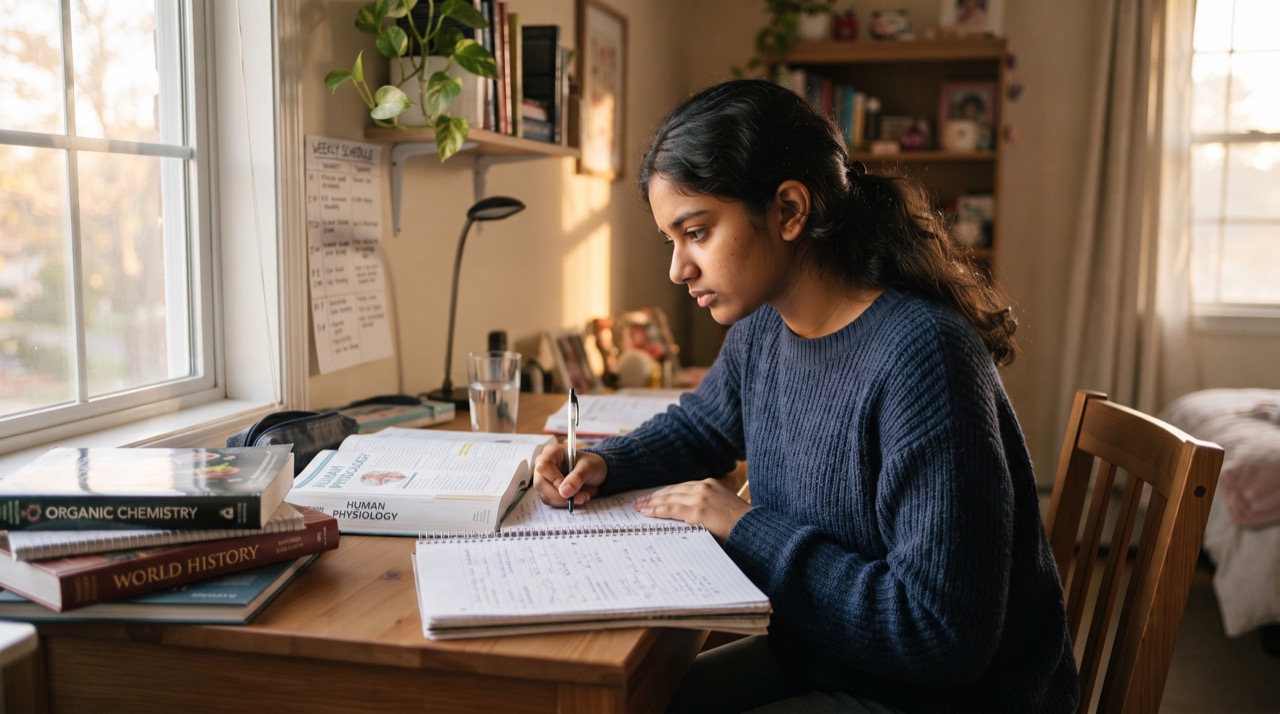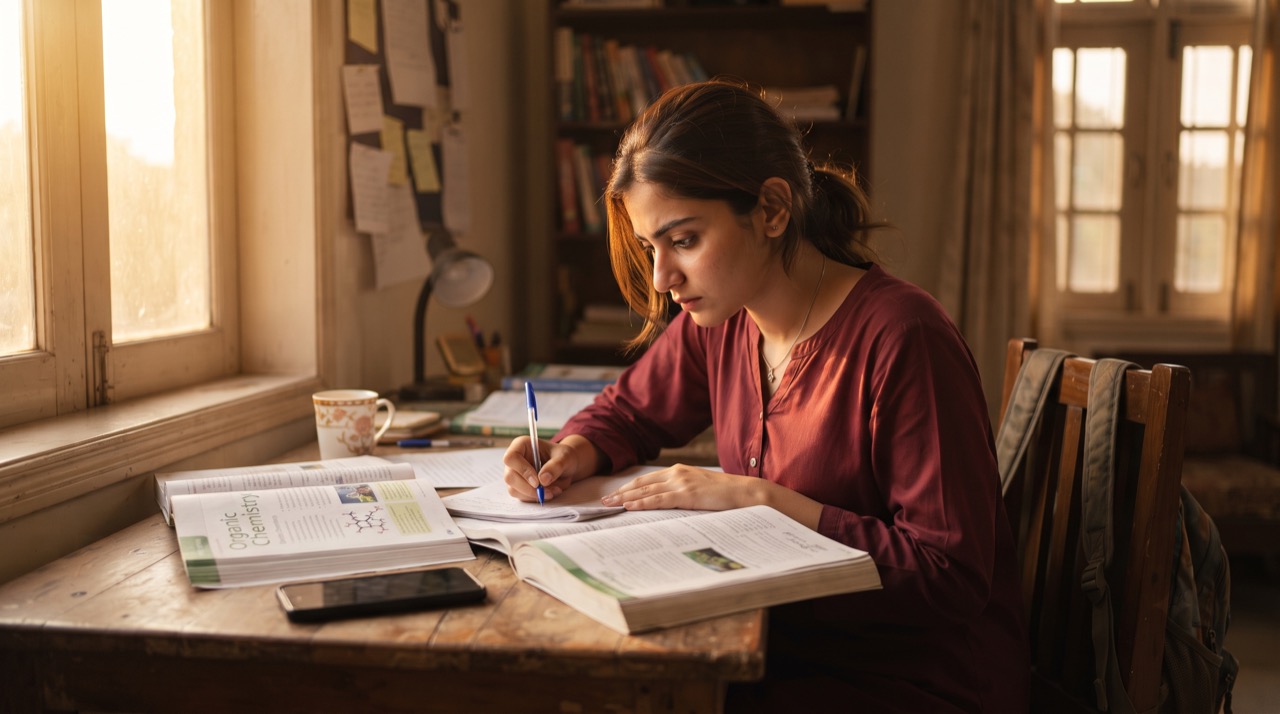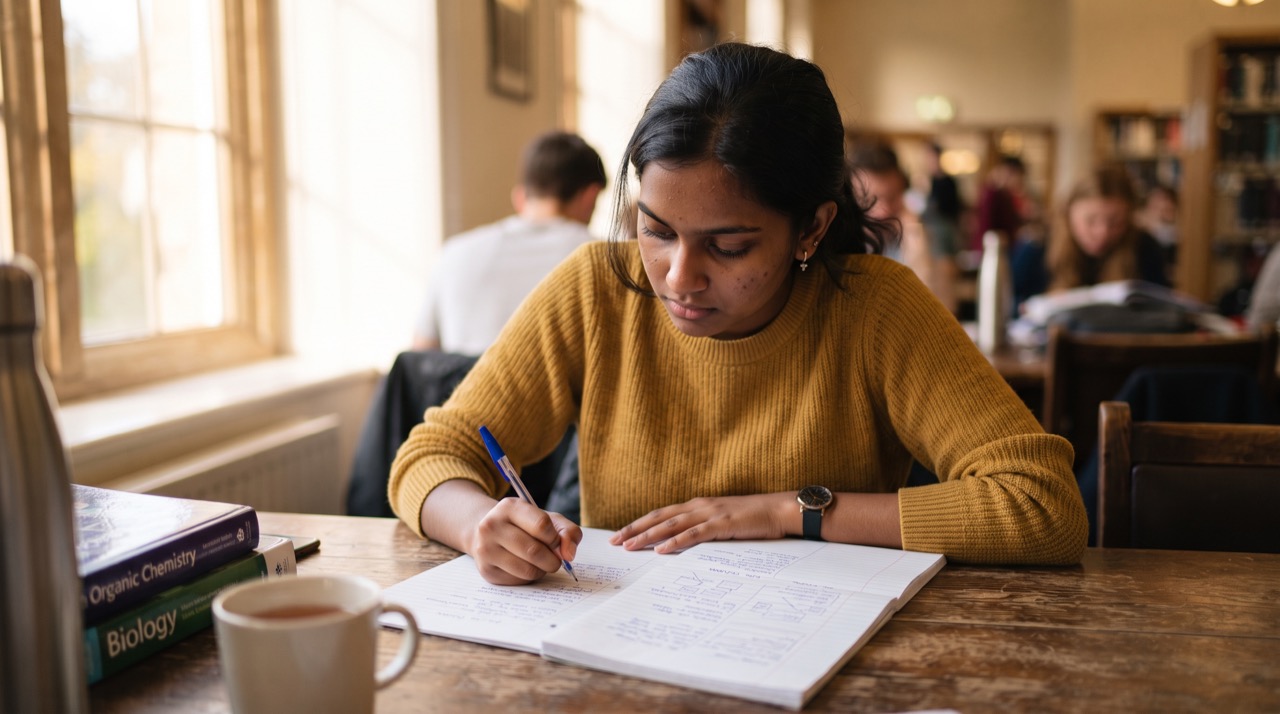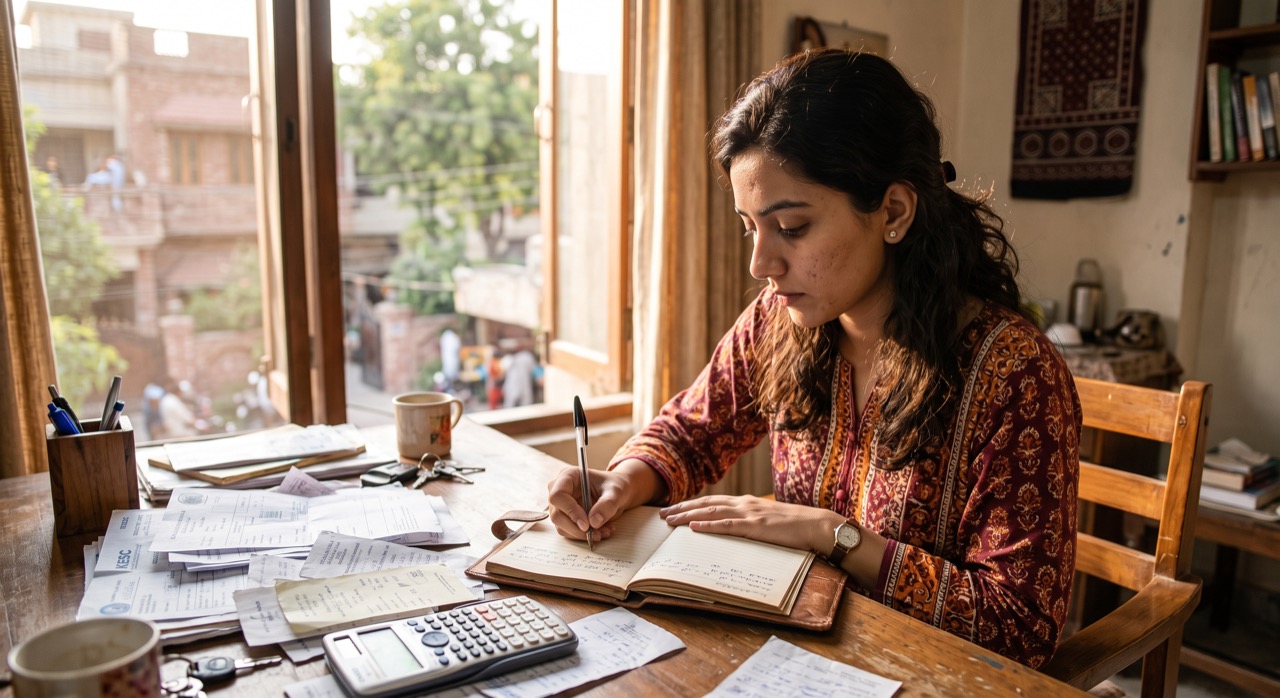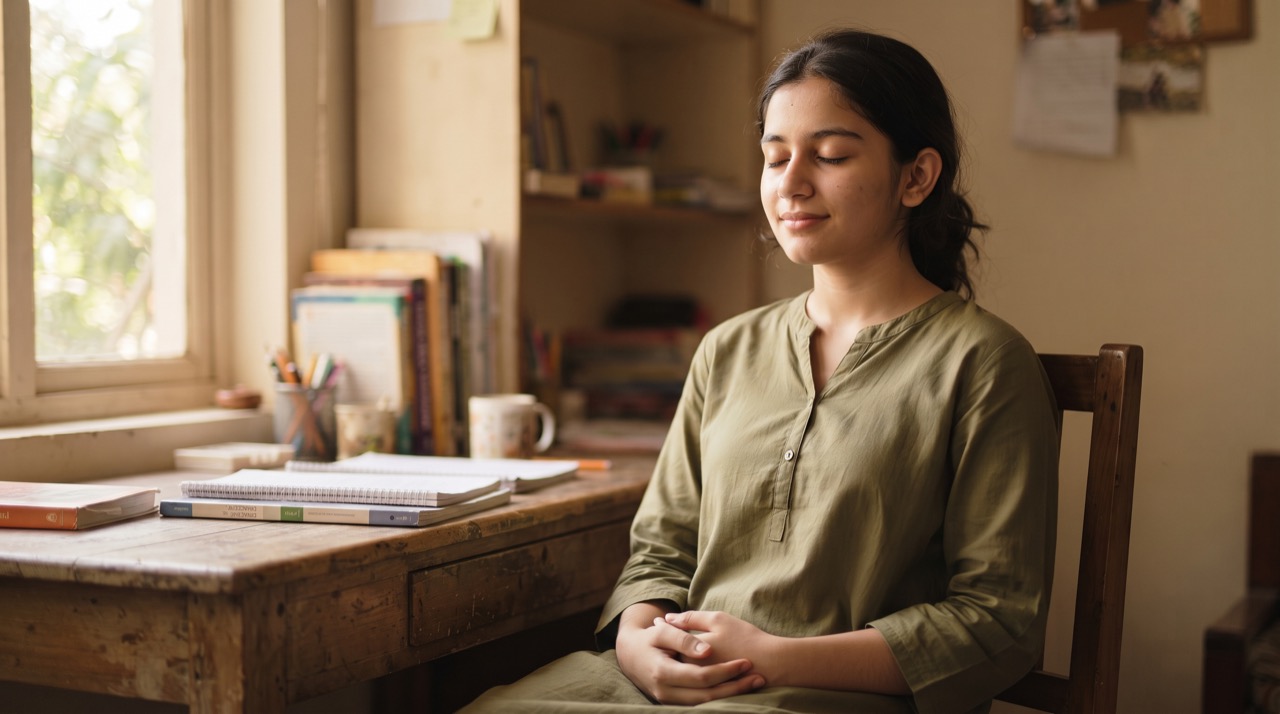
Every student in Pakistan knows the feeling: the exam hall goes quiet, the invigilator hands out the paper, and suddenly your mind goes blank even though you studied for weeks. Whether it is matric boards, FSc, entry tests like MDCAT and ECAT, or a university final, exam stress is one of the most common reasons capable students underperform. The good news is that anxiety before a test is not a character flaw or a sign you did not prepare enough — it is a physical response you can actually manage with a few concrete habits. Here is what genuinely works, backed by simple science, not vague motivational talk.
Understand What Is Actually Happening in Your Body
When you feel panic before an exam, your body is releasing adrenaline and cortisol, the same "fight or flight" chemicals that helped humans survive danger. Your heart races, your palms sweat, and your brain redirects blood flow away from the prefrontal cortex — the part responsible for memory recall and logical thinking — toward your muscles, preparing you to run. This is exactly why students who know the material can still forget it in the exam hall. The fix is not to "try harder to remember." The fix is to calm the nervous system first, so your brain can access what you already learned.
Breathing Techniques That Work in the Exam Hall
You cannot control when anxiety hits, but you can control your breath, and that is the fastest lever you have. Try these before you open the question paper, or even mid-exam if you freeze:
- Box breathing: Inhale for 4 seconds, hold for 4 seconds, exhale for 4 seconds, hold for 4 seconds. Repeat 4 times. This is used by athletes and even military personnel to reset the nervous system quickly.
- 4-7-8 breathing: Inhale through your nose for 4 seconds, hold for 7 seconds, exhale slowly through your mouth for 8 seconds. The long exhale is what signals your body to relax.
- Grounding with your senses: Silently name 5 things you can see, 4 things you can hear, 3 things you can touch, 2 things you can smell, and 1 thing you can taste. This pulls your mind out of panic and back into the present room.
- Cold water on your wrists: If you can step out before the exam, splashing cool water on your wrists and face genuinely lowers heart rate — it triggers what is called the mammalian dive reflex.
Sleep Is Not Optional — It Is Part of Studying
Many Pakistani students pull all-nighters before boards or entry tests, believing extra hours beat rest. This backfires. Memory consolidation — the process where your brain actually files away what you studied into long-term memory — happens during deep sleep. A student who studies until 2am and sleeps 4 hours will often recall less than a student who stopped at 11pm and slept 7 hours.
- Fix your sleep schedule at least 3 nights before the exam, not just the night before.
- Avoid heavy chai, coffee, or energy drinks after Maghrib — caffeine can stay in your system for 6-8 hours and disrupt deep sleep.
- Keep your phone outside arm's reach at night; scrolling before bed is one of the biggest sleep disruptors for students.
- If your mind races with exam thoughts at night, keep a notepad beside your bed and write the worry down — this offloads it from your head so you can actually rest.
What to Do in the Final 24 Hours
The last day before an exam should be about consolidation, not cramming new topics.
- Review summary notes or formula sheets rather than opening new chapters — new information this late increases anxiety without adding much benefit.
- Eat a proper meal before the exam; a heavy, oily meal will make you sluggish, but skipping food entirely spikes anxiety through low blood sugar.
- Do a short, light walk or stretch — physical movement burns off excess adrenaline.
- Read Ayat-ul-Kursi or any dua that brings you calm before entering the hall — for many Pakistani students, this ritual genuinely settles nerves and is worth keeping in your routine.
Anxiety says "you will fail," but your preparation already answered that question weeks ago. Your job on exam day is just to let your brain retrieve what it already knows.
If exam anxiety is severe — panic attacks, an inability to sleep for days, or thoughts of harming yourself — please talk to a school counselor, a trusted teacher, or a doctor. This is common and treatable, and organizations like the World Health Organization have resources confirming that anxiety support is a normal part of student wellbeing, not something to be ashamed of.
Roman Urdu
Har Pakistani student ye feeling jaanta hai: exam hall mein sannata chha jata hai, paper mil jata hai, aur dimagh achanak blank ho jata hai — chahe aap ne hafton padha ho. Matric boards ho, FSc ho, ya MDCAT/ECAT jaisay entry tests, exam stress bohot common wajah hai jis se achay students bhi underperform kar jatay hain. Achi baat ye hai ke ye stress aapki kami nahi, sirf jism ka natural reaction hai jise aap manage kar saktay hain.
Jism Mein Kya Ho Raha Hota Hai
Jab panic hoti hai, jism adrenaline aur cortisol release karta hai, jo blood ko dimagh ke us hisse se hata deta hai jo yaadain wapis lata hai. Isi liye padha hua bhi bhool jata hai. Solution ye nahi ke "zyada zor lagao yaad karnay ke liye" — pehle nervous system ko shaant karo, phir dimagh khud se cheezein yaad dila dega.
Breathing Techniques Jo Exam Hall Mein Kaam Aayen
- Box breathing: 4 second saans andar, 4 second rokein, 4 second bahar, 4 second rokein — 4 baar repeat karein.
- 4-7-8 breathing: Naak se 4 second saans lein, 7 second rokein, 8 second mein muun se dheere chorein.
- Grounding trick: 5 cheezein jo dikh rahi hain, 4 jo sunayi de rahi hain, 3 jo chhoo sakte hain — zehni tor par gino, panic kam ho jayegi.
- Thanday paani se wrists dho lein agar mauka mile — dil ki dhadkan foran kam hoti hai.
Neend Zaroori Hai, Luxury Nahi
Sari raat jaag kar padhna nuqsandeh hai — yaadash deep sleep ke doran hi mazboot hoti hai. Exam se 3 raat pehle se neend ka schedule theek karein, Maghrib ke baad chai/coffee se parhez karein, aur sonay se pehle mobile door rakhein.
Aakhri 24 Ghantay
Naya topic na padhein, sirf summary aur formulas dohrayein. Halka khana khayein, thodi walk karein, aur Ayat-ul-Kursi ya koi bhi dua parh kar hall mein jayein — is se dil ko sukoon milta hai.
Agar anxiety bohot zyada ho — panic attacks ya neend bilkul na aaye — to teacher, counselor ya doctor se zaroor baat karein. Ye aam masla hai aur iska ilaj mumkin hai.