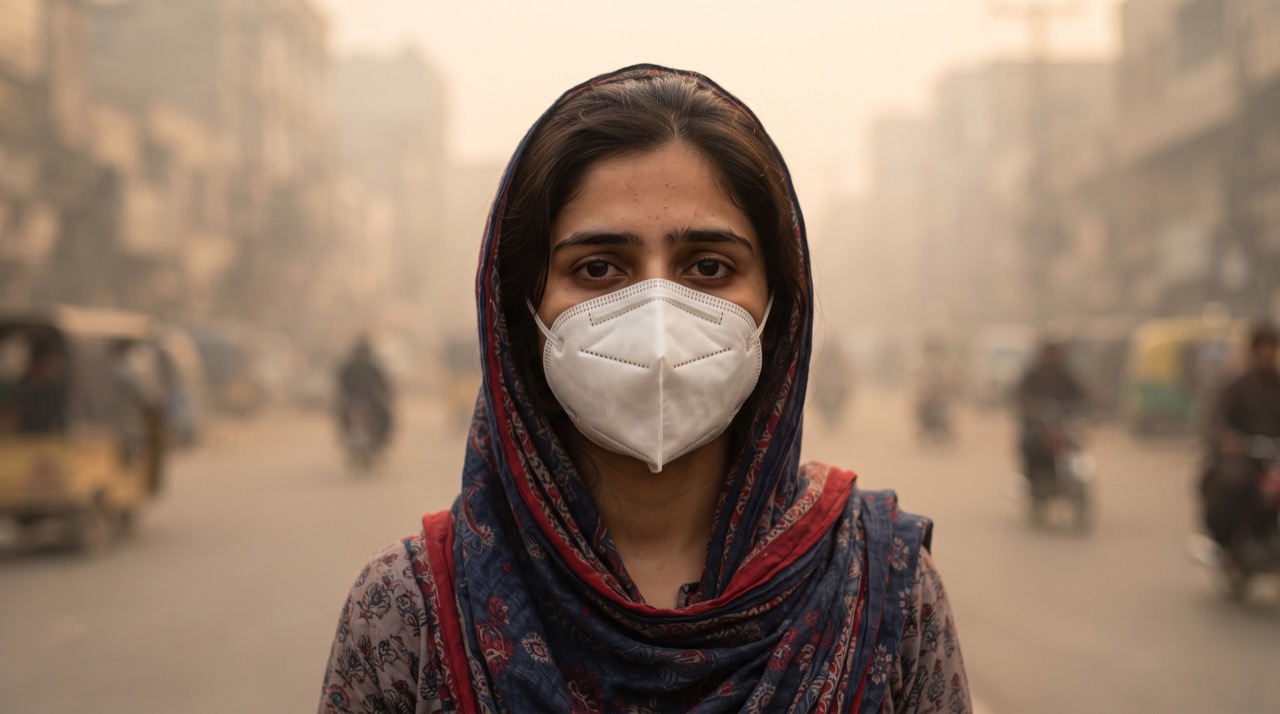
Every year, from late October through January, a thick grey haze settles over Lahore and much of Punjab. Crop burning, vehicle emissions, brick kiln smoke, and cold, still winter air combine to trap pollutants close to the ground, sometimes pushing the Air Quality Index (AQI) past 300 or even 500 — levels the World Health Organization classifies as hazardous to everyone, not just people with existing health conditions. You cannot control the smog itself, but you can control how much of it reaches your lungs. Here is a practical, realistic plan.
Choosing and Wearing a Mask Correctly
Not all masks are equal against smog. Fabric and surgical masks block large dust particles but do almost nothing against the fine particulate matter (PM2.5) that causes the most damage, because these particles are small enough to pass through loosely woven fibers and reach deep into the lungs and bloodstream.
- Use an N95 or KN95 respirator whenever AQI is above 150, especially outdoors. These filter at least 95% of fine particles when worn correctly.
- Get the seal right. A mask that gaps at the nose or cheeks lets unfiltered air in around the edges. Pinch the metal strip over your nose and check for gaps by exhaling sharply — you shouldn't feel air escaping around the sides.
- Replace masks regularly. A damp, dirty, or visibly stretched-out mask loses its filtering ability. Don't reuse a mask for weeks straight.
- Avoid exercising outdoors in a mask during heavy smog — it's better to move the activity indoors entirely, since heavy breathing pulls in more polluted air regardless of mask type.
Making Your Indoor Air Safer
Most people assume indoor air is automatically cleaner than outdoor air during smog season. That's often false — smog seeps in through doors, windows, and gaps, and indoor sources like cooking smoke, incense, and cigarette smoke make it worse.
- Keep windows and doors closed during peak smog hours, typically early morning and late evening when the haze is thickest and temperatures are lowest.
- Use an air purifier with a HEPA filter in bedrooms if you can afford one — even a single unit running in the room where you sleep makes a meaningful difference over a season.
- Avoid indoor smoke sources. Skip indoor sheesha, minimize deep-frying without ventilation, and step outside (or use an exhaust fan) when cooking on high heat.
- Add houseplants sparingly — they help marginally with air quality but are not a substitute for filtration or ventilation; don't rely on them alone.
- Ventilate briefly on cleaner days. Check a live AQI app before opening windows; a short burst of fresh air on a lower-pollution afternoon is better than none at all.
Extra Precautions for Vulnerable Groups
Smog does not affect everyone equally. Children, the elderly, pregnant women, and anyone with asthma, COPD, heart disease, or diabetes are at significantly higher risk of complications.
- Children: Keep outdoor play and school sports indoors or postponed on high-AQI days. Children breathe faster than adults relative to their body size, so they absorb proportionally more pollution.
- Elderly and heart/lung patients: Keep rescue inhalers and prescribed medication within reach, and don't skip routine checkups during smog months — symptoms that seem minor can escalate quickly.
- Pregnant women: Limit outdoor exposure where possible; several studies link high PM2.5 exposure during pregnancy to low birth weight.
- Outdoor workers (traffic police, vendors, laborers): Rotate breaks indoors when possible and prioritize a properly fitted N95 over cloth coverings.
A good mask worn incorrectly protects you no better than no mask at all — fit matters as much as filter rating.
Simple Daily Habits Worth Building
- Check a live AQI reading each morning before deciding on outdoor plans, school runs, or exercise.
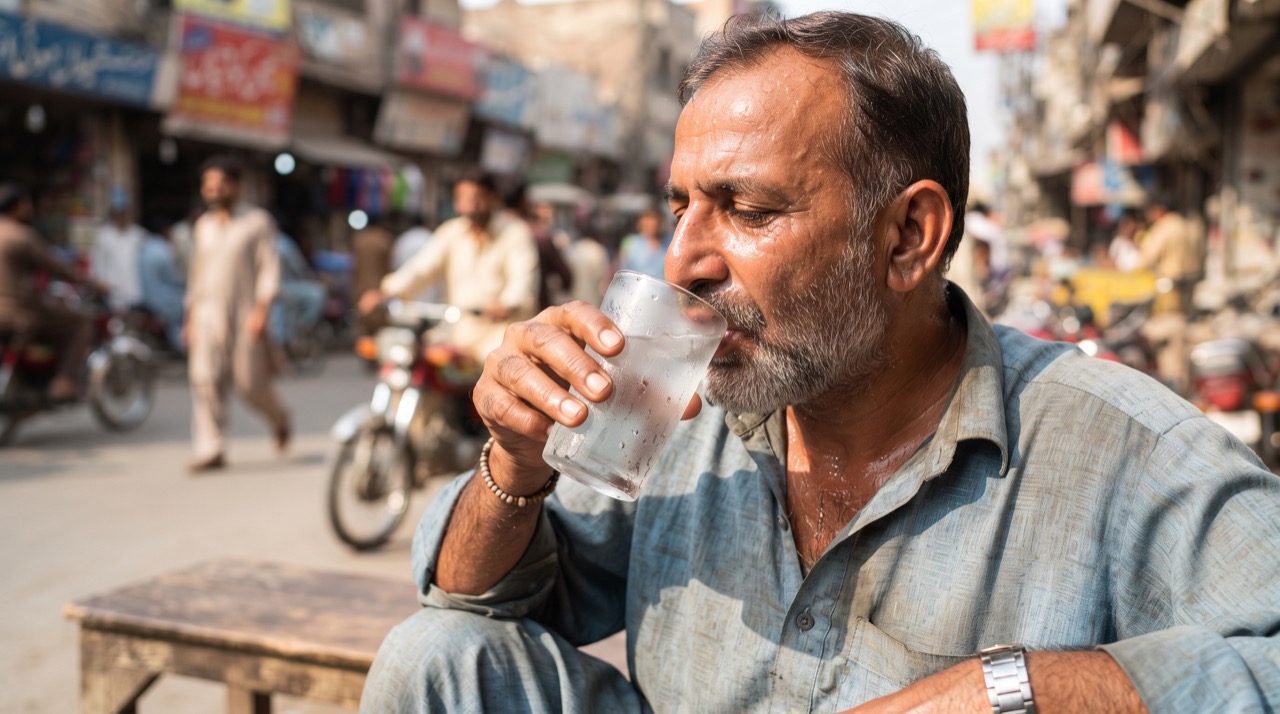
- Stay hydrated — it helps your airways clear mucus and irritants more effectively.
- Avoid burning leaves, garbage, or agricultural waste at home; it adds directly to the problem in your own neighborhood.
- If you develop persistent coughing, chest tightness, or breathlessness, see a doctor rather than waiting for the smog to lift on its own.
Lahore's smog season is a genuine public health challenge, but small, consistent choices — a properly fitted mask, a sealed and filtered home, and extra care for the people most at risk — meaningfully reduce how much of it reaches your lungs.
Roman Urdu
Har saal October ke aakhir se January tak Lahore aur Punjab ke ziyada tar hisson mein smog chha jata hai. Fasal jalana, gaadiyon ka dhuwan, bhatton ka dhuwan, aur sardi ki thandi, sust hawa mil kar pollution ko zameen ke qareeb phansa deti hai, jis se AQI 300 ya 500 tak chala jata hai — jo WHO ke mutabiq sab ke liye khatarnak level hai. Smog ko aap control nahi kar sakte, lekin ye control kar sakte hain ke kitna aapke phephron tak pohanche.
Mask ka sahi istemaal: Kapre ya surgical mask fine particles (PM2.5) ko nahi rok pate. Jab AQI 150 se zyada ho to N95 ya KN95 mask pehnein, aur naak ke upar wali metal strip ko ache se dabayein taake mask ke kinaron se hawa andar na aaye. Purana ya geela mask badal dein, aur bhari smog mein bahar exercise karne se bachein.
Ghar ke andar hawa behtar banayein: Subah aur shaam ke waqt, jab smog sabse zyada hota hai, darwaze aur khirkiyan band rakhein. Agar mumkin ho to HEPA filter wala air purifier istemaal karein, khaas taur par bedroom mein. Ghar ke andar sheesha aur zyada dhuwan wala khana pakana kam karein, aur jab AQI thora behtar ho tab thodi der ke liye khirkiyan khol dein taake taaza hawa aa sake.
Kamzor logon ka khaas khayal rakhein: Bache, buzurg, hamla khawateen, aur asthma, dil ya sugar ke marizon ko zyada khatra hota hai. Bachon ko high-AQI din par bahar khelne se rokein, dil-phephron ke marizon apni dawai aur inhaler hamesha paas rakhein, aur agar khansi ya saans lene mein dikkat lagatar rahe to doctor se zaroor milein.
Roz subah AQI check karna, paani zyada peena, aur ghar mein kuch bhi jalane se parhez karna — ye chhoti aadatein mil kar is smog season ko thora asan bana sakti hain.