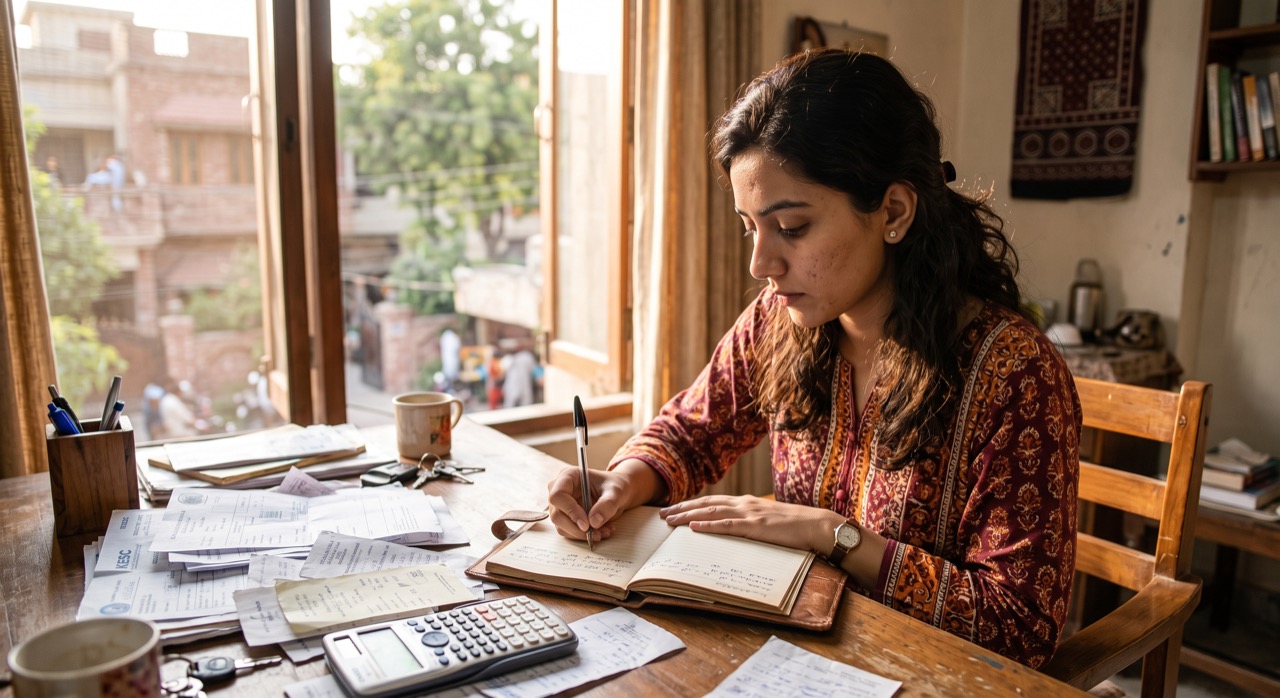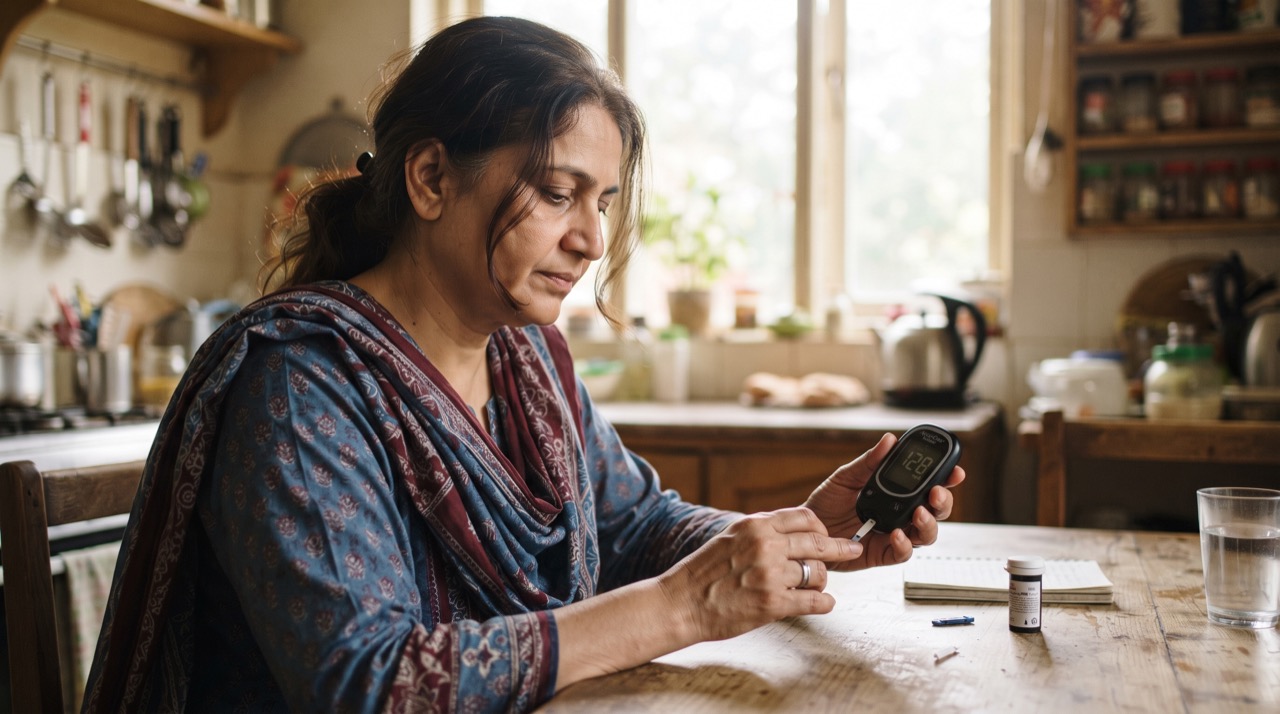
Pakistan now has one of the highest rates of type 2 diabetes in the world, with estimates suggesting more than one in four adults is affected. Yet most of what gets shared about diabetes management is written for diets and lifestyles that don't match ours — nobody tells you what to do about your mother's daily roti, your office ka biryani Friday, or the fact that your evening walk competes with load-shedding and traffic. This guide sticks to what actually fits into a Pakistani household: practical swaps for roti, rice and daal, a walking routine you can keep up in real weather and real streets, and a simple way to stay consistent with medication without turning your day into a chore.
Rethinking the Roti-Rice-Daal Plate
You do not need to give up roti, rice or daal to manage blood sugar — portion, pairing and preparation matter more than elimination.
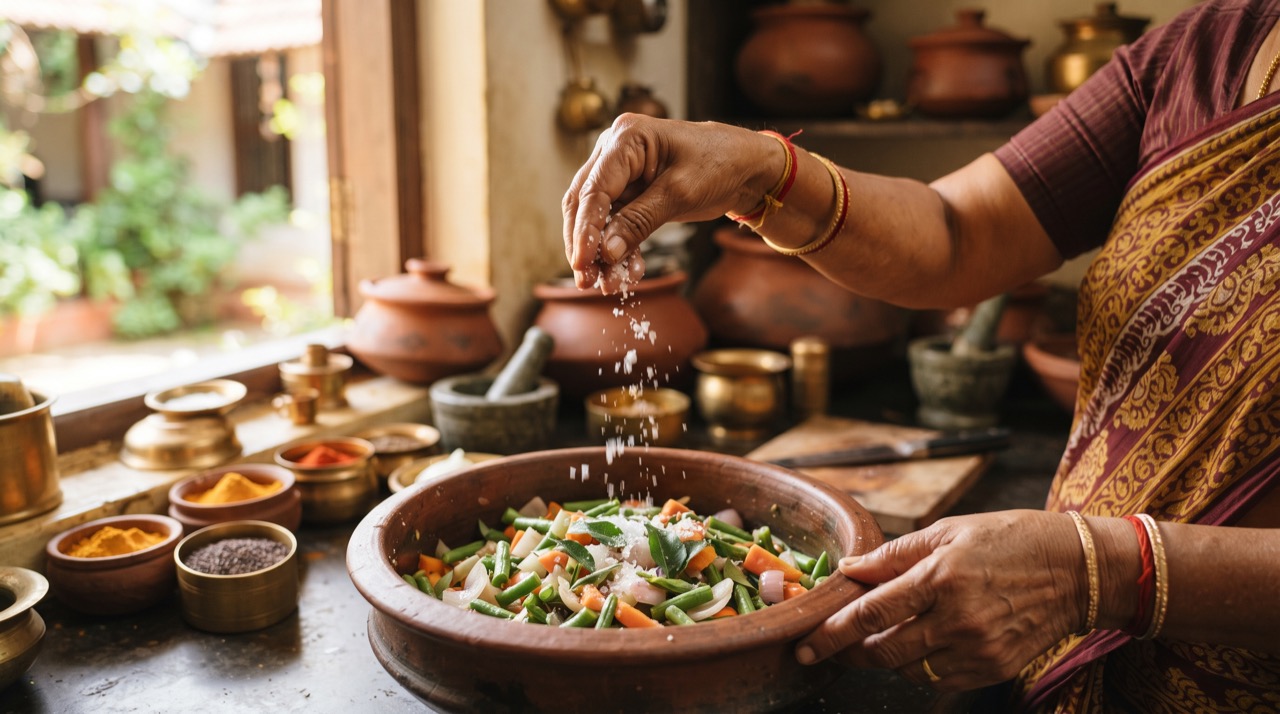
- Choose atta wisely: Chakki-ground whole wheat atta with bran left in has more fibre than refined maida-mixed atta. If your roti currently comes from the corner tandoor, ask what flour they use, or grind your own.
- Cut roti size, not roti out: A medium roti (about the size of your palm) with extra sabzi and daal keeps you fuller than two large rotis with less vegetable.
- Rice needs a pause: Cooking rice and then letting it cool before reheating (even a plain pulao) increases resistant starch, which raises blood sugar less. Basmati is naturally lower glycaemic than short-grain rice — stick with it and keep portions to roughly one cup cooked.
- Daal is your friend: Chana daal, masoor and moong are high in protein and fibre and slow down sugar absorption when eaten with roti or rice. Add a spoon of daal to your rice-based meals rather than eating rice alone.
- Watch the hidden sugar and oil: Restaurant karahi, biryani and desi ghee-heavy salan are the real problem, not roti itself. Cook at home with 1-2 tablespoons of oil per dish rather than a free pour, and go easy on chai — 2-3 cups a day with less sugar (or none) adds up over weeks.
- Fruit timing matters: Mango, banana and grapes are fine in small portions (a small bowl, not a plateful) eaten after a meal rather than on an empty stomach.
A Walking Routine That Survives Karachi Heat and Lahore Smog
Walking is the single most accessible exercise for type 2 diabetes in Pakistan — no gym membership, no equipment, and it directly improves how your muscles use insulin.
- Aim for 30 minutes, 5 days a week — this is the target the World Health Organization and most diabetes associations recommend, and it does not need to happen in one block. Three 10-minute walks after each main meal work just as well and specifically blunt the after-meal sugar spike.
- Time it around the weather: Early morning (before 8am) or after Maghrib are the most realistic windows in summer. In winter smog months in Lahore and Punjab cities, an indoor option — walking up and down stairs, or marching in place while watching TV — is safer than outdoor exercise on high-smog days.
- Use what's around you: A park, a rooftop, even a long verandah works. If safety or space is limited, walking to the local dukaan instead of sending a driver, or getting off the rickshaw a street early, adds up.
- Post-meal walks matter most: A 10-minute walk after lunch or dinner does more for your blood sugar than the same walk done on an empty stomach later in the day.
Staying Consistent With Medication
Missed doses are one of the most common reasons blood sugar stays uncontrolled, often not because people forget but because they stop during a good phase, run out and delay a pharmacy visit, or skip metformin when fasting for a fast or a test.
- Anchor doses to existing habits: Keep tablets next to the chai cup or the prayer mat — pairing medication with something you already do daily beats relying on memory alone.
- Never stop on your own judgment: Feeling "theek" is not the same as sugar being controlled. Only a doctor should change or stop a dose, based on an actual HbA1c or sugar reading.
- Plan around fasting: If you fast (for religious or other reasons), talk to your doctor beforehand — many diabetes medications need dose or timing adjustments, and some are unsafe to take while fasting.
- Keep a simple log: A notebook or phone note with fasting and post-meal readings twice a week gives your doctor far more useful information than a single reading on the day of your appointment.
Diabetes control in Pakistan doesn't require a foreign diet plan or an expensive gym — it requires a slightly smaller roti, a daily walk you can actually keep up, and medication taken on schedule, every single day, without exception.
When to See a Doctor Sooner Rather Than Later
- Fasting sugar consistently above 130 mg/dL or post-meal above 180 mg/dL despite following your routine.
- Numbness or tingling in the feet, blurred vision, or wounds that heal slowly — these need urgent evaluation, not a "wait and see" approach.
- Any large unplanned weight loss, which can signal that sugar is dangerously uncontrolled.
Roman Urdu
Pakistan mein type 2 diabetes ab har chauthay ghar ka masla ban chuki hai, lekin ziyada tar advice aisi hoti hai jo hamare roti-chawal-daal wale khane se match hi nahi karti. Achi khabar yeh hai ke aap apna roz ka khana chhoray baghair bhi sugar control kar saktay hain — bas portion aur tareeqa badalna hota hai.
Khane mein tabdeeli: Chakki wala atta (jis mein chokar shamil ho) maida-mila atta se behtar hai. Roti ka size thora chota rakhein aur sath mein sabzi aur daal ziyada lein. Chawal pakanay ke baad thora thanda hone dein phir dobara garam karein — is se sugar kam barhta hai. Basmati chawal behtar hain aur portion aik katori tak mehdood rakhein. Chana daal, masoor aur moong daal zaroor shamil karein kyunke yeh sugar ko dheere se barhati hain. Bahar ka karahi, biryani aur ziyada ghee wala khana asal masla hai, roti nahi — ghar mein kam tel istemal karein aur chai mein cheeni kam ya bilkul na dalein.
Roz ki walk: Hafte mein 5 din, 30 minute ki walk sabse asaan aur mufeed exercise hai. Yeh aik hi waqt mein zaroori nahi — khane ke baad 10-10 minute ki teen chhoti walks bhi bohat faida deti hain, khaaskar sugar spike ko rokne mein. Subah jaldi ya Maghrib ke baad walk karein taake garmi se bacha ja sakay, aur sardiyon mein smog wale din ghar ke andar seerhiyan chalein.
Dawai ka routine: Dawai ko chai ke cup ya jaanamaz ke paas rakhein taake bhoolne ka khadsha kam ho. Kabhi bhi apni marzi se dawai band na karein, chahay aap theek mehsoos kar rahay hon — sirf doctor hi sugar reading dekh kar dose tabdeel kar sakta hai. Agar roza rakhte hain to pehle doctor se zaroor mashwara karein. Hafte mein do dafa sugar reading note karna doctor ke liye bohat madadgar hota hai.
Agar fasting sugar 130 se ziyada ya khane ke baad 180 se ziyada rahe, pairon mein sunnapan mehsoos ho, ya zakham jaldi na bharay, to fori doctor se milein — intezar na karein.