Electricity bills in Pakistan have become one of the biggest monthly headaches for households, thanks to fuel price adjustments, slab-based tariffs, and taxes that stack on top of your actual usage. The good news is that a large chunk of a typical bill comes from habits and appliance choices you can actually control. This guide breaks down practical, specific steps to reduce your units consumed, manage your appliance load smartly, and use time-of-day usage to your advantage.
Understand Your Bill Before You Try to Fix It
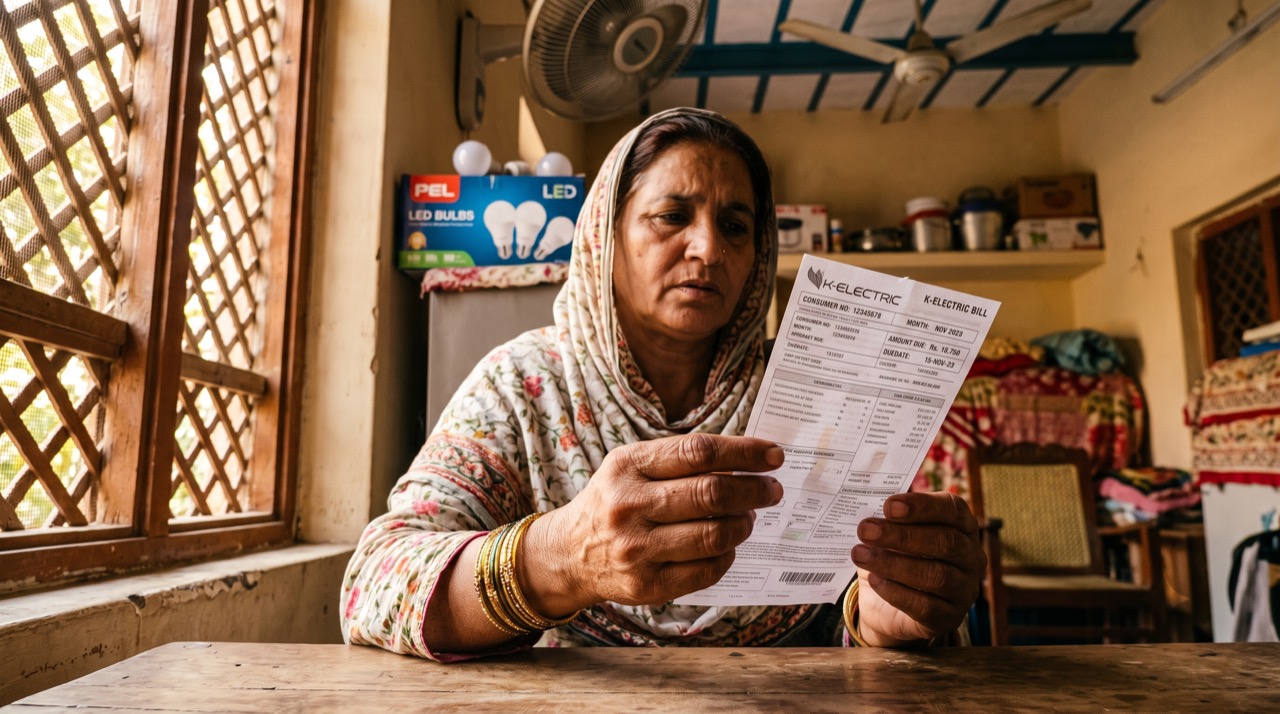
You cannot lower what you do not measure. Pakistani electricity bills (whether from LESCO, K-Electric, IESCO, MEPCO, or other DISCOs) are charged on a slab system, meaning your per-unit rate jumps sharply once you cross certain thresholds, commonly around 200, 300, and 700 units per month. Staying just under a slab boundary can save you far more than the units themselves suggest, because crossing it can retroactively raise the rate on your entire consumption for that month.
- Check your last 3 bills and note your average monthly units, not just the rupee amount.
- Identify which slab you usually fall into, and how close you are to the next one.
- Look at the fuel price adjustment (FPA) and taxes separately from base units, since these vary but the units are what you control.
- If you have a smart or digital meter, check consumption via your DISCO's app or website where available, so you can catch spikes early rather than at month-end.
Cut the Big Consumers First, Not the Small Ones
Many people obsess over switching off phone chargers while running an old inverter AC on full blast. Focus your energy where the actual units go.
- Air conditioners are usually the single largest load in summer. Set the thermostat to 26°C instead of 18–20°C; every degree lower can add roughly 6-8% more consumption. Clean the filter monthly so the compressor is not working harder than it needs to.
- Old refrigerators (10+ years old) can quietly consume as much as a modern inverter AC over a month. If yours is old and non-inverter, budgeting for a replacement often pays for itself within 2-3 years in savings.
- Water motors and geysers left running or on standby heat waste significant units. Use a timer or simply switch the geyser off at the socket when not actively needed rather than leaving it on standby heat.
- Irons, kettles, and instant water heaters draw very high wattage for short bursts — batch tasks like ironing so you are not repeatedly heating up the element.
- Replace any remaining incandescent or CFL bulbs with LED bulbs; LEDs use roughly 80% less energy for the same brightness and last far longer, which also matters given frequent voltage fluctuations in many areas.
Manage Appliance Load and Timing
Beyond individual appliances, how and when you run them together matters, especially if you are on a system with a limited-capacity connection, inverter, solar setup, or UPS backup.
- Avoid running the AC, iron, washing machine, and water motor at the same time. Staggering high-load appliances reduces peak simultaneous draw, which matters for both your bill and for avoiding tripped breakers on older wiring.
- Run washing machines, water pumps, and other heavy but flexible-timing appliances during off-peak hours (typically late night to early morning) if your tariff or solar/battery setup rewards that timing.
- If you have prepaid or time-of-use metering, or a hybrid solar system, check with your DISCO or installer about specific peak-hour windows in your area — these differ by region and are usually published on the NEPRA website or your distribution company's own site.
- Unplug or switch off devices at the socket rather than leaving them on standby; many routers, TVs, and set-top boxes draw a small but constant "phantom load" 24/7 that adds up over a month.
Small Habits That Compound
A bill is not one big decision — it is thirty days of small ones, repeated.
- Use natural daylight and ventilation where possible instead of running lights and fans in every room simultaneously.
- Service your AC before summer starts; a poorly maintained unit with low gas or dirty coils can consume 20-30% more for the same cooling.
- Consider a stabilizer or voltage-check if you notice appliances working harder than usual — Pakistan's grid voltage can fluctuate, and motors draw more current to compensate for low voltage.
- If solar is within your budget, even a small grid-tied or hybrid system covering daytime AC and motor load can meaningfully cut your grid units, and net-metering policies (check current rules via your DISCO) may let you offset costs further.
Roman Urdu
Pakistan mein bijli ka bill kam karne ke liye sabse pehla qadam ye hai ke apna bill samajhna shuru karein. Hamare yahan slab system hota hai, matlab agar aap agli slab mein chale jayein (jaise 200, 300, ya 700 units), to poore mahine ka rate barh sakta hai. Isliye apne pichle 3 bills check karein aur dekhein ke aap kis slab ke qareeb hain.
Sabse zyada units khane wale appliances par tawajju dein, chhoti cheezon par nahi. AC sabse bada load hota hai — thermostat 26°C par rakhein, 18-20°C par nahi, kyun ke har degree kam karne se 6-8% zyada bijli lagti hai. Purani fridge bhi khamoshi se bohat units kha jati hai, agar 10 saal se purani hai to naya inverter model lene ka soch sakte hain. Geyser ko standby heat par chhorne ke bajaye zaroorat na ho to socket se hi band kar dein. Aur purane bulbs ko LED se badal dein — ye 80% kam bijli lete hain aur voltage ke utaar chadhao mein bhi zyada tikte hain.
Heavy appliances ek sath mat chalayein — AC, istri, washing machine aur motor sab ek waqt mein chalane se load barh jata hai. Agar mumkin ho to washing machine ya motor jaise kaam raat ke akhri hisse ya subah jaldi (off-peak hours) mein karein, khaas kar agar aapke paas solar ya UPS system hai. Apne DISCO (LESCO, K-Electric, IESCO, MEPCO waghera) ki website ya NEPRA se peak hours ki details check kar sakte hain.
Chhoti aadatein bhi mila kar bara farq dalti hain — jaise phantom load wale devices (router, TV) ko socket se hi off karna, AC ki saalana service karwana, aur voltage fluctuation ka khayal rakhna. Agar budget ijazat de to chhota solar setup bhi lambi mudat mein bill ko kaafi kam kar sakta hai.