Short-form video has created a real, fast-moving freelance market — and video editing is one of the few skills you can genuinely learn for free and start monetizing within a few months. Pakistani editors are already working with clients in the US, UK, Gulf, and India through freelance platforms, charging anywhere from $5 to $50+ per video depending on skill level. Here is a grounded, no-fluff path to get there.
Start With Free Tools — Don't Buy Anything Yet
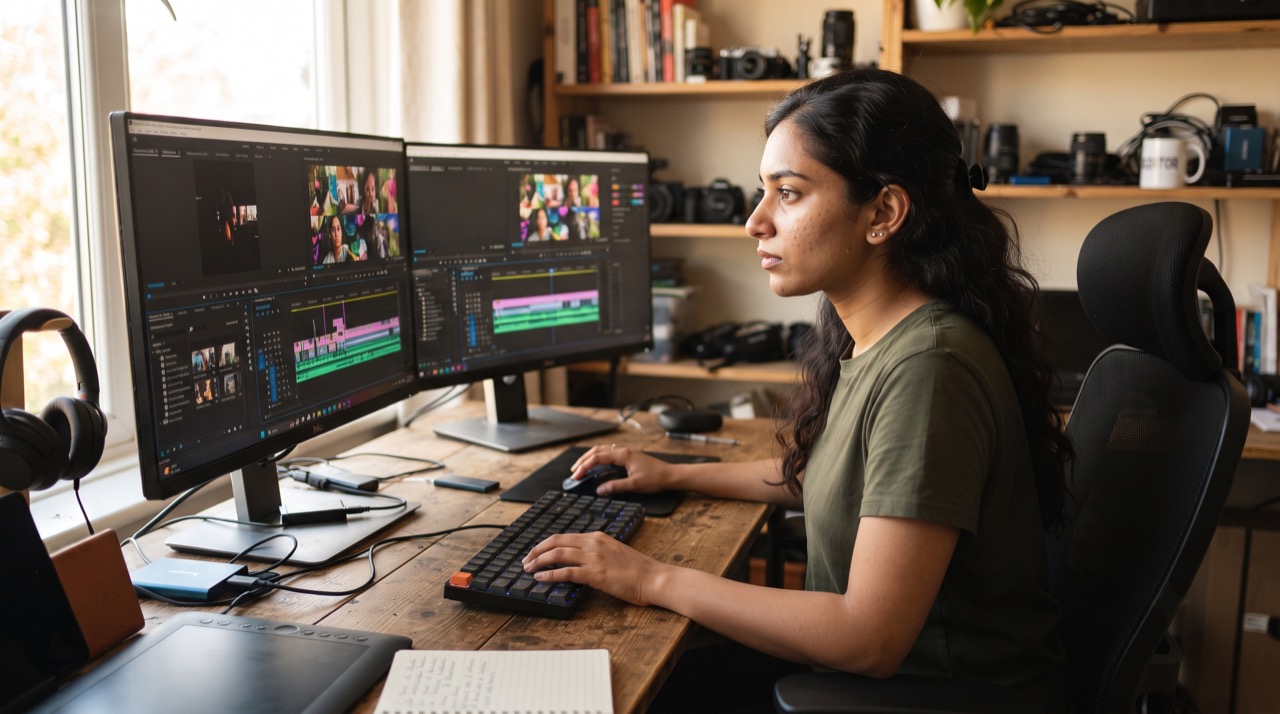
You do not need Adobe Premiere Pro or a powerful laptop to start. Learn on free software first so you understand the craft before spending money.
- CapCut — free, works on phone and desktop, and is what most short-form editors (Reels, TikTok, YouTube Shorts) actually use professionally. Learn it well and you can freelance immediately.
- DaVinci Resolve — a genuinely professional, free desktop editor used in real production houses. Steeper learning curve, but it teaches you color grading and audio mixing properly.
- Blender — free, useful if you later want to add motion graphics or 3D elements to your edits.
- YouTube — search "CapCut tutorial for beginners" or "DaVinci Resolve color grading" and you'll find hundreds of free, current tutorials. This is genuinely how most working editors learned.
Only consider paid software (Premiere Pro, After Effects) once a client specifically requests project files in that format, or once you're earning enough to justify the subscription.
Beginner Projects That Actually Build Skill
Don't wait for "inspiration" — pick a structured project and finish it. Employers care about your output, not your excuses.
- Recut a 10-minute podcast clip into three 60-second Reels. This teaches pacing, caption timing, and hook-writing — the single most requested skill in short-form editing right now.
- Edit a phone-shot vlog of your own day. Practice cuts, transitions, background music selection, and basic color correction.
- Recreate a viral Reel's editing style using your own footage — this is how professionals reverse-engineer trends and it's a legitimate practice method, not copying content.
- Build a 5-video portfolio before you apply anywhere. Clients hire based on what they see, not what you say you can do.
The Skills Clients Actually Pay For
Raw cutting-and-trimming is now a commodity skill. To charge real rates, add these:
- Caption styling and auto-sync — bold, animated captions are now expected on nearly every short-form video; CapCut and Resolve both handle this.
- Hook-writing for the first 3 seconds — clients pay more for editors who understand retention, not just software.
- Basic color grading — a consistent, warm or cinematic look separates amateur from professional work instantly.
- Sound design — clean audio, well-timed sound effects, and music that doesn't drown out speech.
- Fast turnaround — many short-form clients need videos same-day or next-day; reliability alone wins repeat work.
A portfolio of five polished, well-captioned Reels will get you more freelance work than a diploma in video editing — clients hire proof, not paperwork.
Where to Find Your First Clients
- Fiverr and Upwork — start with low, competitive pricing to build reviews, then raise rates every 3-5 completed projects.
- Local businesses and YouTubers — reach out directly to small Pakistani content creators and shops; less competition than global platforms.
- Instagram and Facebook groups for content creators — many post editing gigs directly.
- Referrals — one happy client is your best marketing; ask for a review or a referral after every job.
Treat the first few months as skill-building with income as a bonus, not the goal. Editors who stay consistent for 4-6 months, build a real portfolio, and specialize in one style (podcast clips, e-commerce ads, or vlogs) tend to earn far more than those who spread thin across every video type.
Roman Urdu
Video editing sikhna aaj kal Pakistan mein ek bohat practical aur paisay kamaane wala skill ban chuka hai — aur ye bilkul free seekha ja sakta hai. Shuru mein paisay laga kar software na khareedein. CapCut se shuru karein — ye free hai, mobile aur laptop dono par chalta hai, aur zyada tar short-form editors (Reels, TikTok, Shorts) isi ko professionally use karte hain. Agar zyada seekhna ho to DaVinci Resolve try karein — ye bhi free hai aur real production houses mein use hota hai, khaas kar color grading aur audio ke liye. YouTube par "CapCut tutorial for beginners" search karke sainkron free tutorials mil jaayenge.
Practice ke liye kuch simple projects karein: kisi 10-minute podcast clip ko teen 60-second Reels mein cut karein, apni khud ki vlog edit karein, ya kisi viral Reel ka editing style apni footage par try karein. Client ko approach karne se pehle kam az kam paanch achi videos ka portfolio bana lein — clients aapki baaton se nahi, aapke kaam se impress hotay hain.
Sirf trimming aur cutting ab common skill ban chuki hai, isliye zyada paisay kamaane ke liye ye cheezein seekhein: animated captions lagana, pehle 3 seconds mein hook banana (taake log video skip na karein), basic color grading, aur clean sound design. Fast delivery bhi bohat zaroori hai — kayi clients ko same-day ya next-day video chahiye hoti hai.
Pehla client dhoondne ke liye Fiverr aur Upwork par kam price se shuru karein aur reviews jamaa karein, phir dheere dheere rates barhayein. Local businesses aur chhote YouTubers ko direct message karna bhi kaam aata hai — competition kam hoti hai. Facebook aur Instagram groups mein bhi editing gigs post hoti hain. Sab se zyada important cheez consistency hai — agar aap 4-6 mahinay tak lagataar seekhtay aur practice kartay rahein, aur kisi ek style (jaise podcast clips ya e-commerce ads) mein specialize ho jaayein, to income mein bohat farq aayega.