Every year thousands of students across Pakistan decide to learn programming, and most of them quit within two weeks — not because coding is too hard, but because they start with the wrong resources or try to learn everything at once. Python is the best first language for a beginner because its syntax reads almost like plain English, and it is used everywhere from web apps to data science to automation. This guide lays out a free, structured path you can actually follow, whether you are a matric student, an FSc student, or a university fresher with a slow internet connection and no budget for paid courses.
Why Python First, and What You Actually Need
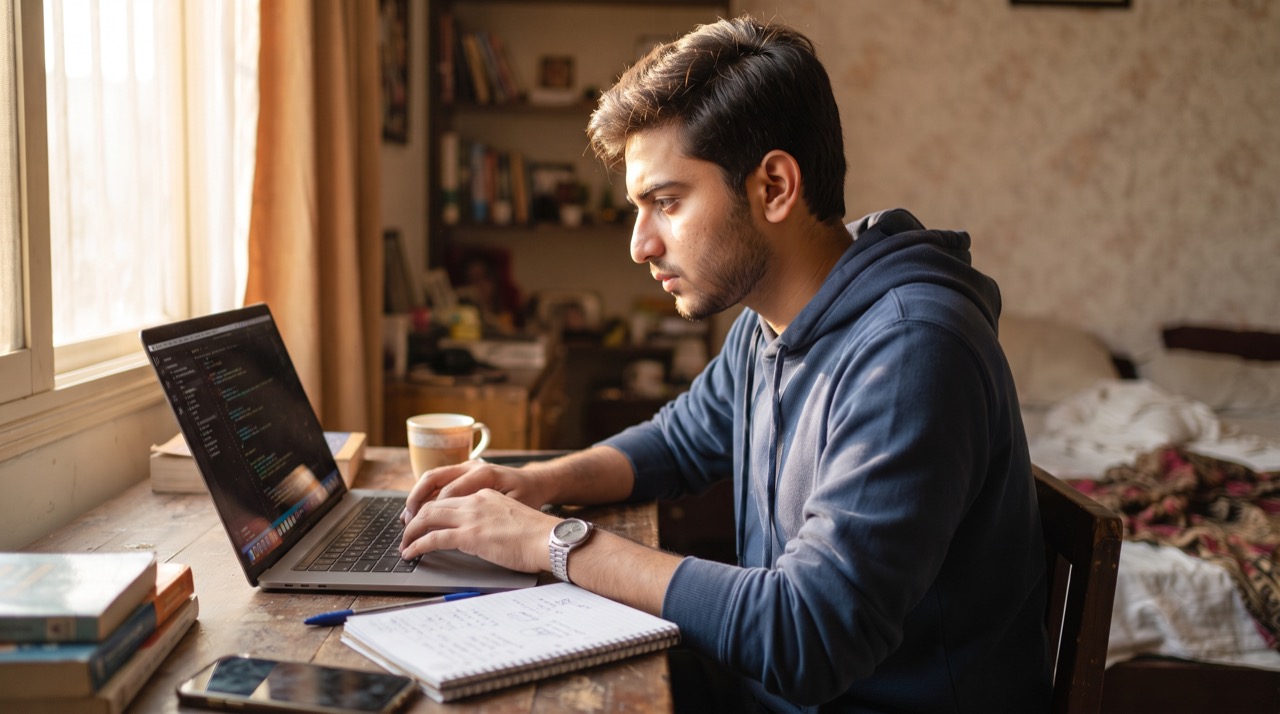
You do not need a powerful laptop or a paid subscription to start. A basic laptop or even a shared computer lab at your college is enough for the first few months. Here is the minimum setup:
- Download Python for free from the official source at python.org — this is the safest place to get it, avoid random third-party download sites.
- Install a free code editor such as VS Code, or simply use the IDLE editor that comes bundled with Python.
- If your internet is unreliable, use Python's offline documentation and practice writing small scripts daily rather than only watching videos.
- Create a dedicated folder on your computer for every practice file — organizing your work from day one saves huge confusion later.
A Realistic 12-Week Roadmap
Do not try to "finish Python" in a week — that is how most beginners burn out. Spread your learning like this:
- Weeks 1-2: Variables, data types (strings, integers, floats, booleans), and basic input/output using
print()andinput(). - Weeks 3-4: Conditionals (if/elif/else) and loops (for/while). Build tiny programs like a number guessing game or a simple calculator.
- Weeks 5-6: Functions and basic error handling. Rewrite your earlier programs using functions to see how much cleaner code becomes.
- Weeks 7-8: Lists, dictionaries, tuples, and sets. Practice with real data — a list of your class's marks, a dictionary of Urdu-to-English word pairs.
- Weeks 9-10: File handling and working with simple text or CSV files. Try building a basic student record system that saves data to a file.
- Weeks 11-12: A small final project — a to-do list app, a unit converter, or a quiz program — that combines everything above.
This pace is deliberately slow. Repetition matters more than speed at this stage; typing the same concept into five different small programs teaches you far more than reading it once in a tutorial.
Free Practice Sites Worth Using
You do not need to pay for any course to become job-ready in basic Python. These free resources are enough:
- freeCodeCamp offers a complete, free, self-paced Python curriculum with certificates — one of the most respected free platforms globally, and a great place to get structured video lessons paired with hands-on coding challenges.
- Practice on coding-challenge sites daily, even if it's just 2-3 small problems — consistency beats long, irregular study sessions.
- Join a local or online study group. Explaining a concept to a classmate is one of the fastest ways to actually understand it yourself.
- Read error messages carefully instead of panicking — Python's errors usually tell you exactly which line and what type of mistake occurred.
Common Mistakes to Avoid
- Jumping between five different tutorials instead of finishing one structured course first.
- Copy-pasting code without typing it yourself — muscle memory and understanding come from typing every line.
- Skipping practice problems because a concept "seems easy" in the video — ease while watching is different from ease while writing.
- Comparing your pace to others online — everyone's starting point and available study time is different.
The only way to learn programming is by writing programs — no amount of watching tutorials will substitute for the hours you spend typing, breaking, and fixing your own code.
Learning Python is a marathon, not a sprint. If you commit to even 30-45 minutes of focused daily practice using the roadmap above, you will have working knowledge of the language within three months — enough to build small projects, automate boring tasks, and confidently move on to more advanced areas like web development or data analysis.
Roman Urdu
Har saal Pakistan mein hazaron students programming seekhne ka faisla karte hain, lekin aksar do hafton mein hi chhor dete hain — is liye nahi ke coding mushkil hai, balke is liye ke woh ghalat tareeqe se shuru karte hain ya ek hi waqt mein sab kuch seekhne ki koshish karte hain. Python beginners ke liye behtareen pehli language hai kyunke iski syntax simple English jaisi lagti hai, aur yeh web apps se le kar data science tak har jagah use hoti hai.
Zaroorat Kya Hai
Aapko mehenga laptop ya paid course ki zaroorat nahi. Bas Python ko official website python.org se free download karein — kabhi bhi kisi third-party site se download na karein, yeh safe nahi hota. Ek free code editor jaise VS Code istemal karein, ya Python ke saath aane wala IDLE hi kafi hai shuruaat ke liye.
12 Hafton Ka Plan
Jaldi mein Python "khatam" karne ki koshish na karein — yehi wajah hai ke zyada tar beginners burn out ho jate hain. Pehle 2 hafton mein variables aur basic print/input seekhein, phir conditionals aur loops par chhote programs banayein jaise number guessing game. Uske baad functions, phir lists aur dictionaries, phir file handling, aur aakhir mein ek chhota final project jaise to-do list app banayein. Yeh dheemi raftaar jaan boojh kar hai — ek hi concept ko baar baar practice karna, sirf video dekhne se zyada faida deta hai.
Free Practice Resources
Kisi bhi paid course ki zaroorat nahi hai. freeCodeCamp par mukammal, muft Python curriculum maujood hai jo certificates ke saath aata hai — yeh duniya bhar mein sab se izzat wale free platforms mein se ek hai. Roz sirf 2-3 chhote problems solve karein, chahe waqt kam ho, lekin roz zaroor karein. Kisi local ya online study group mein shamil ho jayein — doosron ko concept samjhana khud seekhne ka behtareen tareeqa hai.
Programming seekhne ka sirf ek hi tareeqa hai — khud code likhna. Sirf videos dekhne se woh samajh nahi aati jo apne haathon se code type kar ke, ghalti kar ke, aur theek kar ke aati hai.
Agar aap roz sirf 30-45 minute is roadmap par focused practice karein, to teen mahine mein aap Python mein itni mahaarat hasil kar lenge ke chhote projects bana sakein, boring kaamon ko automate kar sakein, aur aage web development ya data analysis ki taraf confidently badh sakein.