Every summer, hospitals across Pakistan see a familiar surge: typhoid, diarrhoea, hepatitis A and cholera cases climbing as temperatures rise and water lines get contaminated. The uncomfortable truth is that in most Pakistani cities and towns, tap water is not reliably safe to drink straight from the pipe. Old, cracked pipelines running close to sewage lines, intermittent supply that lets contaminated water seep in when pressure drops, and unregulated water tankers all mean that what comes out of your tap may look clear but still carry disease-causing bacteria, viruses and parasites. The good news is that protecting your family does not require expensive equipment. A few consistent habits, most costing little or nothing, can cut your risk dramatically.
Why "clear" water can still make you sick
Clarity has nothing to do with safety. Organisms like Salmonella typhi (typhoid), Vibrio cholerae (cholera), E. coli, and Hepatitis A virus are invisible to the naked eye and often odourless. Pakistan's water utilities frequently test positive for faecal coliform contamination, especially in areas where water and sewage lines run parallel underground and leak into each other. If your area has low or intermittent water pressure, that is actually a red flag — when pipes lose pressure, they can suck in contaminated groundwater through tiny cracks, a phenomenon called back-siphonage. Treat every source as potentially unsafe unless you know it has been tested and treated.
Boiling: the cheapest, most reliable method
Boiling remains the gold standard for killing pathogens at home because it needs no equipment beyond a pot and a stove.
- Bring water to a rolling, bubbling boil (not just simmering) for at least one full minute. This is enough to kill bacteria, viruses and parasites at normal altitudes.
- If you live at higher altitude (parts of KP, Gilgit-Baltistan, Azad Kashmir), boil for three minutes, since water boils at a lower temperature there.
- Let the water cool naturally with the lid on to avoid recontamination from dust or unwashed hands.
- Boiling does not remove sediment, heavy metals, or bad taste/smell — for that, pair it with filtering or simple settling and straining through a clean cloth first.
Filtering: affordable options that actually work
Not every household can afford an imported RO (reverse osmosis) system, and that's fine — several lower-cost options meaningfully reduce contamination:
- Ceramic candle filters (the classic clay-pot style filters sold widely in Pakistani markets) remove bacteria and sediment when the candle is genuine and cleaned regularly with a scrub — a clogged or cracked candle is worse than none.
- Cloth filtration — pouring water through a tightly woven, clean cotton cloth folded 4-8 times removes visible sediment and some larger organisms, though it will not remove viruses or most bacteria on its own. Best combined with boiling.
- Chlorination using water purification tablets or plain unscented household bleach (sodium hypochlorite) is extremely cheap and effective against bacteria and most viruses. As a rough home guide, a few drops of plain bleach per litre, left to stand for 30 minutes, is a widely used emergency method — but for exact dosing, follow WHO or UNICEF guidance rather than guessing, since over-dosing is harmful.
- RO systems, where affordable, give the broadest protection (removing dissolved salts and arsenic too, which matters in parts of Punjab and Sindh with high groundwater arsenic), but they need regular filter changes to stay effective — a neglected RO filter can become a bacteria breeding ground.
A cracked or dirty filter candle, or an RO membrane that hasn't been changed in years, can be more dangerous than drinking unfiltered water, because it gives false confidence while doing little real filtration.
Storing water without undoing your hard work
Treating water is only half the job — poor storage habits recontaminate it within hours.
- Always use a container with a narrow mouth and a lid, not an open bucket. Wide-mouth containers invite dipped cups and unwashed hands.
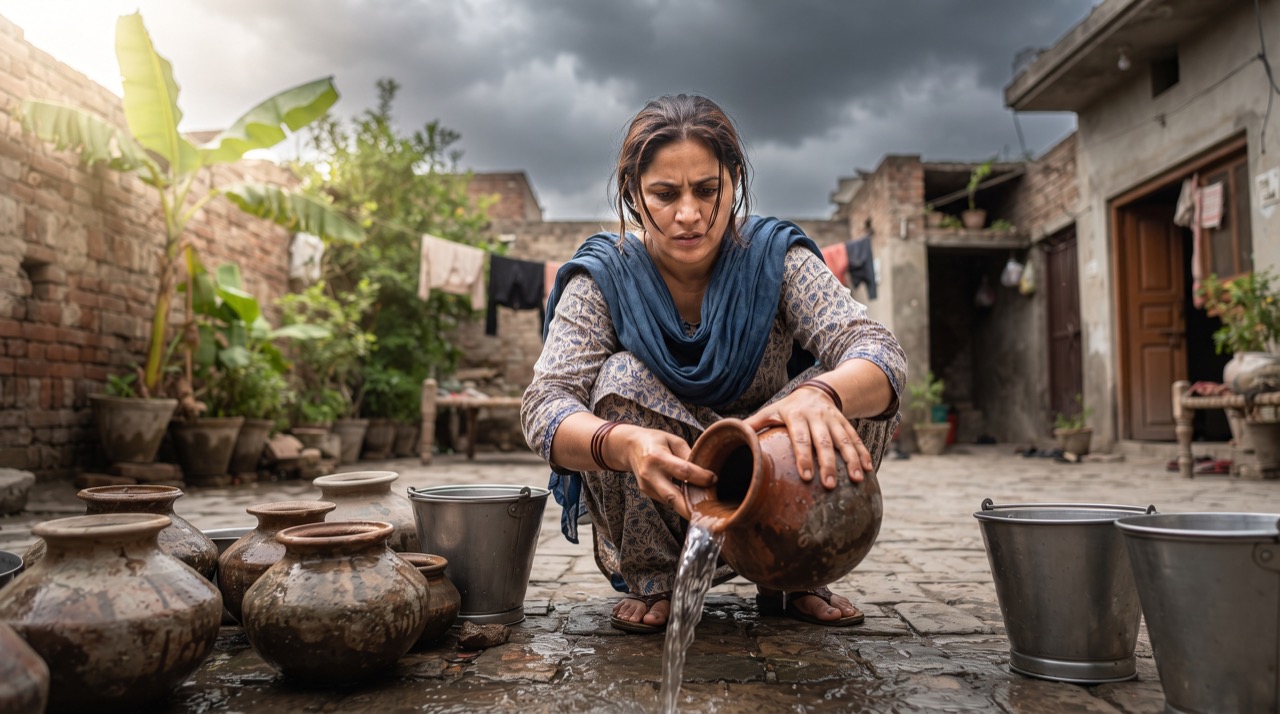
- Wash storage containers (matka, drums, bottles) with soap and hot water at least twice a week; matkas should be scrubbed inside, not just rinsed.
- Never mix newly boiled or filtered water with older stored water in the same container — top-ups contaminate the whole batch.
- Keep drinking water storage away from bathrooms, animal areas, and direct sunlight; heat and light encourage algae and bacterial growth in clear plastic containers.
- Use a clean, dedicated serving cup or pour directly — never let people drink straight from the storage container or dip a used glass back in.
For families with young children or elderly members, who are most vulnerable to severe dehydration from diarrhoeal illness, these habits matter even more. If your area sees a confirmed typhoid or cholera outbreak, follow guidance from your local health department and organisations like WHO and UNICEF Pakistan, which regularly publish outbreak advisories and safe water guidance for Pakistani households.
Roman Urdu
Pakistan ke aksar shehron mein tap ka pani dekhne mein saaf lag sakta hai, lekin iska matlab yeh nahi ke woh peene ke liye mehfooz hai. Purani, kharab pipelines jo sewage lines ke qareeb hoti hain, aur pani ki low pressure ki wajah se contaminated pani pipe mein wapas kheenchna — yeh sab typhoid, diarrhoea aur hepatitis A jaisi bimariyon ki bari wajah hain. Khushqismati se, apne ghar ko mehfooz banane ke liye mehngay equipment ki zaroorat nahi.
Ubalna (boiling) sab se sasta aur bharosemand tareeqa hai. Pani ko poore ek minute tak tez ubaal aane dein (sirf garam nahi, balke bulbule uthne chahiyen). Agar aap pahaadi ilaqe mein rehte hain (KP, Gilgit-Baltistan), to teen minute tak ubaalein. Ubaalne ke baad pani ko dhak kar hi thanda hone dein taake dobara gandagi na lage.
Filter karna bhi zaroori hai. Ceramic candle filters agar asli hon aur regular saaf kiye jaayein to bohot kaam karte hain — lekin gande ya toote hue candle bina filter ke bhi zyada khatarnak ho sakte hain. Saaf, kaskar buni hui cotton cloth se pani chaan lena bhi sediment nikaal deta hai, lekin isse ubaalne ke saath istemaal karein kyunke akela cloth bacteria nahi rokta. Jahan mumkin ho, RO system sab se zyada tahaffuz deta hai, lekin uska filter waqt par badalna zaroori hai warna woh khud hi bacteria ka ghar ban jata hai.
Ek toota hua ya gandagi bhara filter candle, ya kaafi arse se na badla gaya RO membrane, bagair filter ke pani se bhi zyada khatarnak ho sakta hai — kyunke yeh ghalat itminaan deta hai jabke asal filtration bohot kam hoti hai.
Pani ka zakheera (storage) bhi utna hi ahem hai. Hamesha dhakkan wala, tang moonh ka bartan istemaal karein — khula bucket nahi. Matka ya drum ko hafte mein kam az kam do baar sabun se dho lein. Naya ubla ya filter kiya hua pani purane zakheere mein kabhi na milayein, warna pura bartan dobara ganda ho jata hai. Pani ka bartan bathroom ya janwaron ke aas paas na rakhein, aur dhoop se door rakhein taake usme algae na banay. Ghar ke bachon aur bazurgon ke liye yeh ehtiyaatein khaas taur par zaroori hain, kyunke unhe diarrhoea se dehydration jaldi hoti hai. Agar aapke ilaqe mein typhoid ya cholera ka outbreak ho, to apne local health department aur WHO ya UNICEF Pakistan ki hidayat par amal karein.