If you are a woman in Pakistan who feels drained by mid-afternoon, gets breathless climbing stairs, or notices your hair coming out in handfuls, you are not imagining it and you are not alone. Iron-deficiency anaemia is one of the most common health problems among Pakistani women of childbearing age, driven by a mix of monthly blood loss, low dietary iron, back-to-back pregnancies, and diets heavy in roti and chai but light in iron-rich meat, greens, and vitamin C. The good news is that it is also one of the most fixable conditions in medicine, once you understand which foods actually work and how to take supplements correctly.
Why Iron Deficiency Hits Pakistani Women So Hard
Several everyday habits combine to make this worse here than in many other countries. Chai is consumed multiple times a day, often with meals, and the tannins in tea bind to iron and block its absorption by a significant margin. Diets built around wheat and rice provide "non-heme" iron, the harder-to-absorb plant form, with little meat or fish to balance it. Heavy or prolonged periods, common with untreated fibroids or hormonal imbalances, quietly drain iron stores month after month. Add pregnancy and breastfeeding, which multiply iron needs, and it becomes clear why anaemia is so widespread rather than a rare complication.
Foods That Actually Raise Iron Levels
Not all iron sources are equal. Heme iron, found in animal foods, is absorbed two to three times more efficiently than the non-heme iron found in plants. A practical, budget-friendly approach uses both.
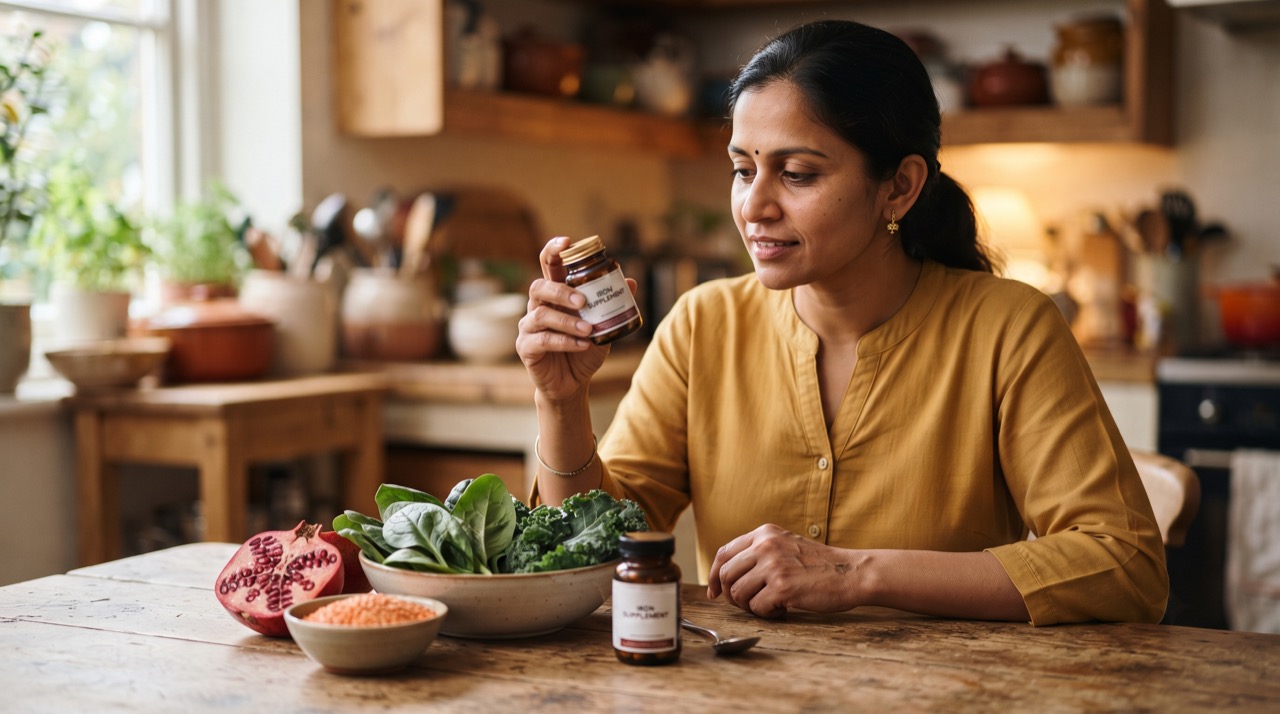
- Red meat and organ meats — mutton, beef, and especially liver (kaleji) are among the richest, best-absorbed iron sources available and are already common in Pakistani kitchens.
- Chicken and fish — smaller amounts of heme iron than red meat, but still meaningfully more absorbable than plant sources.
- Lentils and beans (daal, chana, rajma) — good plant iron, best combined with a vitamin C source at the same meal.
- Dark leafy greens — palak and sarson provide iron along with folate, another nutrient many women run low on.
- Dried fruits and seeds — dried apricots, dates, and pumpkin seeds are easy to snack on and add up over a week.
- Jaggery (gur) instead of refined sugar, in moderation, is a traditional and genuinely useful iron source.
Pair any iron-rich meal with vitamin C — a squeeze of lemon on daal, a glass of orange juice, tomatoes, or guava — because vitamin C can significantly boost non-heme iron absorption. Just as important: avoid drinking chai within an hour of meals. Move your cup of tea to mid-morning or mid-afternoon instead, well away from breakfast, lunch, and dinner.
When Food Isn't Enough: Supplements
Diet alone often cannot correct anaemia once it has set in; that usually requires an iron supplement prescribed after a blood test (CBC, and ideally serum ferritin) confirms both the diagnosis and how severe it is. A few practical points make supplementation far more effective:
- Take iron tablets on an empty stomach if tolerated, or with a small amount of food if they cause nausea — but never with milk, tea, or coffee, which blunt absorption.
- Pairing the tablet with a vitamin C source, such as orange juice, noticeably improves uptake.
- Constipation and dark stools are common and harmless side effects; increasing water and fibre intake helps.
- Iron stores rebuild slowly — most women need three to six months of consistent daily supplementation even after fatigue improves, so stopping too early is the most common reason levels drop back down.
- Pregnant women have their own iron-dose guidelines from their obstetrician and should not self-adjust supplements without medical advice.
According to the NIH Office of Dietary Supplements, adult women need considerably more iron daily than men because of menstrual losses, which is exactly why anaemia rates are so much higher in women of reproductive age worldwide, including in Pakistan.
Fatigue that improves with rest is normal tiredness. Fatigue that doesn't improve no matter how much you sleep is worth a blood test.
When to See a Doctor
Get a CBC test if you experience persistent tiredness, pale skin or nail beds, dizziness, unusual cravings for ice or clay (a classic anaemia sign called pica), or very heavy periods. A basic blood test is inexpensive and widely available even at small local labs, and it turns guesswork into a clear treatment plan rather than months of unexplained exhaustion.
Roman Urdu
Agar aap Pakistan mein rehne wali aik khatoon hain jo dopeher tak thak jati hain, seerhiyan chadhte waqt saans phoolti hai, ya baal zyada jhar rahe hain, to yeh sirf aapke zehan ka wehum nahi. Iron-deficiency anaemia Pakistani khawateen mein bohat aam masla hai, jiski wajah mahwari ka khoon, khurak mein iron ki kami, baar baar hamal, aur roti-chawal wali diet hai jismein gosht aur sabz sabziyan kam hoti hain. Achi baat yeh hai ke yeh masla ilaj se theek ho sakta hai.
Wajah Kya Hai
Chai baar baar peena aik badi wajah hai — chai ke tannins khane ke iron ko jism mein jazb hone se rokte hain. Isliye khane ke foran baad chai na piyen, iske bajaye subah ya sham ko piyen. Bhari mahwari, hamal, aur breastfeeding bhi iron ki zaroorat ko bohat barha dete hain.
Kya Khayen
- Laal gosht aur kaleji — sabse zyada asar wala iron source, jism asaani se jazb karta hai.
- Chicken aur machli — thoda kam lekin phir bhi faydemand.
- Daal, chana, rajma — plant iron, lekin lemon ya tamatar ke sath khayen taake absorption behtar ho.
- Palak, sarson ka saag — iron ke sath folate bhi deta hai.
- Khushk mewa jaise khubani aur khajoor, aur gur (chini ki jagah).
Har khane mein vitamin C shamil karein — lemon, santra, ya amrood — is se iron ka jazb hona kaafi behtar ho jata hai.
Supplements Ka Sahi Tareeqa
Sirf khane se anaemia theek hona mushkil hota hai jab yeh ho chuka ho — iske liye doctor se blood test (CBC, ferritin) karwa kar iron tablets lena zaroori hai. Tablet ko doodh ya chai ke sath hargiz na len, khali pait ya thora khana kha kar len, aur santre ke juice ke sath len taake absorption behtar ho. Kabz aur stool ka rang gehra hona aam side effects hain, fikar na karein. Iron ke stores dobara banne mein 3 se 6 mahine lagte hain, isliye jaldi tablet chhodna sabse badi ghalti hai. Hamal mein doctor ki hidayat ke mutabiq hi dose len.
Agar hamesha thakawat rehti hai, chehra pila lagta hai, ya barf/mitti khane ka dil chahta hai, to CBC test zaroor karwayen — yeh sasta aur asaan test poori tasveer saaf kar deta hai.