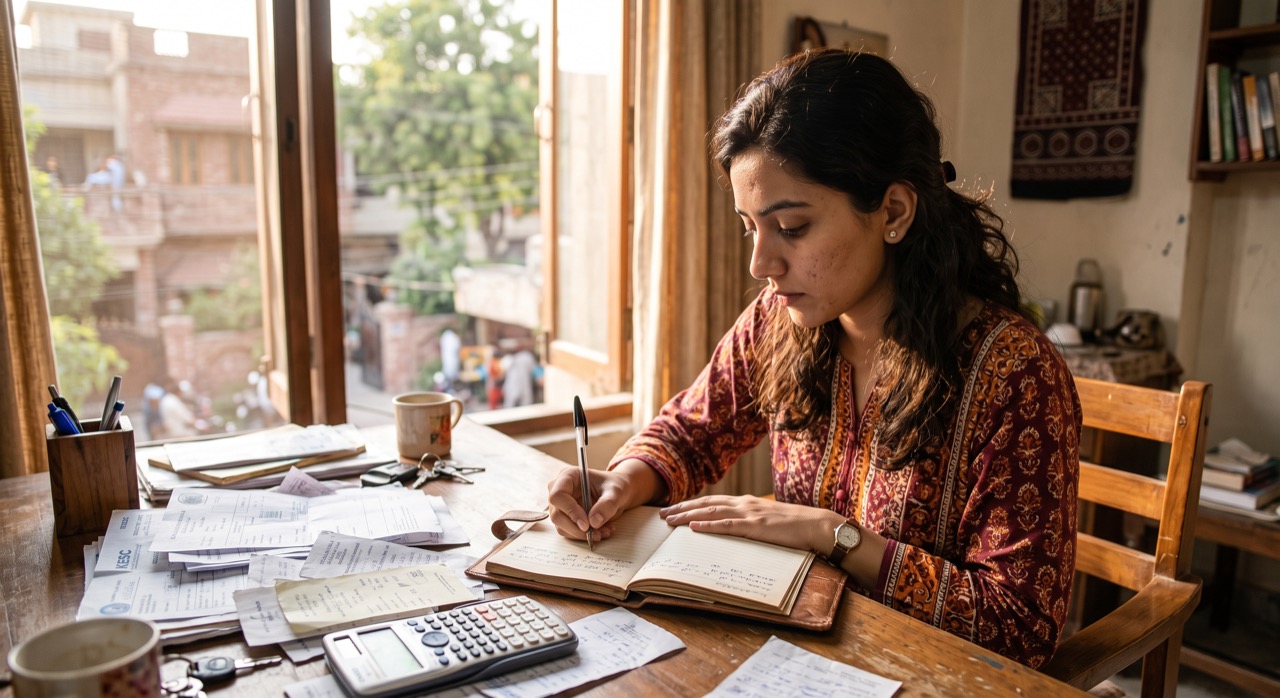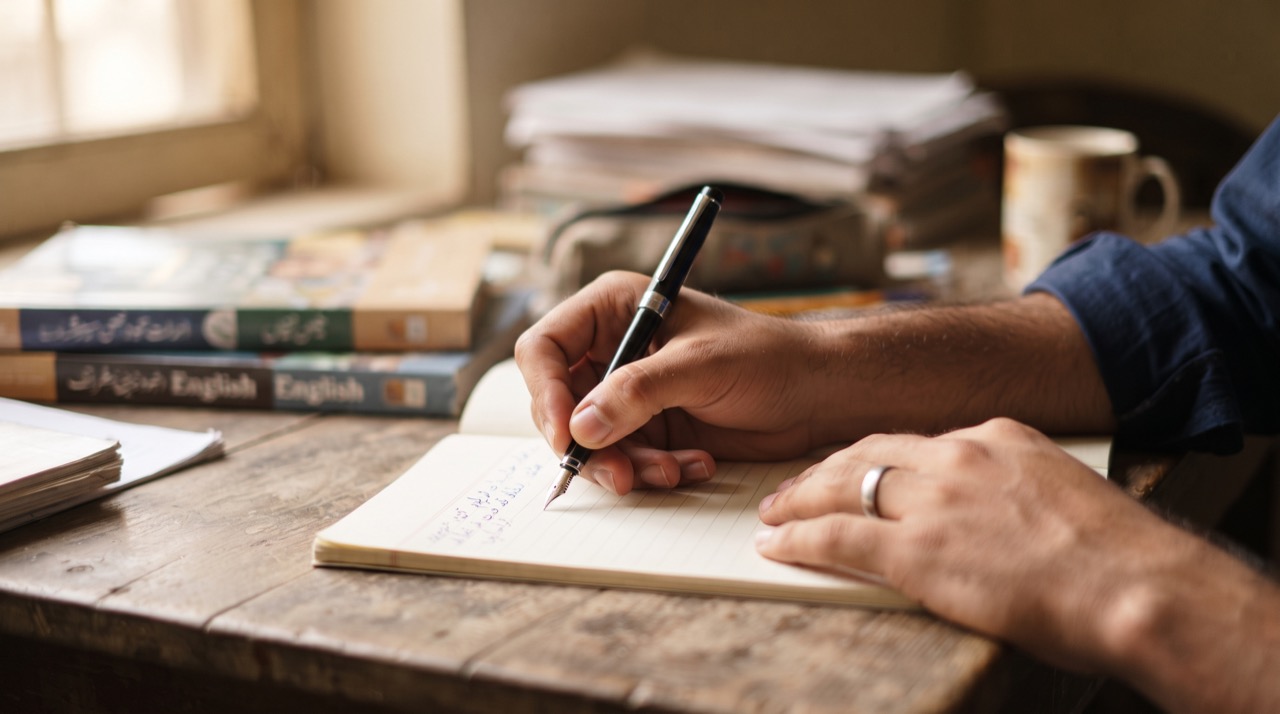
Every year, thousands of Matric, Intermediate, and university students lose marks not because their answers are wrong, but because examiners cannot read them comfortably. Handwriting is not just about looking pretty on paper — it directly affects how quickly and generously an examiner scores your answer sheet. Studies on handwriting and grading (widely cited in education research) consistently show that neater scripts get the benefit of the doubt on borderline answers, while messy scripts get skimmed and under-marked. The good news is that handwriting is a motor skill, not a talent, and it improves with the right kind of practice — not hours of mindless copying, but short, focused daily drills.
Why Handwriting Quality Affects Your Marks
Board examiners in Pakistan often check hundreds of answer sheets in a single sitting, under time pressure. A legible, evenly spaced script lets them find your key points fast — definitions, headings, formulas, the last line of a long answer. An illegible one forces them to slow down, re-read, and sometimes guess, which almost always works against the student. This is especially true for subjects like Urdu, Islamiyat, Pakistan Studies, and English, where long descriptive answers depend on the examiner following your argument smoothly from one line to the next.
- Neat headings and underlined key terms make your answer sheet easy to skim and score generously.
- Consistent letter size and spacing reduce reading fatigue for the examiner.
- Clear numbering of parts (a, b, c) helps examiners match your answer to the marking scheme.
- Legible diagrams and labels in Biology, Chemistry, and Physics answers often carry separate marks of their own.
Daily Drills That Actually Work
You do not need calligraphy classes. Fifteen to twenty minutes a day, done consistently for three to four weeks before your exams, is enough to see a real difference.
- The slant-line drill: Draw five lines of evenly spaced parallel slants for two minutes. This trains wrist control before you write actual letters.
- Alphabet in exam size: Write the alphabet in the exact size you use on answer sheets (not oversized practice letters). Consistency in size matters more than beauty.
- Copy one paragraph slowly: Pick any textbook paragraph and copy it at half your normal speed, focusing only on keeping letters the same height. Speed comes later.
- Timed answer practice: Once a week, write a full long-answer question under exam time pressure. This is the only drill that trains legible-while-fast handwriting, which is what actually matters on exam day.
- Line and margin discipline: Always write on ruled paper, keep a visible left margin, and leave a finger's width of space between lines — this alone makes handwriting look 30% neater without changing letter shape at all.
Pen, Posture, and Paper Choices
Tools matter more than most students realise.
- Use a smooth-flowing ball or gel pen — a scratchy or dry pen forces you to press harder, which tires your hand and worsens letter shape after a few pages.
- Sit with your paper tilted slightly (10-15 degrees) in the direction opposite your writing hand — this is standard advice from handwriting instructors and reduces wrist strain significantly.
- Practice on ruled A4 sheets that match your actual exam answer booklet, not random notebooks with different line spacing.
- Keep nails and grip relaxed — a tight grip is the single biggest cause of handwriting that gets worse as an exam paper goes on.
Exam-Day Habits That Preserve Neatness
Good handwriting built over weeks can still collapse under exam pressure if you rush the last few questions. Pace yourself using the paper's time allocation, and resist the urge to write faster and smaller as time runs short — instead, practice writing complete answers in slightly fewer words so speed pressure never forces sloppy letters. Organisations like the Federal Board (FBISE) and provincial boards grade on presentation as part of overall answer quality, so treat neatness as a scoring factor, not an afterthought.
A page that is easy to read gets read fully. A page that is hard to read gets skimmed — and skimmed answers rarely get full marks.
Improving your handwriting is one of the few exam preparation tasks with a guaranteed, measurable payoff for a small daily time investment. Start these drills at least a month before your board or university exams, and by test day, neat writing will be automatic rather than something you have to think about mid-answer.
Roman Urdu
Har saal Matric, Intermediate aur university ke bohat se students sirf is liye marks kam le jate hain kyunke unki handwriting examiner ke liye parhna mushkil hoti hai. Jawab sahi hone ke bawajood, agar likhai saaf na ho to examiner jaldi jaldi check karta hai aur borderline answers ko kam number deta hai. Achi baat ye hai ke handwriting koi paida-e-fitri talent nahi, balke ek skill hai jo roz thori si practice se behtar hoti hai.
Board examiners ek waqt mein sainkron answer sheets check karte hain. Saaf headings, barabar spacing, aur underline kiye gaye important points examiner ko aapka jawab jaldi samajhne mein madad dete hain — khaaskar Urdu, Islamiyat, Pakistan Studies aur English jaise subjects mein jahan lambay descriptive jawab likhne hotay hain.
- Roz sirf 15-20 minute ki practice kaafi hai, agar exam se 3-4 hafte pehle shuru ki jaye.
- Slant lines banayein taake wrist control behtar ho, phir alphabet ko exam wali size mein likhein — bohat bara likhna zaroori nahi, size ka consistent hona zyada zaroori hai.
- Kisi bhi paragraph ko aadhi speed par copy karein, sirf letters ki height barabar rakhne par focus karein.
- Hafte mein aik baar timed practice karein — pura lamba jawab exam jaisi time limit mein likhein, kyunke asal challenge speed ke sath saaf likhna hai.
- Hamesha ruled paper par likhein, left margin chorain, aur lines ke darmiyan thori jagah rakhein — is se likhai foran saaf dikhti hai.
Smooth chalne wala pen istemal karein, kyunke kharaab pen zyada pressure daalwata hai jo hath ko thaka deta hai aur likhai bigar deti hai. Paper ko halka sa tilt karke rakhein aur grip zyada tight na rakhein. Exam ke doran apna time achi tarah divide karein takay aakhri sawalon mein jaldi mein likhai kharaab na ho — is se behtar hai ke jawab thora mukhtasar likhein lekin saaf.
Saaf handwriting ek aisi cheez hai jis par thori si roz ki mehnat se guaranteed farq parta hai. Exam se kam az kam aik mahina pehle ye drills shuru kar dein, taake exam wale din saaf likhna khud-ba-khud ho jaye.