Getting a student visa is often the most stressful part of the whole study-abroad journey — not because the process is secretive, but because small paperwork mistakes and vague interview answers sink otherwise strong applications every year. Whether you are applying to the UK, US, Canada, Australia, or Europe, the underlying logic is the same: the visa officer needs to believe you are a genuine student who can pay for the course and who will follow the rules of the visa. Here is a practical breakdown of what to prepare, how to prove your finances, and how to avoid the mistakes that get Pakistani applicants refused most often.
Documents You Actually Need
Every country has its own checklist, but almost all student visas ask for the same core set of papers. Start collecting these early — some take weeks to arrange.
- Unconditional offer letter (CAS/I-20/COE) from the university, confirming your course, dates, and fees.
- Valid passport with at least six months validity beyond your intended stay, and enough blank pages.
- Academic transcripts and certificates (matric, FSc/A-levels, bachelor's — attested where the embassy requires it).
- English proficiency test result — IELTS, PTE, or TOEFL, depending on what the university and embassy accept.
- Proof of funds covering tuition and living costs, held for the minimum duration the embassy specifies.
- Statement of Purpose (SOP) or personal statement explaining why this course, this university, and this country.
- Medical exam or vaccination proof, if the destination country requires it (common for UK, Australia).
- Police character certificate from your local police station, sometimes required for longer courses.
- Passport-size photographs in the exact specification the visa form demands — size and background matter more than people think.
Proving Your Finances Without Red Flags
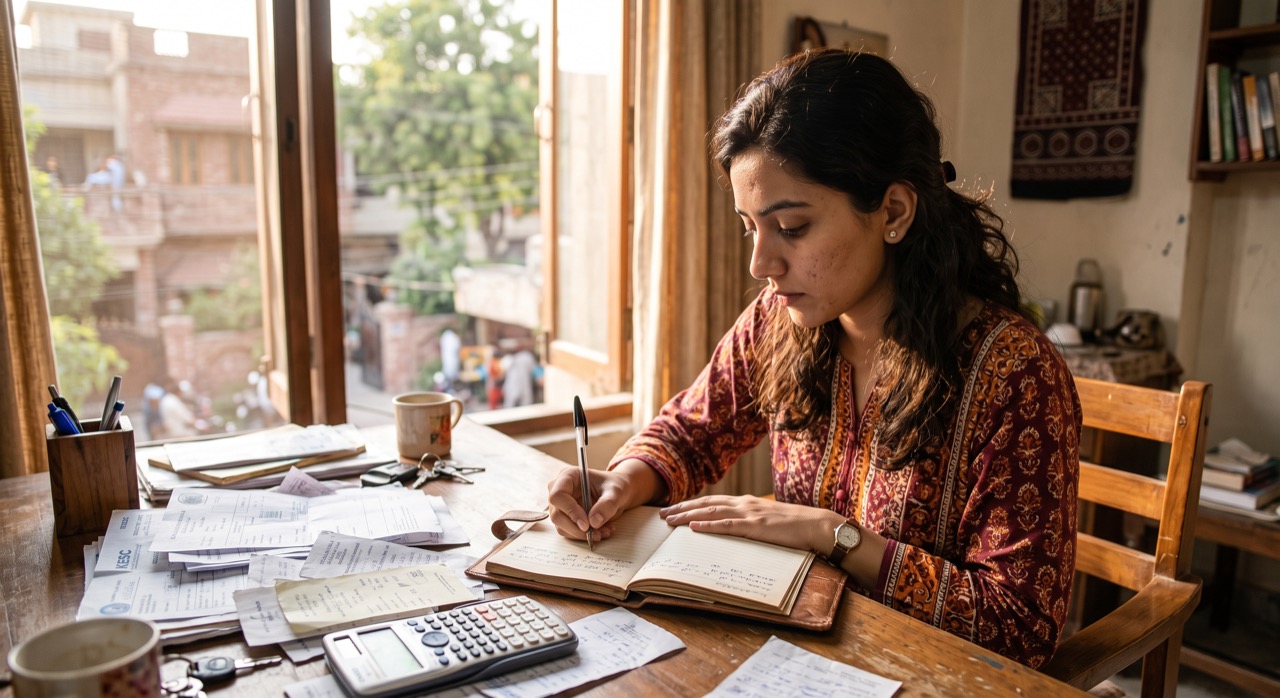
This is where most Pakistani applications get delayed or refused. Visa officers are trained to spot money that appears in an account right before the application and has no explainable history — this is often called a "cooked" or "seasoned" bank statement problem.
- Show at least 28-30 days of bank statement history (the UK's rule) or the specific holding period your destination requires — check the exact number for your country rather than assuming.
- If funds come from a parent or sponsor, include a notarized affidavit of support plus that sponsor's own bank statements and salary slips or business proof.
- Avoid large, unexplained lump-sum deposits right before you apply. If you must transfer money into the account, keep the paper trail — sale deed, provident fund withdrawal, business income — ready to show.
- Use an official bank letter/statement on letterhead, not just an app screenshot, unless the embassy explicitly allows digital statements.
- If you're using an education loan, carry the sanction letter along with the bank statement showing disbursement.
A quick sanity check most people skip: read your own bank statement as if you were a stranger. If a deposit looks odd to you, it will look odd to a visa officer too.
Writing a Statement That Doesn't Sound Copied
Consultants often hand out SOP templates, and officers read hundreds of near-identical ones a week. Yours needs to sound like you.
- Be specific about why this university and this exact course — mention a module, a faculty specialization, or a career outcome, not just "quality education."
- Explain your academic and career timeline logically: what you studied, why this course is the next step, and what you plan to do with it.
- Address the "intent to return" question directly if the visa type requires it — family ties, career plans, or property back home.
- Keep it honest. If your grades dipped one year, a one-line explanation is better than silence.
Interview Do's and Don'ts
Not every visa requires an in-person interview (the UK usually doesn't; the US almost always does), but when it happens, preparation shows immediately.
- Do know your own offer letter, fees, and course details cold — officers ask basic questions to check if you actually understand what you applied for.
- Do answer in your own words, briefly and directly, rather than reciting a memorized script.
- Do be honest about post-study plans; vague or contradictory answers about returning home raise doubt.
- Don't guess an answer you don't know — "I'll check with my university and confirm" is safer than a wrong guess.
- Don't bring unnecessary paperwork you can't explain — every document in your folder should have a purpose.
- Don't argue with the officer or over-explain out of nervousness; keep answers calm and to the point.
A visa interview is not a test of English fluency — it is a test of whether your story is consistent, your documents are real, and your plan makes sense.
Start your document collection at least two to three months before your intended intake, cross-check every requirement against your specific embassy's current checklist (rules change often), and get your statement of purpose reviewed by someone who isn't just going to say it sounds fine. Official government visa websites — for example UK gov.uk Student visa guidance and US Department of State student visa information — are the most reliable source for current requirements, always more current than a consultant's PDF from two years ago.
Roman Urdu
Student visa hasil karna mushkil nahi hota jab tak aap documents aur process sahi tarah samajh lein. Sab se pehli cheez: university ka unconditional offer letter (CAS/I-20/COE), valid passport (kam az kam 6 mahine ki validity), academic transcripts, English test (IELTS/PTE/TOEFL), aur proof of funds — yeh sab early se ikattha karna shuru karein kyunke kuch cheezein hafton leti hain.
Paise ka proof dikhana sab se zyada important hai. Bank statement mein kam az kam utne din ki history honi chahiye jitni aap ke embassy ki requirement hai — UK ke liye aam tor par 28 din. Agar paisa parents ya sponsor de rahe hain to unka affidavit of support, salary slip aur bank statement bhi sath lagayein. Sab se badi ghalti yeh hoti hai ke application se thori der pehle bank account mein achanak bara amount daal dete hain — visa officer ko yeh "cooked" ya banaya hua lagta hai. Har deposit ka clear source (jaise property sale, loan disbursement) proof ke sath rakhein. Statement of Purpose (SOP) likhte waqt consultant ka template copy na karein — apne alfaz mein likhein ke aap ne yeh course aur university kyun chuni, aap ka career plan kya hai, aur agar koi academic gap ya weak year hai to uska honest explanation dein. Interview mein sab se zaroori cheez confidence aur honesty hai. Apne offer letter, fees, aur course details achi tarah yaad rakhein. Jo sawal ka jawab na pata ho, us mein guess na karein — keh dein "main university se confirm kar loon ga." Ghair-zaroori documents na lain jo explain na kar sakein, aur officer se bahas ya lambi lambi baatein karne se bachein — jawab clear aur seedha hona chahiye. Application se kam az kam 2-3 mahine pehle preparation shuru karein, apne specific embassy ki current checklist zaroor check karein kyunke rules waqt ke sath badalte rehte hain, aur SOP kisi aise insan se check karwayein jo sach mein feedback de, sirf "theek hai" na kahe.