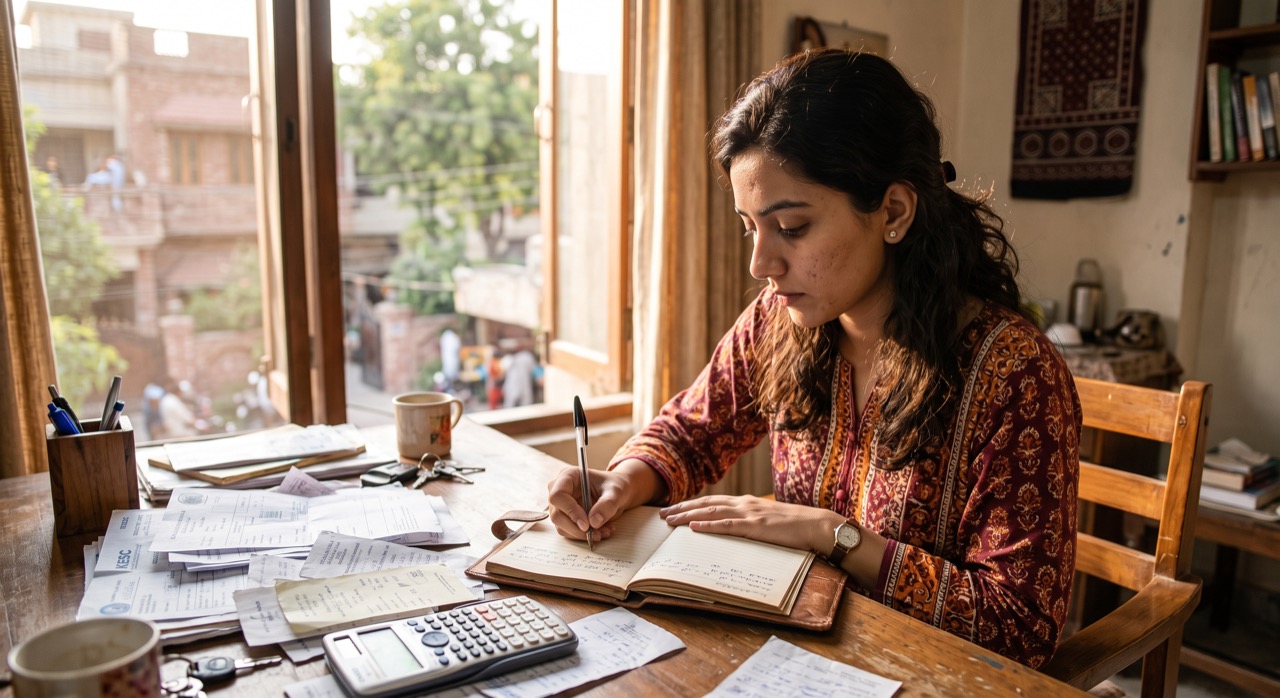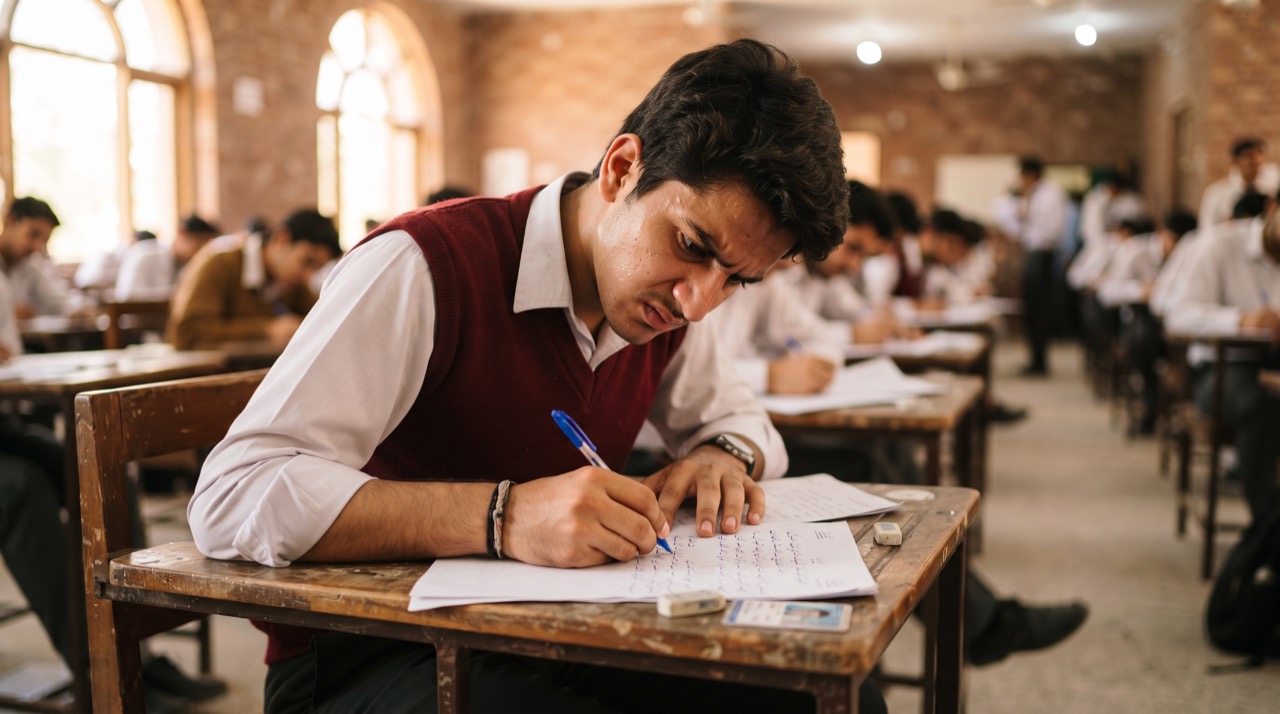
Board exams under BISE (Board of Intermediate and Secondary Education) are not scored like school tests. A different teacher, who never saw your effort in class, marks your paper in a few minutes alongside a hundred others. Two students who know the same content can walk out with a ten-mark gap between them, purely because of how they attempted the paper. That gap is largely under your control. Here is how to attempt your next board paper so the marks you deserve actually land on the answer sheet.
Divide Your Time Before You Write Anything
The first five minutes should be spent reading, not writing. Skim the whole paper, note which questions are compulsory and which have a "choose any" option, and budget roughly 1.5 to 2 minutes per mark. A 10-mark long question should take no more than 15-18 minutes, including any diagram or table.
- Give the objective/MCQ section 15-20 minutes maximum — it carries fewer marks per question than short and long answers.
- Keep 10-15 minutes at the end purely for review, not for finishing a question you are behind on.
- If a question is taking longer than its mark value justifies, write what you have, leave space, and move on. Coming back later beats losing time on three other questions.
Pick the Right Questions in the Right Order
Most BISE papers give choices — "attempt any 5 out of 8" short questions, or a choice between two long questions. Read every option before picking; students often lock into the first question they see and skip a shorter, higher-scoring one further down the page.
- Attempt the objective/MCQ section first — it settles nerves and guarantees quick, sure marks.
- Within short-answer sections, do your strongest question first. Early confidence improves handwriting and pacing for the rest of the paper.
- For long questions with a choice, pick the one you can answer completely — a shorter, complete answer outscores a longer, half-finished one.
- Never leave a question fully blank; examiners award marks step-by-step for correct points, formulas, or diagram labels even in an incomplete answer.
Presentation Rules BISE Examiners Actually Reward
External examiners mark hundreds of scripts against a fixed marking key in just a few minutes each. A paper that is easy to scan gets full credit faster; a messy one risks a correct point being missed inside a crowded paragraph.
- Underline key terms, dates, formulas, and final answers with a pencil and ruler — examiners are trained to scan for underlined content when awarding key-point marks.
- Number every answer exactly as it appears on the paper, including sub-parts like (a), (b), (i), (ii).
- Start each new main question on a fresh line, or a fresh page where the answer sheet allows — do not let answers run into each other.
- Label every diagram and leave a margin around it; unlabelled diagrams in Biology, Physics, or Geography rarely get full marks.
- If you make a mistake, draw a single neat line through it rather than scribbling — overwritten answers are often treated as cancelled.
- Write in clear, moderately sized handwriting; both very small and very large script slow the examiner down and raise the chance of missed points.
The Last Five Minutes: A Quick Checklist
- Confirm your roll number is filled on every additional sheet, not just the main answer book.
- Check that every compulsory question has been attempted, and that you answered the correct number of choices where "attempt any X" applies.
- For MCQs, make sure only one option is circled or filled per question — double-marked answers are usually cancelled.
- Tie or pin extra sheets in the correct order before submitting.
For official model papers and marking-scheme format, the Federal Board (FBISE) website is a useful reference to practice against before exam day.
A complete, correctly numbered, and neatly underlined answer worth 6 out of 10 marks will almost always score higher in practice than a brilliant but disorganized answer that the examiner has to hunt through for the right points.
Roman Urdu
Board exam sirf parhai ka nahi, paper attempt karne ke tareeqe ka bhi test hota hai. Aksar do students jo barabar mehnat karte hain unke marks mein farq sirf isliye aata hai kyunke ek ne paper ko sahi tarah se manage kiya aur doosre ne nahi. Yeh baat aapke control mein hai, isliye exam hall mein yeh tareeqa apnayein.
Sabse pehle paper shuru hote hi 5 minute lagayein sirf poora paper parhne mein — dekhein kaunse questions compulsory hain aur kahan "attempt any" ka option hai. Har question ke marks ke hisab se time set karein, taqreeban har mark ke liye 1.5 se 2 minute. Aakhri 10-15 minute sirf review ke liye bachayein, kisi adhoore question ko poora karne ke liye nahi.
Objective ya MCQs sabse pehle attempt karein — yeh jaldi aur pakka score dete hain aur confidence bhi banate hain. Jab choice mile to sirf pehla question mat pakrein, poora page parh kar wo question chunain jisme aap poora aur mukammal jawab likh sakein. Adhoora lamba jawab likhne se behtar hai ke chota lekin poora jawab likhen.
Presentation par khaas dhyan dein: har jawab ko question paper ke number ke mutabiq number karein, key words, dates aur formulas ko pencil aur ruler se underline karein — examiner inhe dekh kar hi marks deta hai. Har naye question ko nayi line ya nayi page se shuru karein, diagrams ko label zaroor karein, aur agar galti ho jaye to ek seedhi line se cut karein, overwrite na karein.
Aakhri panch minute mein roll number har sheet par check karein, dekhein ke sab compulsory questions attempt ho chuke hain, MCQs mein sirf ek hi option mark hua ho, aur extra sheets sahi tarteeb mein pin ya tie ki gayi hon. Yeh chhoti chhoti baatein hi aksar 5-10 extra marks ka farq banati hain.