Clearing the written exam is only half the journey. For CSS, PMS, and other FPSC or PPSC recruitment cycles, the interview — often called the "viva voce" — is where many strong candidates lose marks simply because they walk in unprepared for the format. The panel is not trying to trap you; it wants to see how you think, how you carry yourself, and whether you can represent the government with composure. With the right preparation, the interview becomes a controlled, predictable exercise rather than a source of dread.
What the Panel Actually Asks
Most panels follow a fairly consistent structure, even though individual questions vary by board and by year. Expect questions to fall into these broad buckets:
- Personal and biodata questions: your hometown, family background, academic choices, and why you left a previous job or field (if applicable). These set the tone and let the panel gauge how self-aware you are.
- Current affairs and general knowledge: Pakistan's relations with neighbouring countries, recent economic indicators, provincial politics, and major global events. Read a serious newspaper daily for at least two months before your interview date.
- Subject and academic questions: tied to your degree or optional subjects, especially if you studied something specialised like law, engineering, or medicine before applying.
- Situational and ethical questions: "What would you do if your senior officer asked you to act against the rules?" These test judgment, not textbook knowledge — answer with a clear principle and a realistic course of action.
- Service preference and motivation questions: why you chose a particular group or department, and what you know about its actual mandate and challenges.
Prepare short, honest answers rather than memorised speeches. Panels interview thousands of candidates and can tell within seconds when an answer is rehearsed word-for-word.
Body Language That Works in Your Favour
Nonverbal signals often shape a panel's impression before you finish your first sentence.
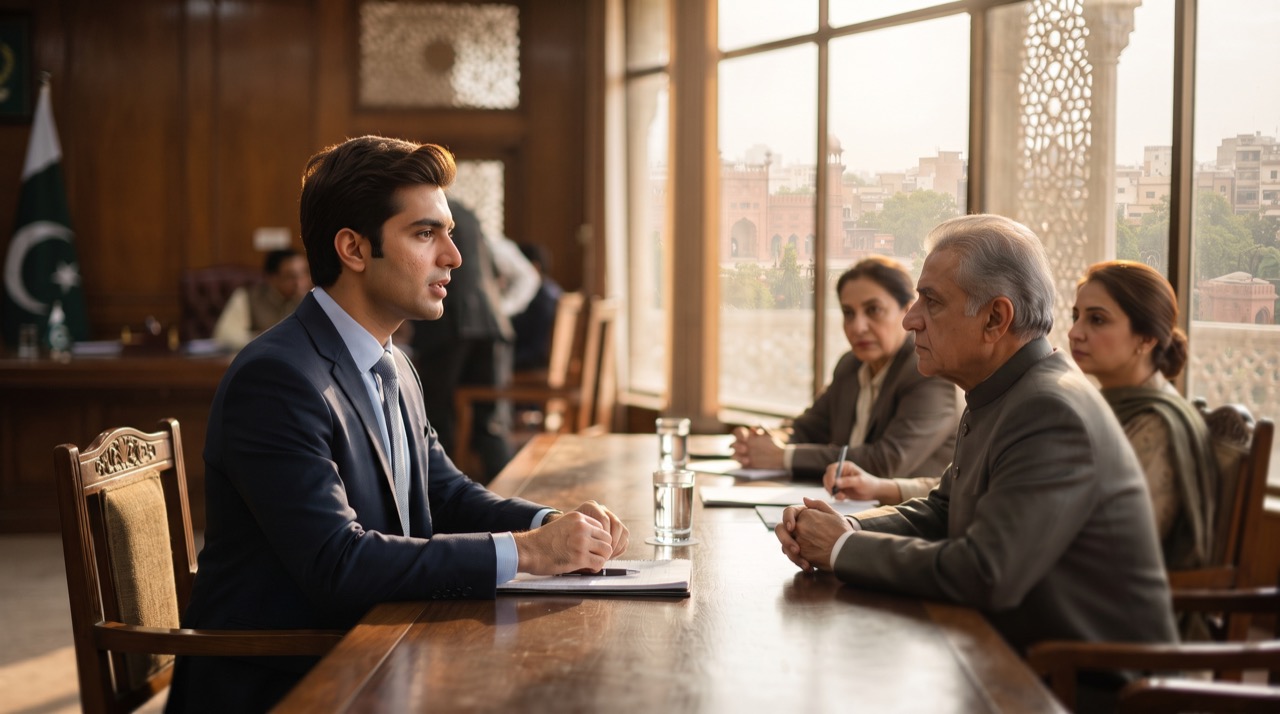
- Knock, greet the panel with a respectful "Assalam-o-Alaikum" or "Good morning," and wait to be asked to sit.
- Sit upright with both feet on the floor; avoid slouching or crossing your arms, which reads as defensive.
- Maintain natural eye contact with whoever is speaking, moving your gaze across the panel rather than fixating on one member.
- Keep your hands visible and still on the table or in your lap — avoid clicking pens, touching your face, or fidgeting with papers.
- Pause for two or three seconds before answering a hard question. A brief, composed pause reads as thoughtfulness, not weakness.
- If you don't know an answer, say so plainly and briefly explain your reasoning if you can. Guessing wildly or arguing with the panel damages credibility more than admitting a gap.
Dress Code and Practical Preparation
FPSC and PPSC interviews are formal government settings, and dress is judged as part of overall presentation.
- Men: a well-pressed dark or navy suit, plain tie, white or light-coloured shirt, polished black shoes, and neat, trimmed hair.
- Women: a formal shalwar kameez or a modest suit in muted colours, minimal jewellery, and simple, professional grooming.
- Carry your original documents (CNIC, degrees, domicile, roll number slip) in a clean folder — panels frequently ask to see originals on the spot.
- Arrive at the FPSC or PPSC office at least 45 minutes early; interview schedules run behind, and rushing in flustered undermines every other preparation step.
- Do a mock interview with a teacher, senior officer, or coaching group at least twice before the real one, focused on your specific service group's likely questions.
For the latest interview schedules, syllabus updates, and official notifications, always check the Federal Public Service Commission website directly rather than relying on secondhand information from coaching centres.
The interview is not a test of how much you know — it is a test of how clearly you can think, and how calmly you can say it.
Treat the panel as senior colleagues assessing whether they can trust you with public responsibility, not as adversaries. Preparation, honesty, and composure will carry you further than any rehearsed script.
Roman Urdu
Written exam pass karna sirf aadha kaam hai. FPSC ya PPSC ke interview, jise viva voce kehte hain, mein bohat se acha likhne wale candidates bhi is liye kam number le lete hain kyunke woh format se waqif nahi hote. Panel aap ko phansane nahi baithta — woh sirf yeh dekhna chahta hai ke aap kaise sochte hain aur khud ko kaise present karte hain.
Panel aam tor par yeh sawalat karta hai: aap ka personal background aur family, current affairs (Pakistan ke haalat, hamsaya mulkon se taluqaat, economy ki khabar), aap ke degree ya optional subject se related sawal, aur ethical/situational sawal jaise "agar senior officer aap ko rules ke khilaf kaam kehe to aap kya karenge." In sab ke jawab yaad kiye hue speech ki tarah nahi, balke seedhe aur imandar tareeke se dein — panel foran pehchan leta hai jab jawab rata hua ho.
Body language bhi bohat matter karti hai. Kamre mein dastak dein, adab se salam karein, aur jab tak bethne ko na kaha jaye khade rahein. Seedhe baith kar dono pair zameen par rakhein, apne haath meez par ya god mein rakhein aur bar bar na hilayein. Jo member sawal kar raha ho uski taraf dekh kar jawab dein, lekin sirf ek hi banda ko na ghoortay rahein. Agar koi jawab nahi aata to seedha keh dein — jhoothi guess lagana ya panel se behas karna zyada nuksan deta hai. Libaas bhi professional hona chahiye: mardon ke liye dark suit, tie, aur polish jooty; khawateen ke liye sada rang ki shalwar kameez ya formal suit, halka makeup aur asal documents (CNIC, degree, domicile) ek saaf folder mein sath lekar jayein. Interview se kam az kam 45 minute pehle pohanch jayein, aur kisi senior ya coaching group ke sath do teen mock interview zaroor karein.
Sab se zaroori baat: interview yeh nahi dekhta ke aap ko kitna ilm hai, balke yeh dekhta hai ke aap kitni sukoon aur wazeh andaz mein soch sakte hain. Panel ko dushman nahi, senior sathi samjhein jo yeh jaanchte hain ke kya aap par zimmedari sonpi ja sakti hai.