Ghee and oil are the backbone of Pakistani cooking — they carry the masala, build the "tadka" aroma, and give karahi that glossy finish everyone loves. But heart disease is one of the leading causes of death in Pakistan, and diets heavy in saturated fat (the kind found in desi ghee, banaspati, and deep-fried snacks) are a major contributor. The good news: you do not have to choose between a healthy heart and a flavourful table. A few smart swaps and technique changes can cut fat by a third or more in most home-cooked dishes while keeping the taste your family expects.
Why the Fat Actually Matters
It is not oil itself that is the problem — it is the amount and the type. Desi ghee and banaspati (vanaspati) are high in saturated and trans fats, which raise LDL ("bad") cholesterol and contribute to clogged arteries over years of daily use. The World Health Organization's healthy diet guidance recommends keeping total fat intake moderate and replacing saturated fat with unsaturated fats where possible — for example, swapping some ghee for canola, sunflower, or olive oil, which are lower in saturated fat and better for cholesterol levels.
Smart Ingredient Swaps
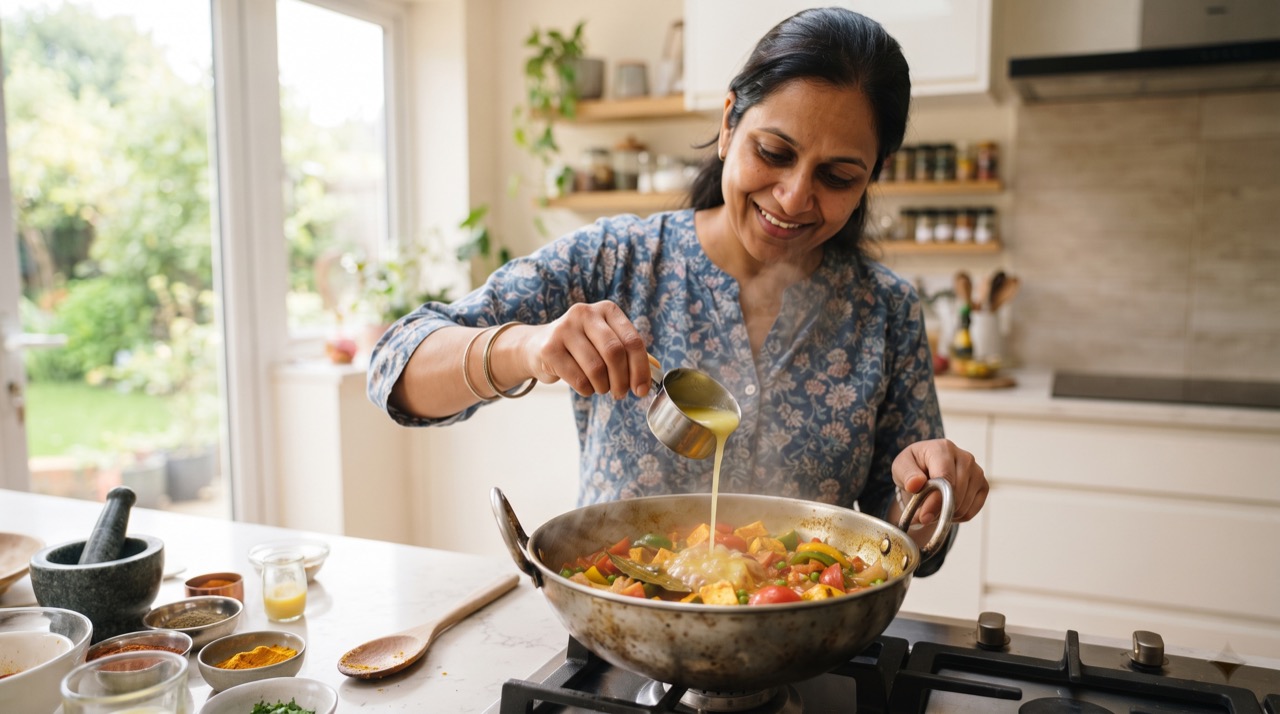
- Measure, don't pour. Most of us eyeball oil straight from the bottle. Switch to a measuring spoon — a karahi for four people rarely needs more than 3-4 tablespoons of oil, not half a cup.
- Blend ghee with oil. Use half desi ghee and half a light cooking oil (canola, sunflower, or rice bran oil) for tadka and biryani. You still get the ghee aroma at a fraction of the saturated fat.
- Use yogurt instead of extra oil in curries — plain dahi tenderises meat and adds body to the gravy without the calories.
- Thicken gravies with pureed onion, tomato, or besan (gram flour) instead of adding more oil to get that rich, cooked-down texture.
- Choose mustard oil or olive oil for tadka in daal — both carry flavour well with far less used per serving than ghee.
Cooking Techniques That Cut Fat Without Cutting Flavour
- Water-sauté onions. Start browning onions in a little oil, then add a splash of water when they start sticking. This "steam-fry" method gets deep caramelisation using half the oil.
- Use a non-stick or well-seasoned karahi. Good cookware means masala doesn't stick, so you're not tempted to keep adding oil to "loosen" it.
- Skim the fat after cooking. For nihari, qorma, or any curry made ahead, refrigerate it and lift off the solidified fat layer on top before reheating — an easy, invisible way to remove a large chunk of saturated fat.
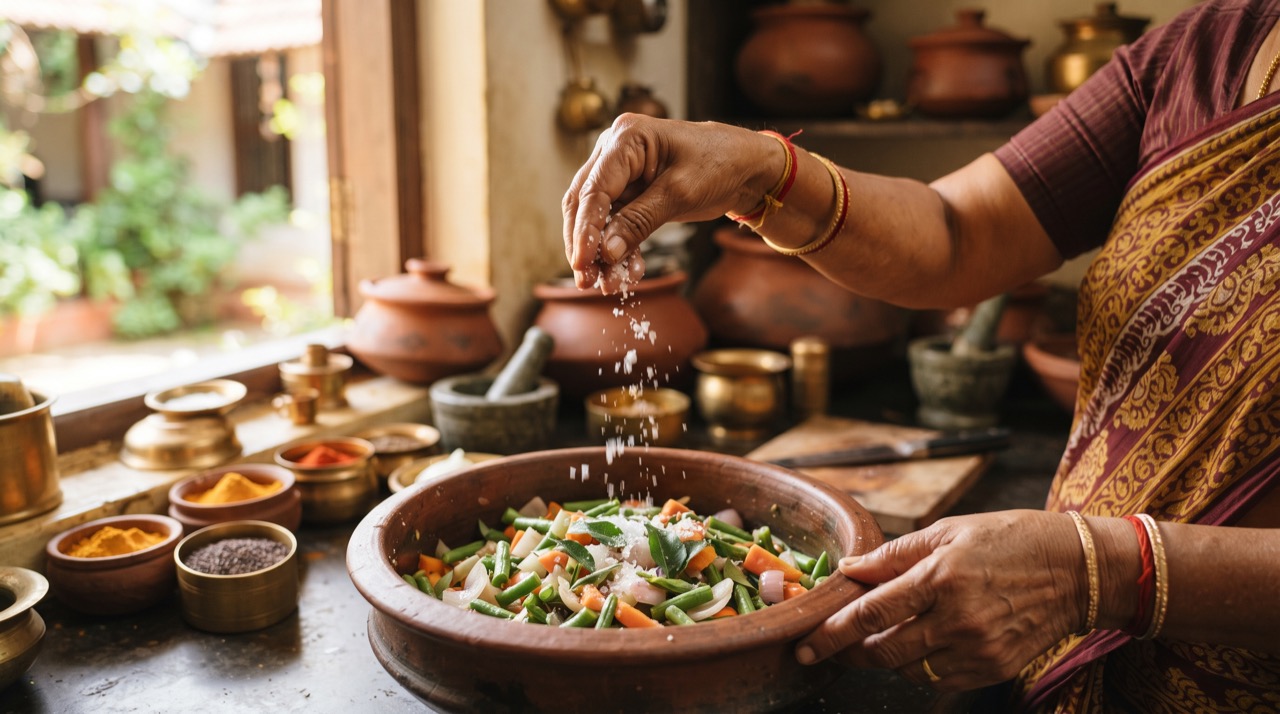
- Dry-roast whole spices before grinding instead of frying them in oil; you still get full flavour for the masala base.
- Bake or air-fry instead of deep-frying for samosas, pakoras, and cutlets — brush lightly with oil and you'll get a crisp result using a fraction of what deep-frying absorbs.
- Marinate meat well (yogurt, lemon, ginger-garlic, spices) — a good marinade reduces the amount of oil needed during cooking because the meat is already tender and flavourful.
Dish-by-Dish Quick Fixes
- Karahi: Use bone-in chicken for natural juices, cut oil to 3-4 tbsp, and let tomatoes cook down fully instead of adding oil for shine.
- Biryani: Layer with a light brush of ghee-oil mix rather than pouring it between layers; fried onions (birista) can be oven-baked instead of deep-fried.
- Daal: Cook the daal itself with zero oil, and reserve just 1-2 tsp for the tadka on top.
- Paratha: Use a non-stick tawa, brush oil with a pastry brush instead of pouring, and try roghni or plain phulka more often through the week.
As nutritionists often put it: it's not one meal that harms the heart, it's the everyday tablespoon you don't measure — small, consistent swaps do more good than one strict diet week.
None of this means giving up karahi gosht or biryani on Sundays. It means making the everyday dal, sabzi, and tadka lighter so the occasional richer meal doesn't have to carry all the guilt — or the cardiac risk.
Roman Urdu
Pakistan mein dil ki bimariyan aam hoti ja rahi hain, aur iski bari wajah hamara ziyada ghee aur oil wala khana hai. Lekin acchi khabar yeh hai ke thori si tabdeeli se aap swaad kam kiye baghair fat kam kar sakte hain.
Sabse pehla kaam: oil ko andaze se nahi, chamach se naapein. Karahi banate waqt 3-4 tablespoon oil kaafi hota hai, aadha cup nahi. Desi ghee ko halke cooking oil (canola ya sunflower) ke saath mix kar lein — aadha ghee, aadha oil — is se khushboo bhi barqarar rahegi aur saturated fat bhi kam hoga.
Gravy ko gaadha karne ke liye zyada oil dalne ki bajaye piyaz, tamatar ya besan ka istemal karein. Piyaz ko oil mein bhoonte waqt jab chipakne lage to thora pani dal dein — is se piyaz utni hi acchi bhunti hai lekin oil kaafi kam lagta hai.
Dahi ka istemal karein — gosht ko naram banane aur gravy mein taste lane ke liye dahi behtareen hai, aur oil ki zaroorat kam kar deta hai. Achhi marination bhi oil bachati hai kyunke gosht pehle hi tender aur khushboo-dar ho jata hai.
Nihari ya qorma jaisi cheezein agar pehle se banai hain to fridge mein rakh kar upar jama hua fat nikal dein — yeh saturated fat kam karne ka sabse asaan tareeqa hai. Samosay ya pakoray deep-fry karne ki bajaye air-fryer ya oven mein halka sa oil laga kar banayein.
Karahi mein bone-in chicken use karein taake apna hi rus (juice) nikle, biryani mein layers ke darmiyan oil dalne ki bajaye halka sa brush karein, aur daal khud plain paani mein pakayein — sirf upar ka tadka oil mein banayein, wo bhi 1-2 chamach.
Yaad rahe, maqsad karahi ya biryani chorna nahi — sirf rozmarra ke khane ko halka rakhna hai taake hafte mein ek baar ka mazedaar khana dil ke liye bojh na bane.