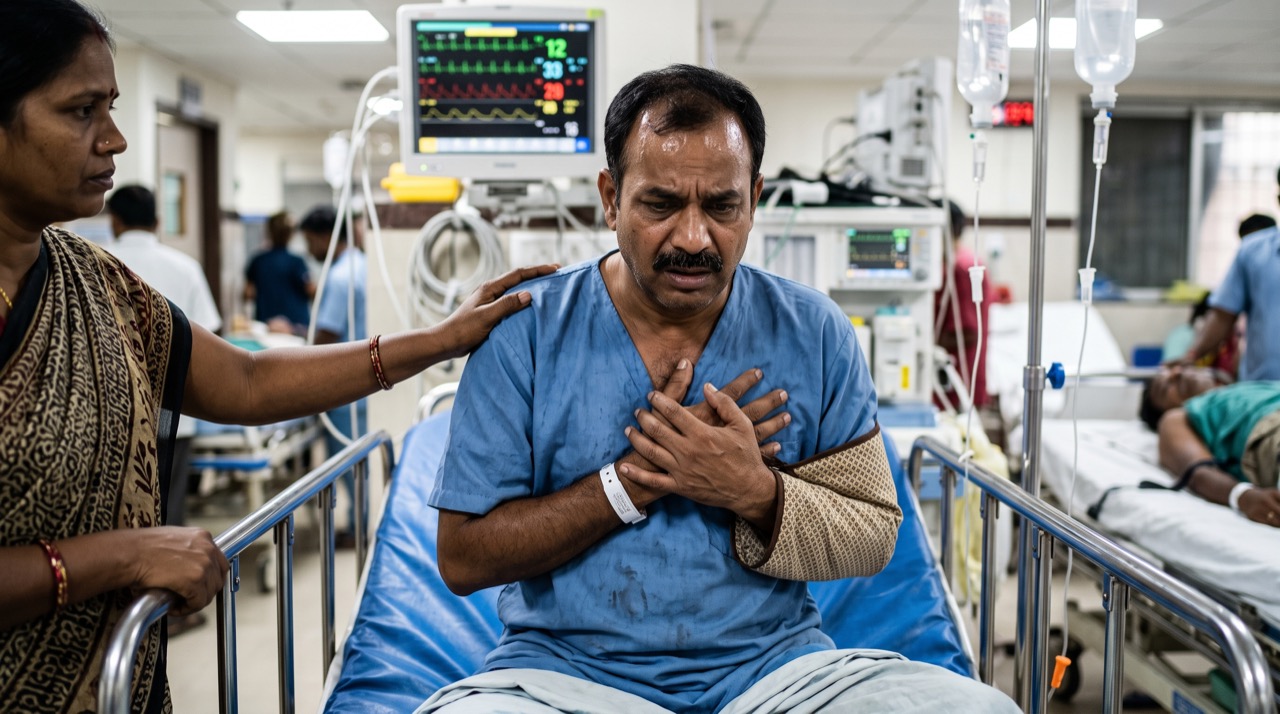
In Pakistan, heart disease and stroke together are among the leading causes of death, and doctors will tell you the same hard truth every time: most of the damage happens not because help wasn't available, but because it wasn't called soon enough. People wait, hoping the chest tightness will pass, or they mistake slurred speech for tiredness. That delay is exactly what costs lives and turns a survivable event into a permanent disability. Knowing the signs cold, and having a plan for the first few minutes, is one of the most practical things you can do for yourself and your family.
Heart Attack: What It Actually Feels Like
Movies train us to expect a dramatic clutch-the-chest collapse, but real heart attacks are often quieter and easy to explain away, especially in women, older adults, and people with diabetes. Watch for:
- Pressure, squeezing, fullness, or pain in the center of the chest lasting more than a few minutes, or that goes away and comes back
- Pain or discomfort spreading to one or both arms, the back, neck, jaw, or upper stomach
- Shortness of breath, with or without chest discomfort
- Cold sweat, nausea, or lightheadedness appearing suddenly
- Unusual fatigue that feels different from normal tiredness (more common in women)
If any of these hit while someone is at rest or during mild activity, treat it as an emergency, not something to sleep off.
Stroke: The FAST Check
A stroke cuts off blood supply to part of the brain, and brain cells start dying within minutes. The internationally used FAST test is simple enough to teach a child, and it works in Urdu households just as well as anywhere else:
- Face — Ask the person to smile. Does one side droop?
- Arms — Ask them to raise both arms. Does one drift downward or fail to lift?
- Speech — Ask them to repeat a simple sentence. Is it slurred, strange, or hard to get out?
- Time — If you see any of these, note the time symptoms started and get emergency help immediately.
Other signs include sudden confusion, sudden severe headache with no known cause, sudden vision trouble in one or both eyes, and sudden loss of balance or coordination.
What to Do in the First Minutes
Time lost is muscle lost, and time lost is brain lost — for both a heart attack and a stroke, the clock starts the moment symptoms begin, not when you reach a hospital.
- Call for emergency transport immediately. In many Pakistani cities, Edhi (115) and Chhipa ambulance services, or 1122 in Punjab, can reach faster than a private car stuck in traffic — call them rather than driving yourself if possible
- Keep the person calm, seated or lying down with head slightly raised, and loosen tight clothing
- Do not give food or water, especially if speech or swallowing seems affected — choking risk is real
- If the person is conscious, not allergic to aspirin, and you suspect a heart attack, a single chewed adult aspirin (roughly 300mg) can help, but only if a medical dispatcher advises it or you're confident it isn't a stroke, since aspirin can worsen a bleeding-type stroke
- If the person becomes unresponsive and isn't breathing normally, begin chest compressions if you know how, and keep going until help arrives
- Write down or remember exactly when symptoms started — hospitals need this to decide on clot-busting treatment, which is only effective within a narrow window
Lowering Your Risk Long Term
- Get blood pressure and blood sugar checked regularly — hypertension and diabetes are extremely common and under-treated across Pakistan
- Cut down on ghee, fried snacks, and excess salt in daily cooking; walk briskly for at least 30 minutes most days
- If you smoke or use naswar/paan with tobacco, quitting is the single biggest change you can make
- Keep a list of family medical history and share it with your doctor, since both conditions run in families
For more detailed clinical guidance, the World Health Organization's cardiovascular disease resources and the American Heart Association's warning signs guide are trustworthy references worth bookmarking.
Roman Urdu
Pakistan mein heart attack aur stroke maut ki sab se badi wajah mein shamil hain, aur zyada tar nuksan is liye hota hai kyunke log alamaat ko nazar-andaz kar dete hain ya madad bulane mein deri kar dete hain. Yeh chand minute ki deri hi fark paida karti hai.
Heart Attack Ki Alamaat
Seene mein jakdan, bharipan ya dabao jo kai minute tak rahe; dard jo bazuon, kamar, jabray ya gardan tak phail jaye; sans phoolna; thanda paseena aana; jee michlana; ya achanak be-wajah thakan mehsoos hona — yeh sab alamaat hain jinhein hargiz nazar-andaz na karein, khaas taur par khawateen aur sugar ke marizon mein yeh alamaat halki lag sakti hain.
Stroke Ka FAST Test
- Face (Chehra) — Muskurane ko kahein, kya aik taraf latak raha hai?
- Arms (Bazu) — Dono bazu upar uthwayein, kya aik neeche gir raha hai?
- Speech (Guftagu) — Aik jumla bulwayein, kya alfaz lardkharate hain?
- Time (Waqt) — In mein se koi bhi alamat nazar aaye to foran emergency madad bulayein, aur waqt note kar lein.
Pehle Minutes Mein Kya Karna Hai
Foran ambulance ko call karein — Edhi (115), Chhipa, ya Punjab mein 1122, khud gari chalane ki koshish na karein. Mariz ko sukoon se bithayein ya lita dein, sar thoda upar rakhein, aur tang kapre dheele karein. Khana ya pani hargiz na dein, khaas taur par agar bolne ya nigalne mein mushkil ho. Agar heart attack ka shak ho aur mariz hosh mein ho to aik aspirin chaba kar de sakte hain, lekin agar stroke ka shak ho to aspirin na dein kyunke yeh nuksan de sakti hai. Agar mariz behosh ho jaye aur sans na le raha ho to CPR shuru karein agar aapko aata ho, aur madad aane tak jari rakhein. Alamaat shuru hone ka waqt zaroor yaad rakhein, hospital ke liye yeh maloomat bohat zaroori hoti hai.
Risk Kam Karne Ke Tareeqay
Blood pressure aur sugar regular check karwayein, ghee aur talay hue khane kam karein, roz 30 minute tez chalna karein, aur agar sigarette ya naswar/paan istemal karte hain to chhorna sab se bara faida dega. Apni family history doctor ko zaroor batayein, kyunke yeh dono bimariyan khandani ho sakti hain.