Ramadan changes everything about how our bodies run for a month — meal timing flips, water intake drops to two windows a day, and Pakistani iftar tables are famously loaded with pakoras, samosas, and fried snacks. None of that has to mean sluggish afternoons or a burning chest after iftar. A few adjustments to what goes on the plate at sehri and iftar make a real difference in energy, focus, and comfort during fasting hours.
Sehri: Eating for a 14-Hour Fast, Not Just a Full Stomach
The goal at sehri is slow-release energy, not a heavy, quick-digesting meal that leaves you hungry by noon. Refined carbs like plain paratha or sugary tea alone spike blood sugar fast and drop it just as fast, which is why some people feel drained mid-morning.
- Complex carbs: oats, whole-wheat roti, brown rice, or daal — these digest slowly and keep blood sugar steadier.
- Protein: eggs, yogurt, paneer, or a small portion of grilled chicken help with satiety through the day.
- Fiber: add a fruit like banana or apple, or a small salad — fiber slows digestion and helps prevent constipation, which is common during Ramadan.
- Healthy fats: a few almonds or a teaspoon of desi ghee in moderation help with sustained energy without the greasiness of fried food.
- Go easy on salt and pickles: excess sodium at sehri increases thirst dramatically by afternoon.
Try to eat sehri as close to the fajr cut-off as reasonably possible rather than early and going back to sleep — this shortens the metabolic gap and reduces mid-day fatigue.
Iftar: Break the Fast Gently, Then Eat
Jumping straight into a full plate of fried food after 14+ hours without food is hard on digestion and is exactly what causes that heavy, sleepy feeling right after iftar.
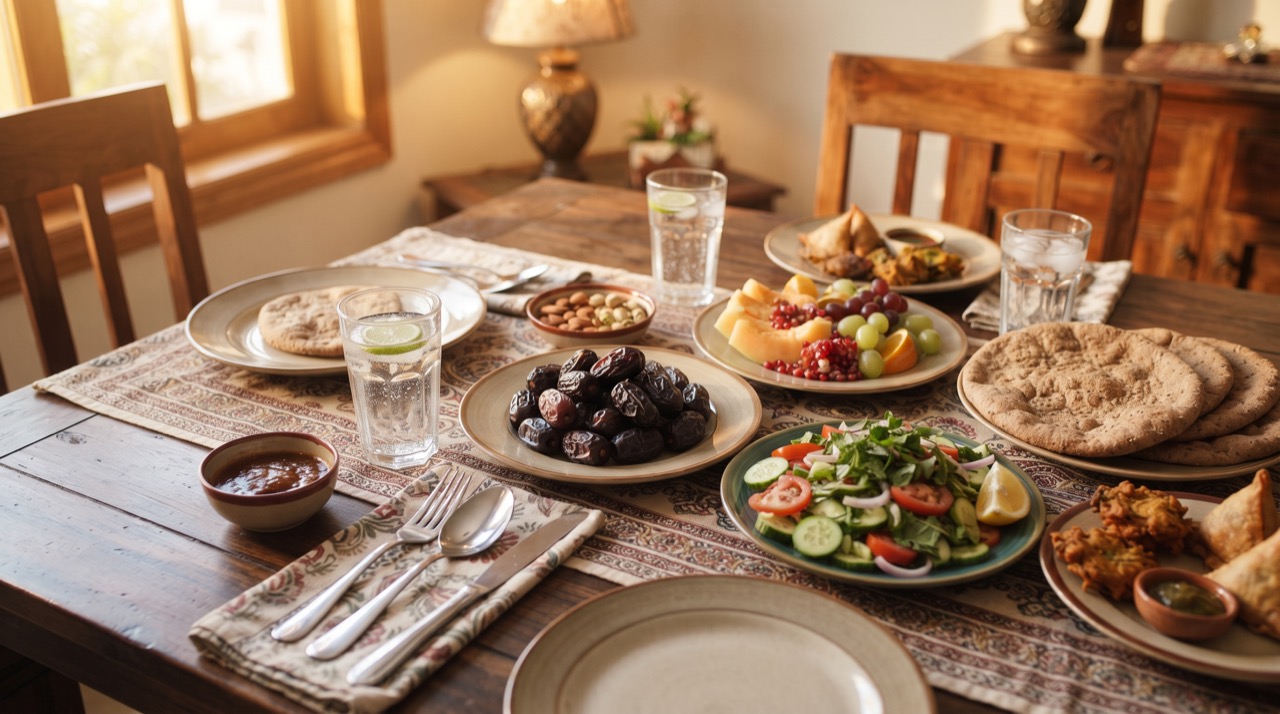
- Start small: 2-3 dates and a glass of water or milk to restore blood sugar gently.
- Wait 10-15 minutes: pray maghrib, then move to the main meal — this pause alone reduces overeating.
- Lead with something warm and light: a bowl of soup or shorba settles the stomach before heavier food arrives.
- Balance the main plate: protein (grilled or baked, not fried), a vegetable dish, and a modest portion of rice or roti — rather than filling up entirely on fried items.
- Limit fried food to one item, not the whole spread: pick either pakoras or samosas, not both, and pair with something baked or grilled.
Hydration Between Fasts
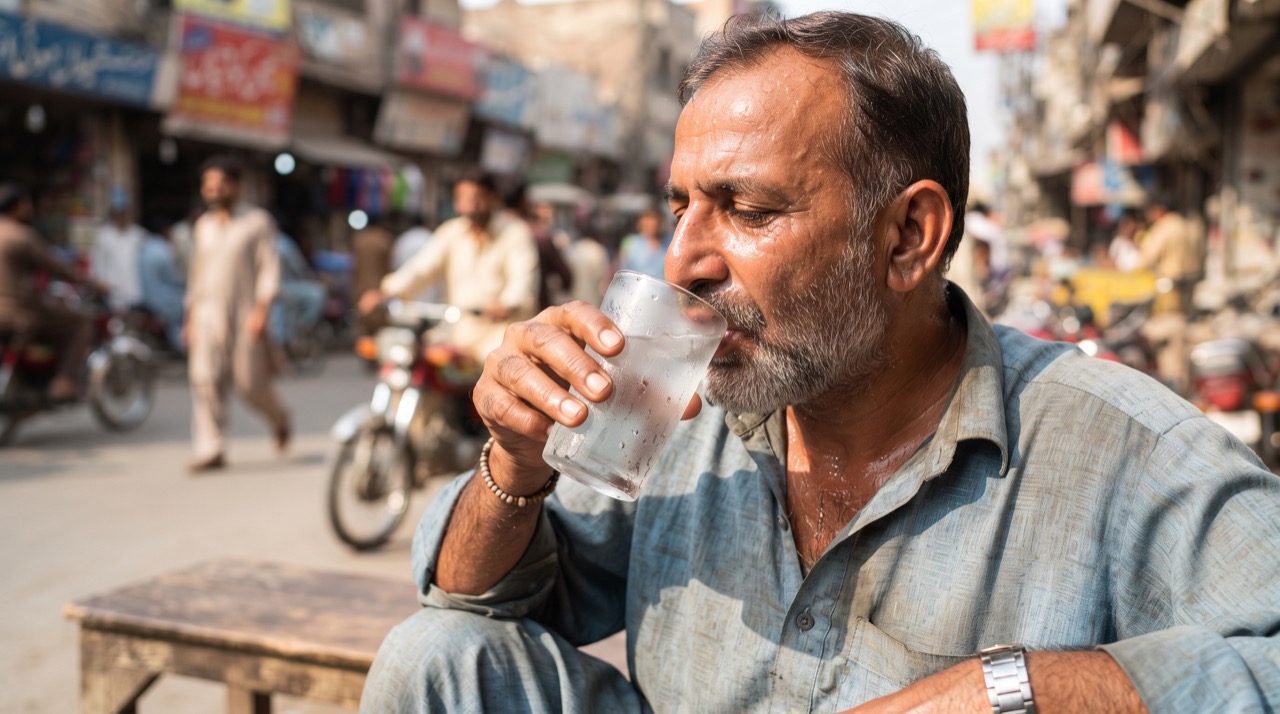
Hydration is a between-iftar-and-sehri project, not a one-time gulp. Spread fluids across the evening instead of drinking large amounts right before sleeping.
- Aim for roughly 8-10 glasses of fluid between iftar and sehri, including water, milk, and soup.
- Rooh Afza and fresh juices are fine in moderation, but too much added sugar can leave you thirstier — dilute sugary drinks with extra water.
- Coconut water or a pinch of salt with lemon water helps replace electrolytes lost during hot fasting days.
- Cut back on tea and coffee, especially at sehri — caffeine is a mild diuretic and can increase fluid loss during the fast.
The World Health Organization's guidance on healthy diets is a useful general reference for balancing salt, sugar, and fat intake — principles that apply just as well during Ramadan as any other month.
Avoiding Fried-Food Fatigue and Acidity
Heavy, oily food combined with a suddenly full stomach is the main reason so many people feel bloated or get acidity after iftar.
- Bake or air-fry samosas and pakoras instead of deep-frying when possible — same flavor, far less oil load.
- Avoid lying down right after eating; sitting upright for 30-45 minutes helps prevent acid reflux.
- Skip very spicy or heavily fried food at sehri specifically — it tends to trigger acidity hours later while you can't drink water.
- If heartburn is a regular issue, a small bowl of plain yogurt or a banana at iftar can help settle the stomach naturally.
A simple rule that works for most people: fill half the iftar plate with vegetables and protein, a quarter with carbs, and treat fried snacks as a side, not the main event.
None of this means giving up the traditional Ramadan table — it means rebalancing it slightly so the fast supports the body instead of draining it by the third week.
Roman Urdu
Ramadan mein sehri aur iftar ka sahi intikhab bohat farq dalta hai — na sirf pait bharne se, balki poora din active rehne se. Sehri mein sirf paratha aur chai lene ke bajaye complex carbs (jaise oats, daal, brown rice), protein (anda, dahi, paneer) aur fiber (fruit ya halka salad) shamil karein — yeh energy ko der tak barqarar rakhte hain. Namak aur achaar sehri mein kam rakhein kyunke yeh din mein pyaas zyada barhata hai.
Iftar shuru karte waqt seedha bhari plate na khayein. Pehle 2-3 khajoor aur pani ya doodh se roza kholein, phir maghrib ki namaz ke baad 10-15 minute ruk kar khana shuru karein. Halka shorba ya soup pehle lena mede ke liye behtar hota hai. Main khane mein protein, sabzi aur thori si roti ya chawal balance karein — sirf fried cheezon se pait na bharein. Pakora ya samosa mein se koi ek hi lein, dono nahi, aur koshish karein ke kuch bake ya grill kiya hua bhi ho.
Paani ki kami se bachne ke liye iftar se sehri tak thora thora pani pite rahein — poori raat mein 8-10 glass fluid lena behtar hai, aik dam bohat sara peene se behtar. Rooh Afza ya juice mein extra pani mila lein taake sugar kam ho aur pyaas bhi kam lage. Chai coffee ka istemal kam karein, khaaskar sehri mein, kyunke yeh jism se pani nikalte hain.
Acidity aur pait bhari mehsoos hone se bachne ke liye fried khane ki jagah bake ya air-fry karein, khane ke foran baad letne se parhez karein, aur sehri mein zyada masala wala khana avoid karein. Agar acidity ho jaye to dahi ya kela lena aksar aaram deta hai. Aasaan usool yaad rakhein: aadhi plate sabzi aur protein se, thori carbs se, aur fried cheez sirf side item ke tor par.