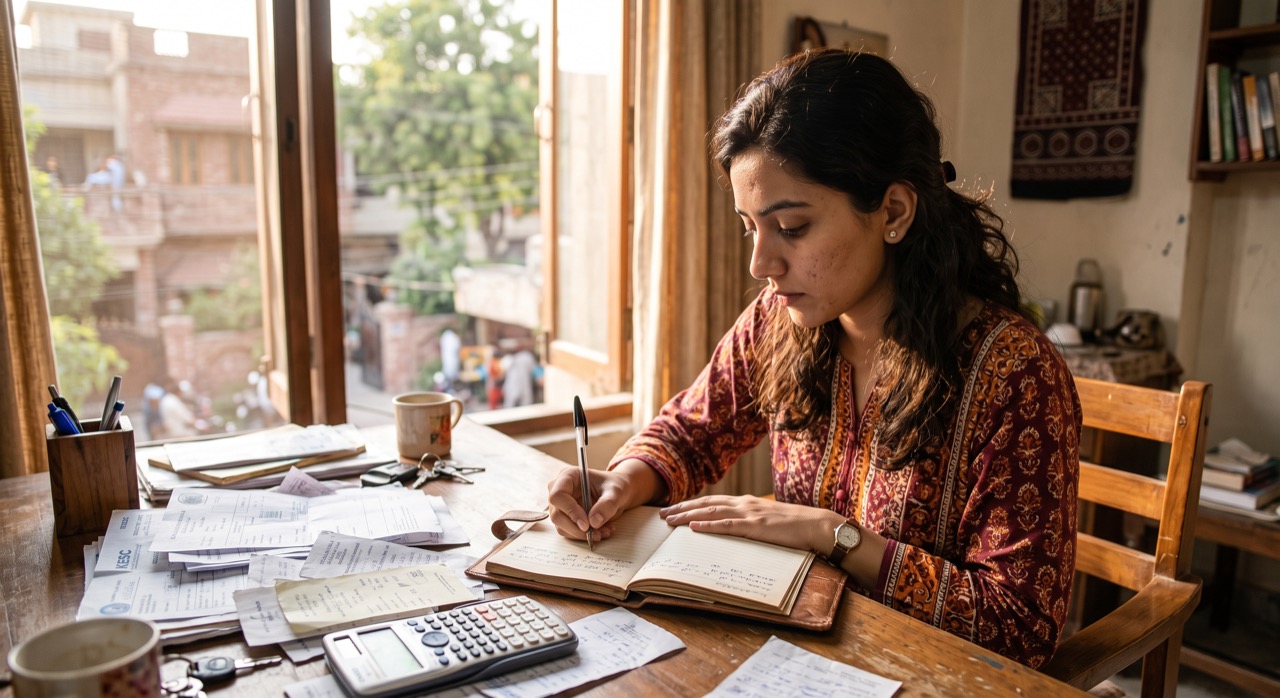
If you spend eight or more hours a day hunched over a laptop at an office in Karachi or Lahore, or bent over notes preparing for FSc, MDCAT, or CSS exams, you already know the drill: a dull ache between the shoulder blades by 4pm, a stiff neck by evening, and a lower back that complains the moment you stand up. This is not just "getting old" or "weak bones" — it is almost always a mechanical problem caused by how the desk, chair, and screen are set up, and how long you stay frozen in one position. The good news is that most of it is fixable without buying expensive furniture.
Fix Your Posture Before You Fix Anything Else
Most desk pain in Pakistan comes from makeshift setups — a dining chair paired with a low table, or a laptop balanced on a bed with a pillow behind the back. Before spending money, correct these basics:
- Feet flat on the floor. If your chair is too high, use a stack of old books or a small stool under your feet so your knees sit roughly level with your hips.
- Lower back supported. Roll up a towel or a dupatta and wedge it into the small of your back. This one trick fixes more slouching than any gadget.
- Screen at eye level. Looking down at a laptop screen for hours is the single biggest cause of "tech neck." Prop the laptop on a few books or an old shoebox and use a separate keyboard and mouse if you can — even a cheap Rs. 800 wired set from Hafeez Centre or a local computer market solves this.
- Elbows at roughly 90 degrees when typing, with shoulders relaxed, not shrugged up toward your ears.
Check yourself sideways in a phone camera or mirror once — most people are shocked at how far forward their head actually sits when they "feel" like they're sitting straight.
Move Every 30-45 Minutes, Not Just at Lunch
Pain builds up from staying still, not just from bad posture. Set a phone alarm or use a free app to remind yourself to stand every half hour to 45 minutes. You don't need a gym break — just stand, walk to get water, or do a lap around the room. This alone reduces stiffness dramatically for people doing 8-10 hour shifts or long study sessions before exams.
Five Stretches You Can Do at Your Desk
These take under five minutes total and need zero equipment — do them between study chapters or after a long call:
- Chin tucks: Gently pull your chin straight back (like making a double chin) for 5 seconds, repeat 10 times. This directly counters forward head posture from screen use.
- Shoulder blade squeezes: Pull both shoulder blades back and down as if pinching a pencil between them, hold 5 seconds, repeat 10 times.
- Neck side stretch: Tilt your ear toward your shoulder until you feel a gentle pull on the opposite side of the neck, hold 20 seconds each side.
- Seated spinal twist: Sitting tall, twist your torso to look behind you on each side, holding the chair back for support. Hold 15-20 seconds per side.
- Standing back extension: Stand up, place hands on your lower back, and gently lean backward a few inches. Great after long sitting stretches.
Pain is your body's way of telling you a position has been held too long, not a sign that something is permanently broken — in most desk-related cases, the fix is mechanical, not medical.
When to See a Doctor
Simple desk-related aches usually improve within 1-2 weeks of consistent posture correction, movement breaks, and stretching. However, see a physician or physiotherapist if you experience numbness or tingling running down an arm or leg, pain that wakes you up at night, weakness in your hands or legs, or pain that does not improve after a few weeks of trying these fixes. Organizations like the World Health Organization note that musculoskeletal pain is one of the leading causes of lost productivity worldwide, so it's worth treating seriously rather than pushing through it indefinitely.
Cheap Workstation Tweaks Worth Trying
- A firm cushion or folded chaadar on a hard chair seat to reduce pressure on the tailbone.
- A laptop stand or improvised stack of books to raise screen height — costs nothing if you already own books.
- An external keyboard so the laptop can sit higher without your arms being stuck typing at chin level.
- A small footrest (even an upturned crate) if your feet dangle.
None of this requires an imported ergonomic chair. Small, consistent adjustments plus regular movement fix the vast majority of desk-related back and neck pain.
Roman Urdu
Agar aap Karachi ya Lahore ke kisi office mein 8 ghante laptop pe jhuk kar baithte hain, ya phir FSc, MDCAT ya CSS ki taiyari ke liye ghanton study table pe baithe rehte hain, to kandhon ke darmiyan dard aur gardan ki akarhat aapko pehchani lagegi. Yeh buढापa ya kamzor haddiyon ki nishani nahi — zyada tar mamla kursi, table aur screen ki ghalat setting aur ek hi position mein zyada der baithne ka hota hai. Behtareen baat yeh hai ke iska ilaj mehnga furniture khareede baghair mumkin hai.
Sabse Pehle Posture Theek Karein
Pair zameen pe seedhe rakhein — agar kursi oonchi hai to purani kitabon ka stack ya stool use karein. Kamar ke neeche ek rolled towel ya dupatta laga lein, isse slouching bohat kam ho jati hai. Laptop screen ko aankhon ke level pe rakhein — kitabon ya shoebox pe rakh dein aur agar mumkin ho to separate keyboard-mouse use karein (Hafeez Centre se sasta wired set mil jata hai). Kaam karte waqt kohniyan taqreeban 90 degree pe hon aur kandhe relax hon, kaanon tak na uthe hon.
Har 30-45 Minute Mein Hilna Zaroori Hai
Dard zyada tar der tak ek jagah baithe rehne se hota hai, sirf ghalat posture se nahi. Phone pe alarm laga lein ke har aadhe ghante baad khade hon, pani lene jayein, ya kamre mein chakkar lagayein.
Desk Pe Karne Wali Stretches
- Chin tuck: thodi ko seedha peeche khinchein, 5 second hold, 10 baar dohrayein.
- Shoulder blade squeeze: dono kandhe ki haddiyan peeche-neeche khinchein, 5 second hold, 10 baar.
- Gardan side stretch: kaan ko kandhe ki taraf le jayein, har side 20 second hold.
- Baithe-baithe spinal twist: peeche mudkar dekhein, kursi ki peeth pakar kar, har side 15-20 second.
- Khade hokar back extension: kamar pe haath rakh kar halka sa peeche jhukein.
Dard yeh batata hai ke ek position bohat der tak hold hui hai, iska matlab yeh nahi ke kuch permanently kharab ho gaya — desk se related zyada tar dard ka hal mechanical hota hai, medical nahi.
Doctor Se Kab Milein
Aam desk-related dard 1-2 hafton mein posture fix karne aur stretches se theek ho jata hai. Lekin agar haath ya pair mein sunnpan (numbness) mehsoos ho, raat ko dard se neend khul jaye, ya kamzori mehsoos ho, to physiotherapist ya doctor se zaroor milein. Sasti tabdeeliyan — jaise kitabon ka stack, folded chaadar, ya external keyboard — zyada tar desk dard ka hal khud hi kar deti hain, bina kisi mehnge ergonomic chair ke.