With grocery prices climbing every season, many families in Pakistan assume that eating healthy means spending more. In reality, some of the most nutritious foods in our kitchens — daal, eggs, seasonal vegetables and whole grains — are also the cheapest per plate. The trick is shopping smart, cooking in bulk, and building meals around what is in season rather than what is trending. Here is a practical, no-nonsense guide to eating well without stretching your budget.
Build Meals Around Daal and Eggs
Daal (lentils and pulses) is the backbone of affordable Pakistani nutrition. A kilo of masoor, moong, or chana daal costs a fraction of meat but delivers a similar amount of protein along with fiber, iron, and folate. Eggs are the other budget superstar — cheap, versatile, and packed with complete protein and vitamin B12.
- Rotate your daals: Masoor cooks fastest (great for busy weeknights), chana daal is heartier for lunch, and moong daal is gentle on digestion — good for kids and elders.
- Add a boiled egg to daal-chawal: This turns a simple meal into a more complete one without adding meat costs.
- Batch-cook daal: Make a large pot every 2-3 days and refrigerate. It reheats well and saves both gas/electricity and time.
- Try egg curry (anda curry): Boiled eggs in a tomato-onion masala stretch a dozen eggs into two full family meals.
- Sprout your own moong or chana: Soaking and sprouting at home multiplies the nutritional value of pulses you already have, at zero extra cost.
Shop Seasonal Vegetables, Not Imported Ones
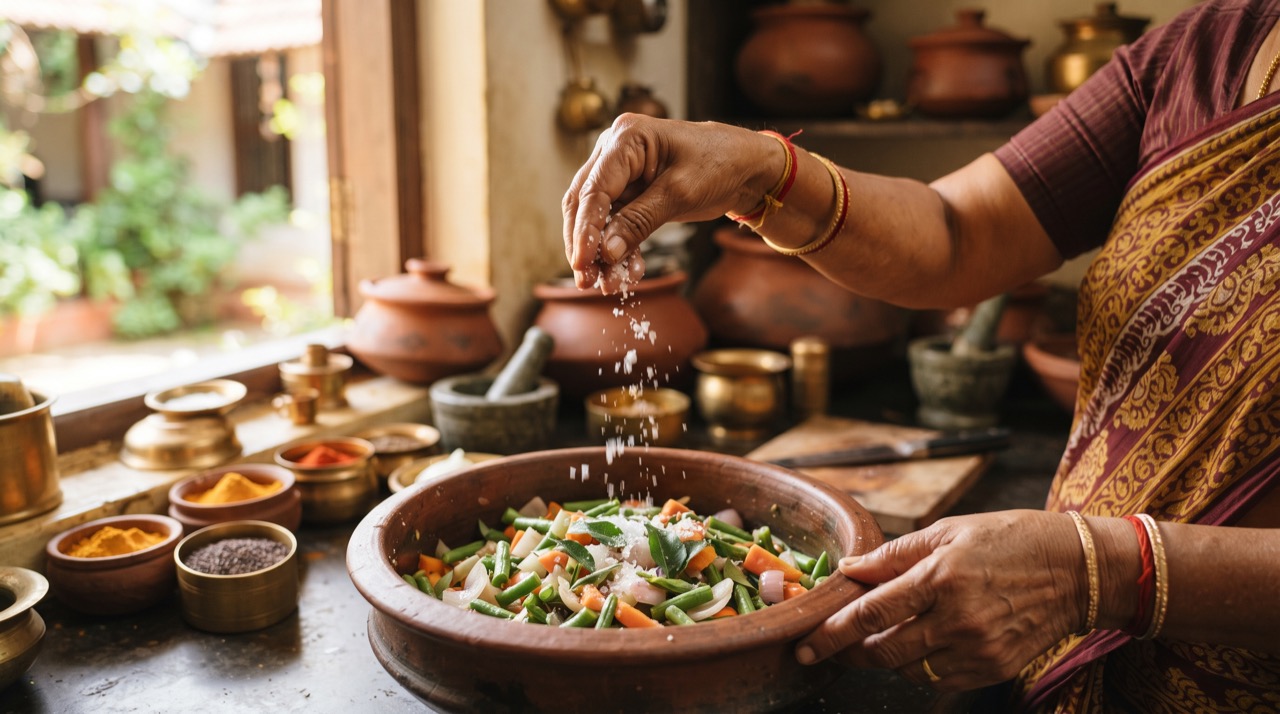
Seasonal sabzi is always cheaper because it doesn't need cold storage or long transport, and it's usually fresher and more nutrient-dense too. In summer, look for karela, tinda, lauki, bhindi, and guar phali. In winter, turnips (shalgam), spinach (palak), methi, and cauliflower (gobi) are at their cheapest and best.
- Buy from your local sabzi mandi early morning when supply is highest and prices are lowest, rather than from a retail store later in the day.
- Cook sabzi with minimal oil, more masala: This keeps meals light and saves on cooking oil, which is one of the more expensive kitchen staples.
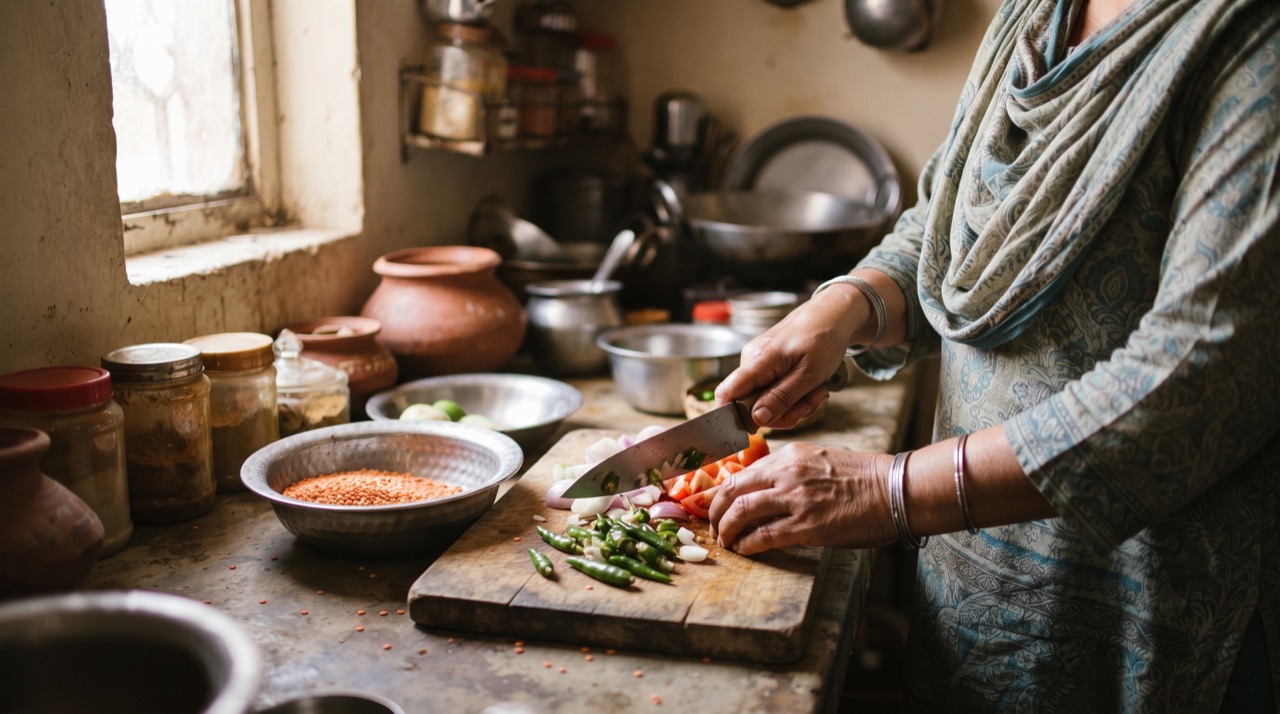
- Mix vegetables with daal or chana: Palak daal, lauki chana, or aloo-methi stretch both ingredients further while adding fiber and micronutrients.
- Don't discard the greens: Turnip greens, radish leaves, and coriander stems are edible and nutritious — most households throw these away unnecessarily.
Choose Whole Grains Over Refined Ones
Whole wheat atta (chakki atta) is not just healthier than maida — it's often cheaper per roti when you account for how filling it is. Brown or broken rice, and daliya (cracked wheat), are underused but affordable options that keep you full longer, which itself saves money by reducing snacking and second helpings.
- Make daliya for breakfast instead of packaged cereal — cook it with milk and a bit of jaggery (gur) for a filling, low-cost start to the day.
- Use chapati made from whole wheat atta rather than naan or refined-flour bread for daily meals.
- Add a spoon of chana or daal flour (besan) to your regular atta when kneading — it boosts protein content at almost no extra cost.
A plate of daal-chawal with a boiled egg and a side of seasonal sabzi often has more balanced nutrition than a costly fast-food meal — and it costs a fraction of the price.
Practical Budget Habits That Add Up
- Plan a weekly menu around what's on sale at the mandi that week — this alone can cut a family's grocery bill noticeably.
- Buy pulses and atta in bulk (10kg bags) when possible — the per-kilo price drops significantly compared to buying small quantities repeatedly.
- Avoid packaged snacks and replace with roasted chana, peanuts, or fruit chaat made from seasonal fruit — cheaper and far more nutritious.
- Cook once, eat twice: Extra daal or sabzi from dinner can become a paratha filling or sandwich stuffing the next day, reducing waste.
For general dietary guidance, the World Health Organization's healthy diet guidance is a useful reference point when planning balanced, affordable meals for the whole family.
Roman Urdu
Pakistan mein mehngai ke is daur mein healthy khana mushkil lagta hai, lekin haqeeqat mein humari sasti cheezein — daal, anday, mausami sabziyan aur sabut anaaj — hi sabse zyada nutrition dete hain. Bas thora planning aur smart shopping ki zaroorat hai.
Daal aur anday ko base banayein: Masoor, moong aur chana daal protein, fiber aur iron ka behtareen aur sasta zariya hain. Har 2-3 din mein bara pot daal bana kar fridge mein rakhein — gas aur waqt dono bachega. Daal-chawal ke sath ek ubla anda add karne se meal zyada complete ban jata hai. Anda curry bana kar ek dozen anday se do waqt ka khana nikal sakte hain.
Mausami sabzi khareedein: Garmiyon mein karela, tinda, lauki, bhindi sasti milti hain, sardiyon mein shalgam, palak, methi aur gobi. Subah sawere mandi se khareedna zyada faida mand hota hai kyunke rates kam hote hain. Sabzi ko daal ke sath milakar pakayein — jaise palak daal ya lauki chana — is se dono cheezein aage tak chalti hain. Shalgam aur mooli ke patte phenkne ki bajaye unhe bhi pakayein, ye bhi nutritious hote hain.
Sabut anaaj ko tarjeeh dein: Chakki atta maida se behtar aur sasta hota hai. Daliya breakfast ke liye acha aur sasta option hai — doodh aur thora gur milakar banayein. Roti banate waqt atta mein thora besan mila dein, is se protein barh jata hai bina extra kharcha kiye.
Budget ke chote habits: Hafta pehle se plan karein ke kaunsi sabzi sasti mil rahi hai. Daal aur atta bulk mein (10 kg bag) khareedein, per-kilo rate kam ho jata hai. Packaged snacks ki bajaye roasted chana ya fruit chaat khayein. Bacha hua khana agle din paratha ya sandwich mein use karein taake wastage na ho. Choti choti tabdeeliyan lambay arsay mein bara farq dalti hain.