Joint pain is one of the most common complaints we hear from parents, grandparents, and increasingly from people in their thirties and forties across Pakistan. Between squatting on the floor for meals, climbing stairs in homes without lifts, and long hours standing in kitchens or shops, our joints take a daily beating. The good news is that arthritis and joint stiffness are rarely something you just have to "live with." A combination of the right kind of movement, sensible weight management, and consistent warmth can noticeably reduce pain and keep you mobile for years longer. This is not about expensive treatments — it is about small, repeatable habits.
Move Often, But Move Gently
The instinct when a joint hurts is to rest it completely. In most cases of osteoarthritis, that backfires — joints that don't move get stiffer, and the muscles around them weaken further, putting more strain on the joint itself. Low-impact movement keeps the cartilage lubricated with synovial fluid and strengthens the supporting muscles without pounding the joint.
- Walking: A 20-30 minute walk on flat ground, ideally in the cooler morning or evening hours, is one of the best things you can do for knees and hips. Start with 10 minutes if you're out of practice and build up gradually.
- Swimming or water walking: If you have access to a pool, water takes the weight off your joints almost entirely while still letting you exercise. This is particularly good for hip and knee arthritis.
- Gentle stretching and yoga: Simple stretches for the neck, shoulders, and lower back, done daily, prevent the stiffness that builds up from sitting or sleeping in one position too long.
- Chair-based exercises: For people with significant knee or hip pain, seated leg raises, ankle rotations, and shoulder rolls build strength without any impact at all.
- Avoid deep squatting and floor-sitting for long periods if your knees are already painful — try using a low stool (peedhi) instead of sitting fully on the floor for prayers or meals, and consider a raised toilet seat if getting up is difficult.
The World Health Organization recommends at least 150 minutes of moderate activity a week for adults, and this applies just as much to people managing joint pain — the key is choosing activities that don't jar the joints.
Weight and Your Joints
Every extra kilogram of body weight adds several kilograms of extra pressure on the knees with every step. This is one of the clearest, most researched links in joint health — losing even 5-10% of body weight can meaningfully reduce knee pain and slow the progression of arthritis. You don't need a crash diet. Focus on:
- Reducing fried food and excess ghee/oil in daily cooking, swapping some meals to grilled or boiled preparations.
- Adding more daal, vegetables, and fruit to fill you up without excess calories.
- Cutting back on sugary drinks and reducing portion sizes of rice and roti at dinner rather than eliminating them entirely.
- Pairing dietary changes with the low-impact movement above — the two work far better together than either alone.
The Power of Warmth
Heat therapy is simple, cheap, and genuinely effective for stiff joints, especially in Pakistan's cooler winter months when arthritis pain tends to flare up.
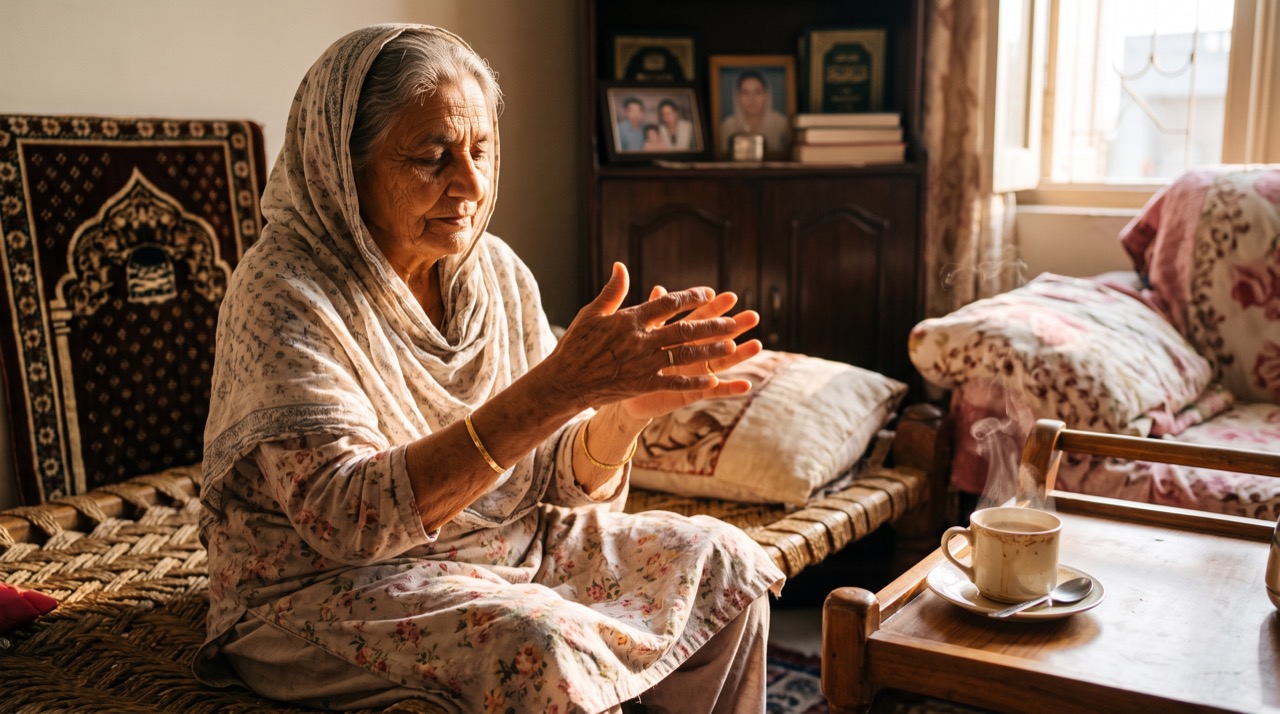
- Warm water compress or a hot water bottle applied to a stiff knee or shoulder for 15-20 minutes can relax muscles and ease pain before you start moving in the morning.
- A warm bath or shower first thing in the morning loosens joints that have stiffened overnight.
- Layer up and keep joints covered in winter — knee sleeves or simply wearing warmer clothing over the knees and elbows reduces the ache many people notice as temperatures drop.
- Mustard or sesame oil massage, warmed slightly, is a common home remedy that can improve local blood flow, though it should be gentle and not replace medical treatment for swelling or acute injury.
Joints, like relationships, do best with regular gentle attention — not long neglect followed by sudden strain.
When to See a Doctor
Home measures help enormously, but they are not a substitute for medical care. See a doctor if you notice joint swelling that doesn't go down, redness and warmth around a joint, pain that wakes you at night, or stiffness lasting more than an hour every morning — these can signal rheumatoid arthritis or other conditions that need proper diagnosis and medication. The National Institute on Aging has clear, accessible guidance on distinguishing everyday joint wear from conditions that need a specialist's attention.
Roman Urdu
Jor'on ka dard Pakistan mein bohat aam masla hai — khaas taur par un logon mein jo farsh par baith kar khana khate hain ya bina lift ke seerhiyan charhte hain. Achi baat yeh hai ke arthritis ko sirf "bardasht" nahi karna parta. Sahi movement, wazan ka khayal, aur garmi (warmth) se dard mein kaafi farq aa sakta hai.
Halki movement zaroori hai: Jab jor dard karay to bilkul rest karna theek nahi — jor aur bhi stiff ho jate hain. Roz subah ya shaam 20-30 minute ki walk karein, agar mumkin ho to pool mein water walking karein, aur halki stretching ya yoga roz karein. Agar ghutno mein dard hai to peedhi ka istemal karein bajaye seedha farsh par baithne ke, aur seerhiyan chadhte waqt araam se chalein.
Wazan control karein: Har extra kilo wazan ghutno par kai guna zyada pressure daalta hai. Crash diet ki zaroorat nahi — bas talay huay khane aur zyada ghee kam karein, daal-sabzi zyada khayein, aur meetha mashroob kam karein. Movement aur diet dono sath karne se behtareen result milta hai.
Garmi (warmth) ka faida: Sardi ke mausam mein jor'on ka dard aksar barh jata hai. Subah uthte hi garam pani ki botal ya garam kapra jor par rakhein, garam pani se nahayein, aur ghutno ko sardi se bachane ke liye garam kapre pehnein. Sarson ya til ka tail halka garam kar ke maalish karna bhi aram deta hai — lekin agar jor sujaa hua ho to maalish se parhez karein.
Doctor ko kab dikhayen: Agar jor mein soojan kam na ho, jor garam ya laal nazar aaye, raat ko dard ke wajah se neend kharab ho, ya subah stiffness ek ghante se zyada rahe — to foran doctor se rujoo karein, kyun ke yeh rheumatoid arthritis jaisi condition ho sakti hai jise proper ilaj ki zaroorat hoti hai.