Diabetes quietly damages nerves and blood vessels in the feet over years, which is why a small cut, blister, or ingrown toenail can turn into a serious wound before a person even feels pain. In Pakistan, where diabetes affects roughly one in four adults according to International Diabetes Federation estimates, foot complications are one of the most common — and most preventable — reasons people end up hospitalized or losing a limb. The good news is that a five-minute daily habit and a few smart footwear choices can stop most problems before they start.
Why Diabetic Feet Are High Risk
Two things make diabetic feet dangerous: peripheral neuropathy (nerve damage that dulls sensation, so you may not feel a stone in your shoe or a burn from hot water) and poor circulation (which slows healing and makes infections harder for the body to fight). Combine reduced feeling with slow healing, and even a minor injury from walking barefoot on a rooftop or wearing tight sandals at a wedding can quietly worsen for days before it is noticed.
- High blood sugar over time damages small nerves, starting in the toes and moving upward.
- Reduced blood flow to the legs means cuts and cracks heal slowly, if at all.
- A minor blister can become an ulcer within days if pressure and moisture are not addressed.
- Untreated ulcers can lead to bone infection (osteomyelitis), and in advanced cases, amputation.
The Daily Foot Check: A 5-Minute Habit
Every diabetic should inspect both feet once a day, ideally at night before bed. If bending down is difficult, use a small mirror placed on the floor or ask a family member to help.
- Look between the toes, on the soles, heels, and around nails for cuts, blisters, redness, swelling, or discoloration.
- Check for cracks or dryness, especially around the heels, which can split open and become entry points for infection.
- Feel the temperature of each foot — one foot noticeably warmer than the other can signal infection or inflammation.
- Wash feet daily with lukewarm (not hot) water and mild soap, then dry thoroughly, especially between the toes.
- Apply a light moisturizer to the top and soles of the feet, but never between the toes, where excess moisture encourages fungal infection.
- Trim toenails straight across, not curved, to prevent ingrown nails, and never cut cuticles or use sharp tools on calluses at home.
Any wound on a diabetic foot that has not visibly improved within 24 to 48 hours needs medical attention — do not wait for it to "heal on its own."
Choosing the Right Footwear
Footwear is often the single biggest factor separating diabetics who stay wound-free from those who end up with ulcers. Walking barefoot indoors, wearing loose chappals, or squeezing into tight formal shoes for events are all common habits in Pakistan that carry real risk for diabetics.
- Never walk barefoot, even at home — a stray pin, hot floor, or sharp edge can cause an unnoticed injury.
- Choose closed, well-cushioned shoes with a wide toe box rather than pointed or narrow styles.
- Avoid high heels, tight straps, and stiff leather that rubs against the skin; seams and rough stitching inside shoes are common culprits behind hidden blisters.
- Shake out shoes and feel inside before putting them on, to catch small stones, insects, or folded insoles.
- Break in new shoes gradually — wear them for an hour at a time and check feet afterward for red pressure spots.
- Wear clean, well-fitting cotton socks without tight elastic bands that can restrict circulation.
- If you notice calluses, corns, or foot deformities such as bunions, ask a doctor about custom diabetic footwear or orthotic inserts rather than self-treating with blades or over-the-counter corn removers, which can cause serious injury on numb skin.
When to See a Doctor Immediately
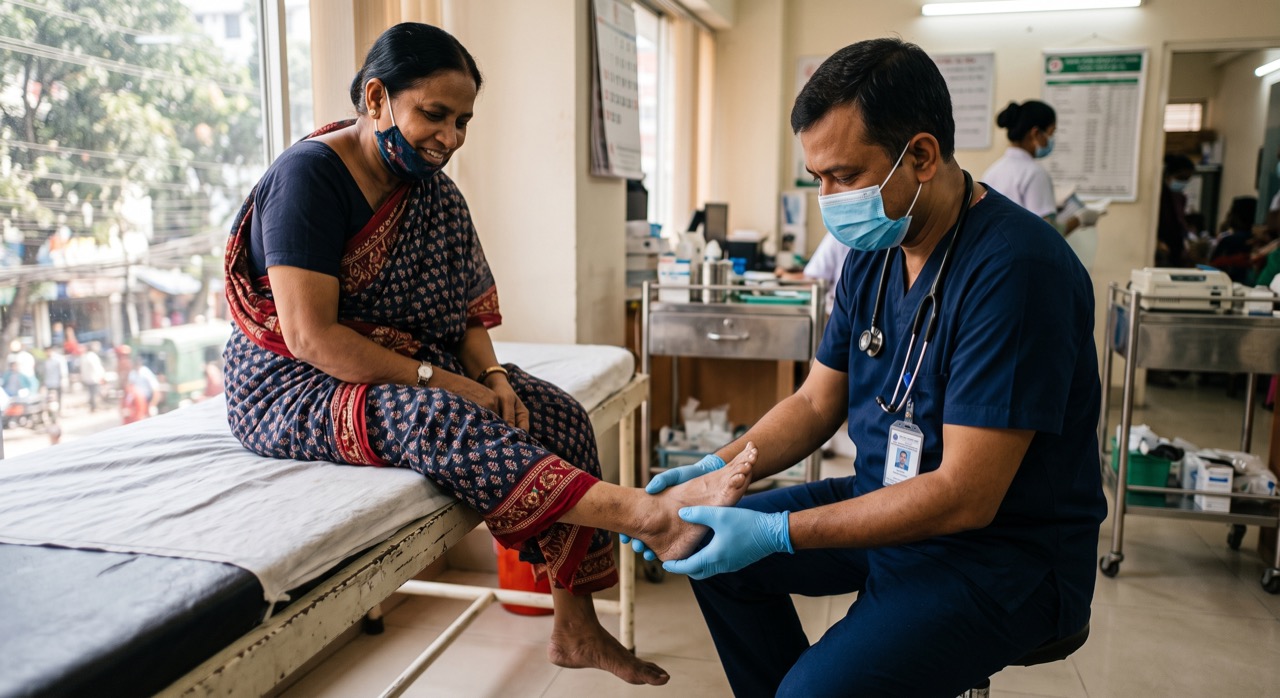
Do not delay care when it comes to foot wounds in diabetes. Seek medical attention right away if you notice any of the following.
- A wound, blister, or sore that is not healing or is getting larger.
- Redness, warmth, swelling, or pus around any cut or nail.
- A foul smell from a wound, which can indicate infection or tissue death.
- Sudden numbness, tingling, or complete loss of sensation in the feet.
- A black or discolored patch of skin, which needs urgent evaluation.
Regular checkups matter too — ask your doctor or diabetes clinic for a foot exam at least once a year, or more often if you already have neuropathy or previous ulcers. Keeping blood sugar, blood pressure, and cholesterol under control also protects the nerves and blood vessels in your feet over the long run. For general diabetes guidance, resources from the World Health Organization and the International Diabetes Federation offer reliable, up-to-date information.
Roman Urdu
Sugar (diabetes) ke marizon mein paon ke zakham aur infection bohat aam masla hain, aur agar waqt par dhyan na diya jaye to yeh amputation (paon ka katna) tak ki naubat le aata hai. Iski wajah yeh hai ke lambay arsay tak high blood sugar rehne se paon ki nerves kamzor ho jati hain, jis se dard mehsoos hona kam ho jata hai, aur khoon ka dauran (circulation) bhi sust ho jata hai jis se zakham jaldi theek nahi hota.
Is liye har roz raat ko sotay se pehle apne dono paon ko ghor se check karein — ungliyon ke darmiyan, talwon aur eriyon par koi katt, chhala, sujan ya rangat ki tabdeeli to nahi. Agar jhukna mushkil ho to chhota aaina zameen par rakh kar dekh sakte hain ya ghar walon se madad lein. Paon ko rozana halke garam pani aur mulayam sabun se dho kar achi tarah khushk karein, khas kar ungliyon ke darmiyan. Nails ko seedha kaatein, gol nahi, taake ungliyan andar na dhas jayein.
Jootay chunte waqt khayal rakhein ke wo kushada, aram deh aur band toe wale hon — tang chappal ya heels pehenne se bachein. Ghar mein bhi kabhi nanga paon na chalein, kyun ke koi kanta ya pin bina dard mehsoos hue chubh sakta hai. Naya joota pehenne se pehle uske andar haath phair kar check karein, aur naye jootay ko thoda thoda waqt pehen kar aadat dalein.
Agar koi zakham 24 se 48 ghante mein khud theek na ho, to usay nazar-andaz na karein — foran doctor se rabta karein.
Agar paon par sujan, laali, garmi, badbu ya kaala nishan nazar aaye, ya achanak sunapan (numbness) mehsoos ho, to yeh khatre ki alamat hain aur foran ilaj zaroori hai. Sal mein kam az kam aik dafa apne doctor se paon ka mukammal muayna zaroor karwayein, khas kar agar pehle bhi koi zakham ya nerve damage ho chuka ho. Blood sugar, blood pressure aur cholesterol ko control mein rakhna hi is poori problem se bachne ka sab se behtareen tareeqa hai.