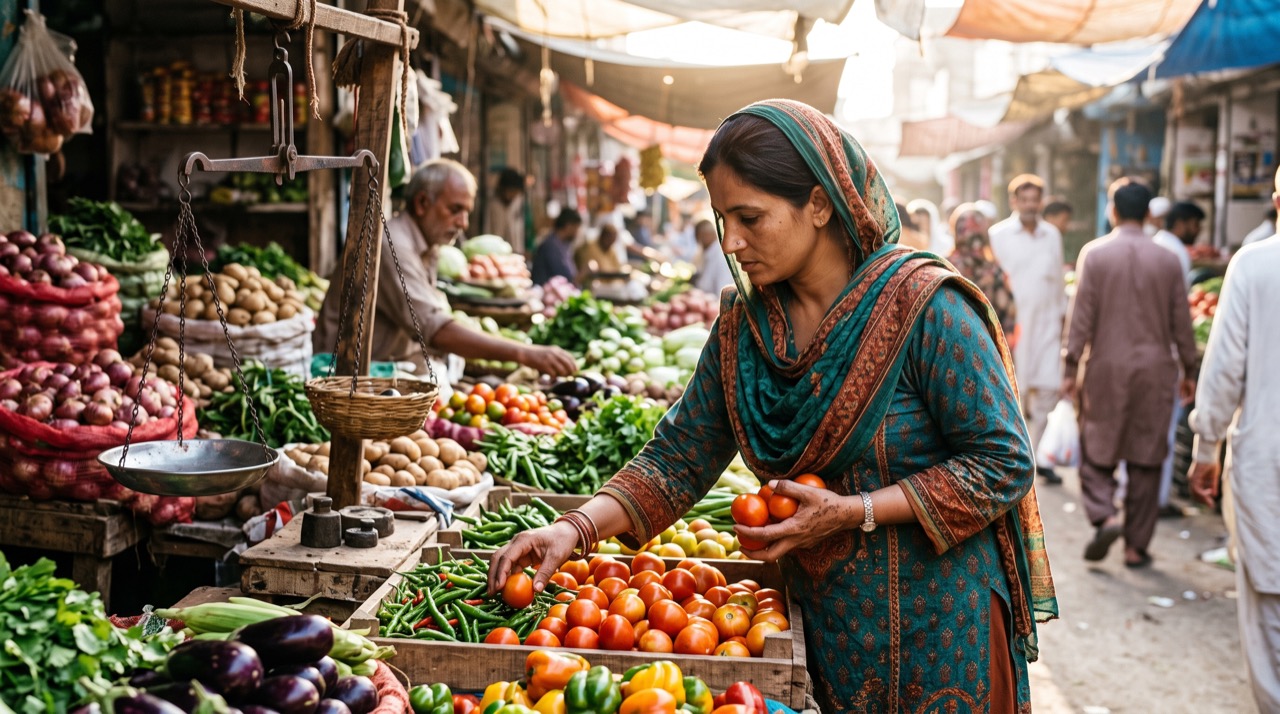
Every household in Pakistan has felt it: the same kiryana list that cost a certain amount six months ago now costs noticeably more. Atta, ghee, chicken, and vegetables move in price every few weeks, and it is easy to feel like the only options are to spend more or eat less. Neither is necessary. Most families can cut their monthly grocery bill by 15-25% simply by changing when, where, and how they buy — not by shrinking meals or cutting protein. Below are habits that actually work in a Pakistani kitchen, not generic advice copied from elsewhere.
Plan the Week's Meals Before You Shop, Not After
Most overspending happens because people shop first and decide meals later, which means buying "just in case" items that half go to waste. Flip the order.
- Write a 7-day meal grid before you make any list — even a rough one pinned on the fridge or saved as a WhatsApp note works. Repeat 2-3 sabzis and daals across the week so you buy fewer distinct items in larger, cheaper quantities.
- Build meals around what is in season. Seasonal sabzi and fruit in Pakistan can be 30-40% cheaper than off-season imports — palak and gajar in winter, karela and torai in summer, for example.
- Plan one "leftover remix" day a week — yesterday's daal becomes today's daal paratha filling, leftover chicken karahi becomes a sandwich or pulao mix-in. This alone can cut food waste (and therefore the bill) by a real margin, since a large share of household food spending is thrown away uneaten.
- Shop with a list and a full stomach. Shopping hungry or without a list is the single biggest cause of impulse buying at both kiryana stores and supermarkets.
Buy in Bulk — But Only the Right Items
Bulk buying saves money only when the item does not spoil before you finish it. Used wrongly, it just moves waste from the fridge to the store cupboard.
- Good bulk buys: atta, rice, daal, sugar, cooking oil/ghee, spices, and tea — these have long shelf lives and per-kg prices drop noticeably at 5kg, 10kg or bora (sack) quantities.
- Bad bulk buys: fresh dairy, leafy sabzi, and ripe fruit — these spoil in days and any "discount" is wiped out by what you throw away.
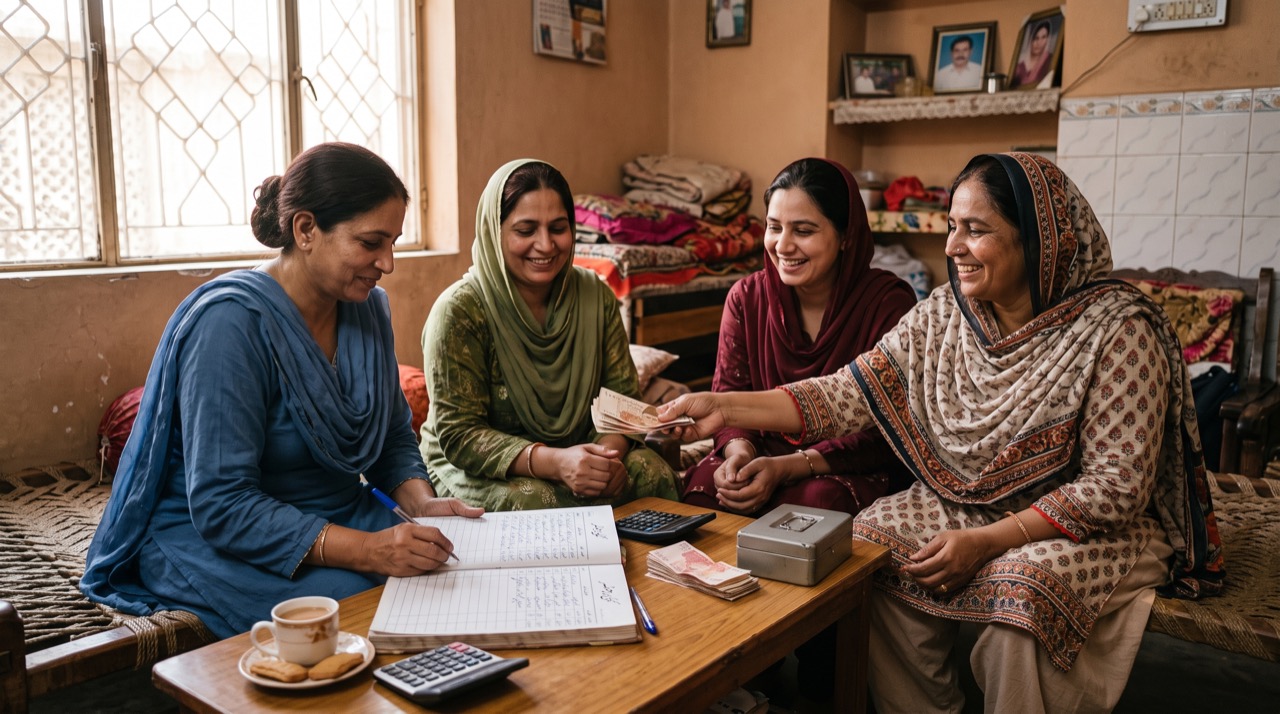
- Split bulk purchases with a neighbour or relative for items like a full bora of atta or a large chicken order — you both get the bulk rate without either of you over-buying for your household size.
- Check the price-per-kg, not the pack price. A bigger pack is not automatically cheaper per unit — do the division before assuming it's a deal.
Compare Prices Before You Commit
Loyalty to one kiryana store often costs more than people realize, since prices for the same brand can vary meaningfully between shops on the same street.
- Check 2-3 kiryana stores or the nearby sabzi mandi for your biggest recurring items (atta, oil, chicken) rather than assuming your usual shop is cheapest.
- Buy meat and produce at mandi or wholesale timing where possible — early morning at sabzi mandis often has better rates than midday retail.
- Ask for a fixed monthly rate from your regular kiryana shopkeeper if you buy consistently — many will offer a small discount for guaranteed repeat business, especially if you pay on time.
- Use price-comparison and deal apps for packaged goods when shopping at larger stores; even checking listings on Daraz for pantry staples in bulk packs can reveal a cheaper option than your local shelf price for branded items.
A grocery budget rarely breaks because of one big purchase — it breaks slowly, through small unplanned extras added at the counter every single trip.
Small Habits That Add Up
- Keep a simple running total on your phone as you shop, so you know your bill before you reach the counter.
- Store atta, rice, and daal properly (airtight containers, away from moisture) so bulk purchases don't spoil or attract pests before you finish them.
- Rotate stock — use older stock first (first in, first out) so nothing expires unused at the back of the shelf.
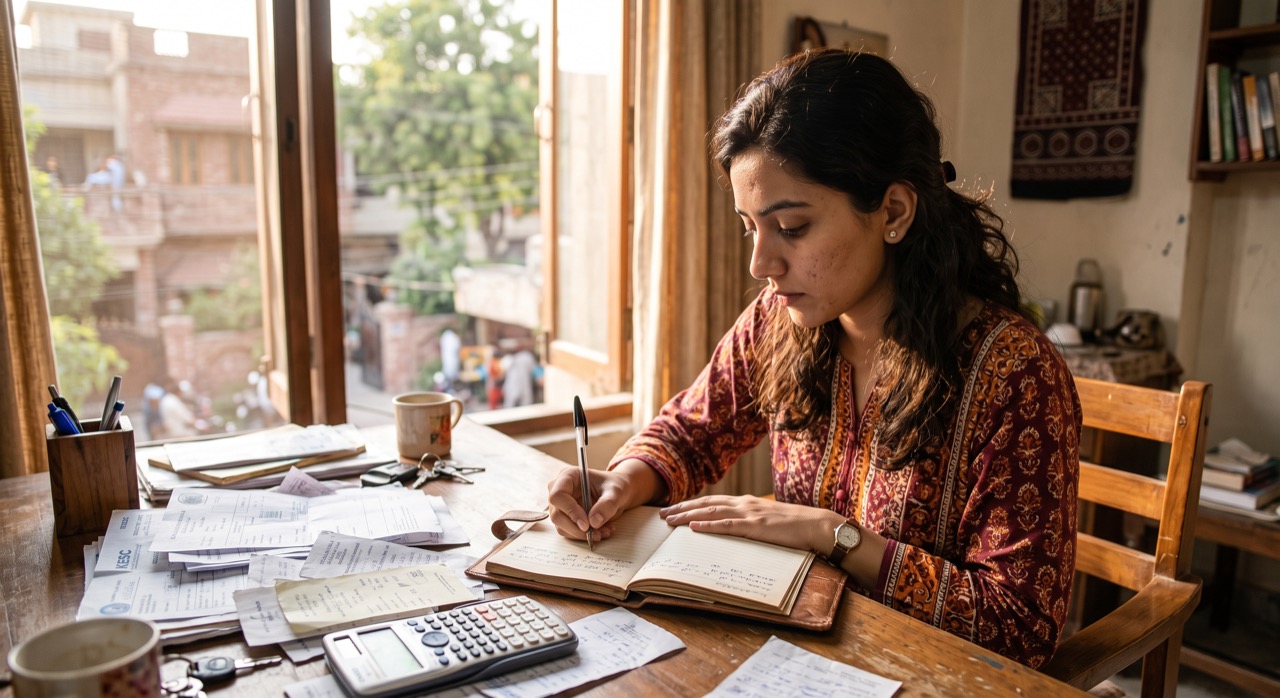
- Track your spending for one month against last month's — you cannot cut what you don't measure.
Roman Urdu
Har ghar mein kiryana ka bill mahengai ki wajah se barhta hi ja raha hai, lekin iska matlab yeh nahi keh khane mein kami ki jaye. Sahi tareeqay se planning aur shopping karke 15-25% tak bachat mumkin hai.
Pehle hafta plan karein, phir shopping karein. Poora hafta kya pakega yeh pehle decide karein taake list clear ho aur fazool cheezein na khareedni parein. Seasonal sabzi aur phal khareedein kyun keh yeh off-season items se kaafi sasti hoti hain. Bacha hua khana dobara istemal karein — kal ka daal aaj ka paratha ban sakta hai.
Bulk mein sirf woh cheezein khareedein jo kharab nahi hoti. Atta, chawal, daal, cheeni, tel aur masalay bulk mein sasty parte hain kyun keh yeh zyada arsay tak theek rehte hain. Lekin dairy, sabzi aur phal bulk mein na khareedein — yeh jaldi kharab ho jate hain aur bachat ulti nuqsan ban jati hai. Agar mumkin ho to kisi rishtedar ya padosi ke saath mil kar bora ya bara order share karein.
Rate compare karna na bhoolein. Ek hi cheez ki qeemat mukhtalif kiryana dukanon mein alag ho sakti hai — do teen jagah rate check karein, khaas taur par atta, tel aur gosht ke liye. Subah subah sabzi mandi jane se rate behtar milte hain. Agar aap kisi dukandar se regular khareedte hain to unse fix monthly rate ki baat karein — aksar dukandar loyal customers ko discount de dete hain.
Choti choti aadatein bhi farq dalti hain — shopping se pehle list banayein, pet bhar kar jayein (bhooke pait shopping mehenga sauda hoti hai), aur her mahine apna kharcha track karein taake pata chale kahan bachat mumkin hai. Yaad rakhein: bill ek hi bari kharch se nahi, balkeh har chakkar mein chhoti chhoti fazool cheezon se barhta hai.