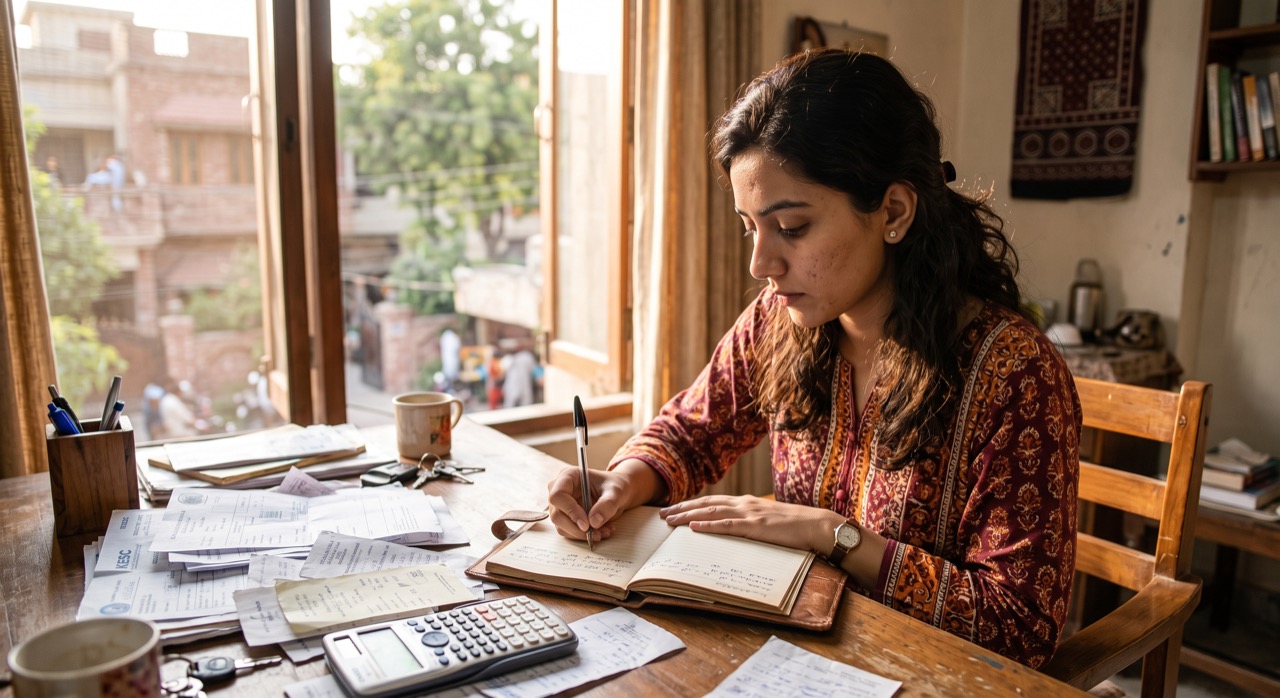
If you spend your day hunched over a desk, sitting cross-legged on the floor, or standing for long hours at a shop or kitchen, some stiffness in the neck, lower back, and hips is almost guaranteed. The good news is that you do not need a gym membership, fancy equipment, or years of yoga practice to feel looser and move more freely. A short, consistent stretching and mobility routine done at home, even in a small room, can noticeably reduce stiffness within a couple of weeks. This guide walks you through a beginner-friendly routine you can do every day in about 15 minutes.
Before You Start: A Few Ground Rules
Stretching is not about forcing your body into a shape you saw online. It is about gradually teaching your muscles and joints to move through a fuller range with less resistance and no pain.
- Warm up first. Cold muscles stretch poorly and are more prone to strain. Walk in place, do some light arm circles, or march on the spot for 2-3 minutes before stretching.
- Stretch to mild tension, never pain. You should feel a gentle pull, not a sharp or burning sensation. If something hurts, back off immediately.
- Breathe slowly. Holding your breath tightens muscles further. Inhale through the nose, exhale slowly as you ease into each stretch.
- Hold static stretches for 20-30 seconds. Shorter holds do little for flexibility; much longer holds are not necessary for beginners.
- Consistency beats intensity. Ten to fifteen minutes daily will do far more for your mobility than one long session a week.
The Daily Routine (About 15 Minutes)
Do this routine slowly, in a quiet corner of your home with a mat, thick towel, or even a folded chaadar on the floor.
- Neck rolls and side tilts (1 minute): Gently tilt your ear toward your shoulder, hold 15 seconds each side, then slowly circle the neck. Skip full backward rolls, as they can strain the spine.
- Shoulder rolls and cross-body arm stretch (1 minute): Roll shoulders backward 10 times, then pull one arm across your chest, holding it gently with the other hand for 20 seconds per side.
- Cat-cow stretch (2 minutes): On hands and knees, alternate arching your back up (like an angry cat) and dipping it down (letting the belly sink). This is one of the best moves for a stiff lower back.
- Child's pose (1 minute): Sit back on your heels, stretch your arms forward on the floor, and breathe deeply. Excellent for releasing tension in the back and shoulders.
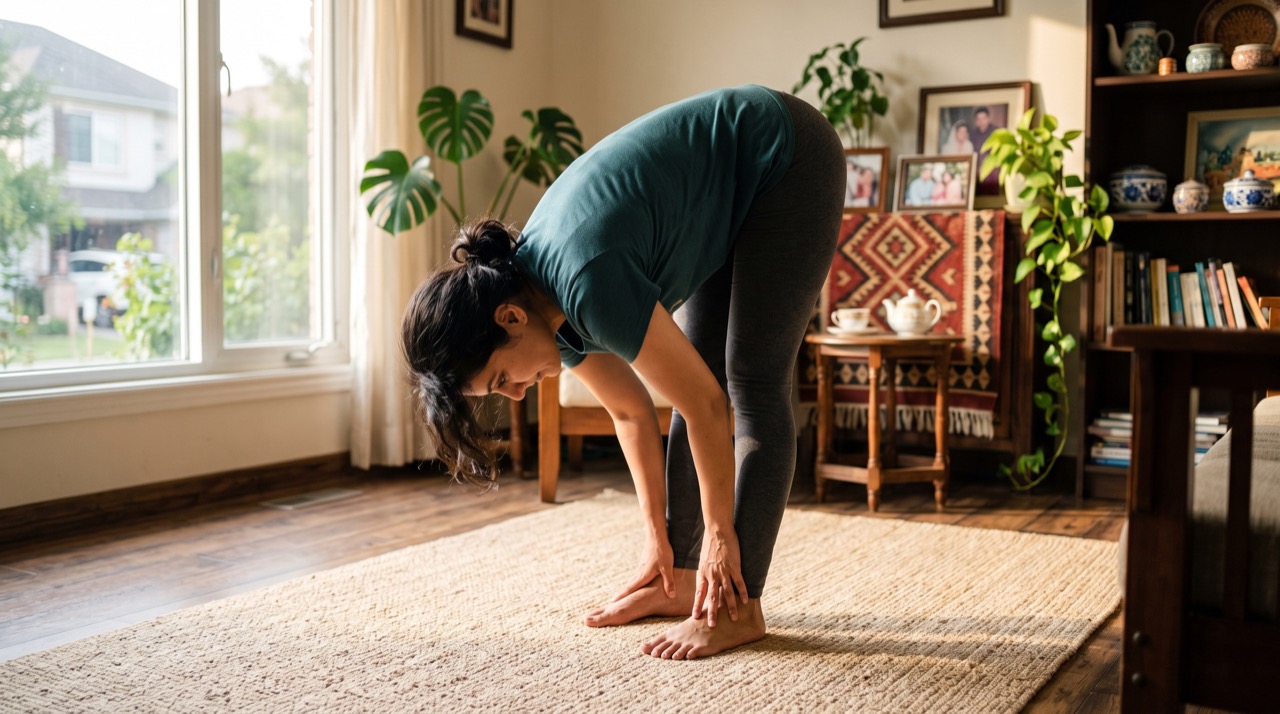
- Standing forward fold (1 minute): Feet hip-width apart, knees softly bent, let your upper body hang forward toward your toes. This loosens the hamstrings and lower back.
- Hip flexor lunge stretch (2 minutes): Step one leg forward into a gentle lunge, back knee on the floor, and push your hips slightly forward. Hold 20-30 seconds per side. Very helpful if you sit for long hours.
- Seated butterfly stretch (1 minute): Sit with soles of the feet together, knees falling gently outward, and lean forward slightly. Good for hip and inner thigh mobility.
- Ankle circles and calf stretch (2 minutes): Rotate each ankle 10 times in both directions, then stretch the calves against a wall, one leg back, heel pressed down.
- Spinal twist, seated or lying down (2 minutes): Cross one leg over the other and gently twist your torso, holding 20 seconds per side. This helps with mid-back stiffness common from long hours of sitting.
Making It a Habit
Attach the routine to something you already do daily, such as right after Fajr prayer, before breakfast, or right before bed. Doing it at a fixed time makes it far more likely to stick.
Flexibility is not a talent some people are born with. It is a skill built through small, repeated effort, the same way strength or stamina is built.
If you have a diagnosed back, neck, or joint condition, recent surgery, or persistent pain, it is best to check with a doctor or physiotherapist before starting any new stretching routine. For general reference on safe movement and physical activity guidelines, resources like the World Health Organization's physical activity guidance are a reliable starting point.
When You'll Start Noticing a Difference
Most beginners notice easier movement getting up from the floor, less stiffness in the morning, and better posture within two to three weeks of daily practice. Flexibility gains are gradual and highly individual, so avoid comparing your progress to anyone else's. The goal is simply to move a little more freely than you did last week.
Roman Urdu
Agar aap din bhar desk par baithy rehte hain, farsh par cross-legged baithtay hain, ya dukaan/kitchen mein khare rehte hain, to gardan, kamar aur hips mein akarhat aam baat hai. Achi khabar yeh hai ke ismein sudhaar ke liye gym ya mehnga saman zaroori nahi. Ghar par roazana 15 minute ki halki stretching routine kaafi hai taake chand hafton mein farq mehsoos ho.
Shuru karne se pehle
- Pehlay 2-3 minute halka warm-up karein, jese jagah par chalna ya haath ghumana.
- Stretch sirf halka khinchao tak karein, dard tak hargiz nahi.
- Saans normal aur slow rakhein, roken nahi.
- Har stretch 20-30 second tak hold karein.
- Roazana thori der karna, hafte mein ek lambi session se zyada faida deta hai.
Roazana Routine (Taqreeban 15 minute)
- Gardan ko halka side aur circle mein ghumayein (1 minute)
- Shoulder rolls aur cross-body arm stretch (1 minute)
- Cat-cow stretch — haath-ghutnon par ke kamar upar-neeche karein (2 minute)
- Child's pose — eyri par baith kar haath aagay zameen par phelayein (1 minute)
- Khare hokar aagay jhukna, hamstring aur kamar ke liye (1 minute)
- Hip flexor lunge stretch, har taang 20-30 second (2 minute)
- Seated butterfly stretch — talwe milakar halka aagay jhukna (1 minute)
- Ankle circles aur calf stretch deewar ke saharay (2 minute)
- Baith kar spinal twist, har side 20 second (2 minute)
Is routine ko roazana ke kisi mustaqil waqt se jorh dein, jese Fajr ke baad ya sone se pehle, taake yeh aadat ban jaye.
Lachak (flexibility) koi paidaishi talent nahi, yeh chotay chotay roazana try se banti hai, bilkul taqat ki tarah.
Agar kamar, gardan ya jor mein koi purani takleef, operation, ya musalsal dard hai, to naya stretching routine shuru karne se pehle doctor ya physiotherapist se mashwara zaroor karein. Do se teen hafton mein aksar log subah ki akarhat mein kami aur behtar posture mehsoos karte hain — bas apni raftaar ko kisi aur se compare na karein.