Gym memberships in cities like Lahore, Karachi, or Islamabad often cost more than many people can spare each month, and even where they're affordable, finding the time to travel back and forth eats into an already packed day. The good news is that your body is all the equipment you actually need. A well-designed bodyweight routine, done consistently in a room the size of a prayer mat, can build real strength, improve stamina, and support weight management just as effectively as a gym session — especially when you're starting out.
Why Bodyweight Training Works for Beginners
Bodyweight exercises use your own mass as resistance, which means the intensity scales naturally to your current fitness level. You don't need to calculate weights or worry about injuring yourself under a loaded barbell. Movements like squats, push-ups, and planks train multiple muscle groups at once, burn calories, and improve joint mobility — all without a single rupee spent on equipment. The World Health Organization recommends at least 150 minutes of moderate activity per week for adults, and a short daily bodyweight routine gets you there comfortably.
A 20-Minute Routine You Can Do in a Small Room
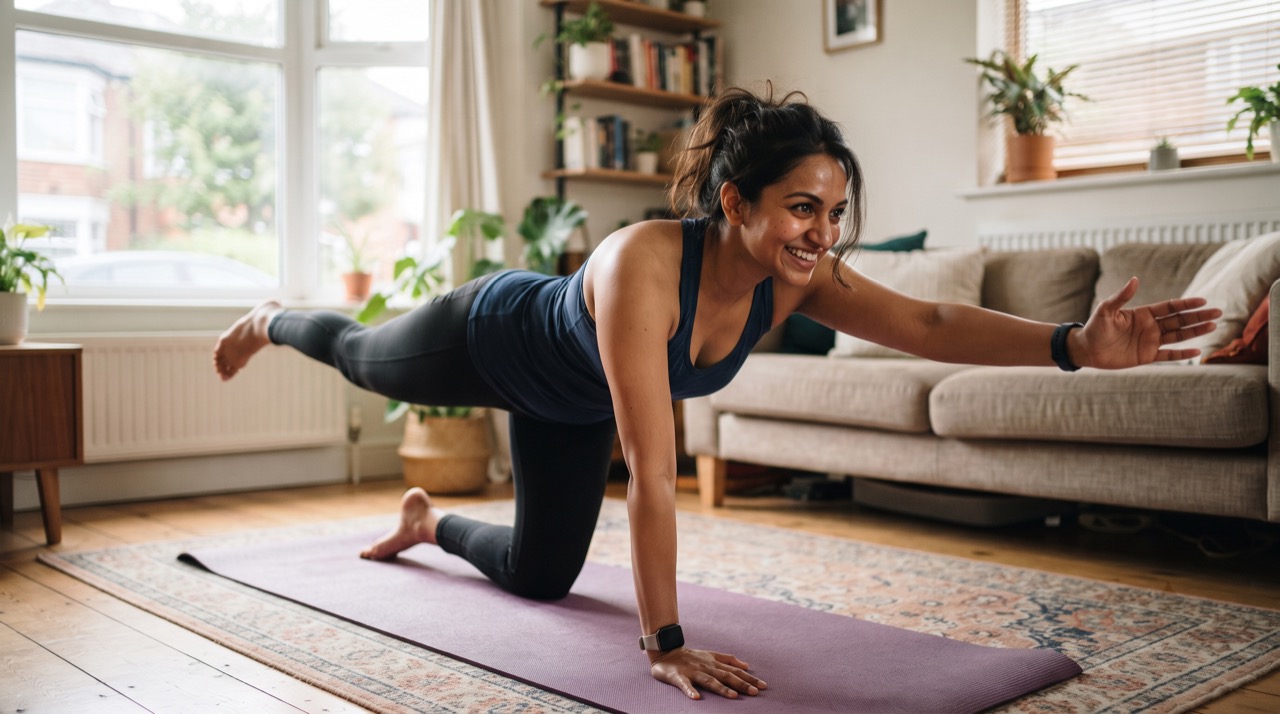
This circuit needs about 6x6 feet of floor space. Do each move for 40 seconds, rest for 20 seconds, and complete the whole circuit twice.
- Bodyweight squats — feet shoulder-width apart, lower until thighs are near parallel to the floor, keep your chest up.
- Push-ups (or knee push-ups) — start on knees if full push-ups are too hard; form matters more than reps.
- Standing march or high knees — a low-impact cardio option if your room has a low ceiling or downstairs neighbours.
- Plank hold — forearms on the ground, body in a straight line, hips neither sagging nor piked.
- Glute bridges — lie on your back, feet flat, lift hips toward the ceiling, squeeze at the top.
- Wall sit — back flat against a wall, knees at 90 degrees; great for building leg endurance in tight spaces.
Beginners should aim for this circuit 3-4 times a week, with rest days in between so muscles can recover and grow stronger.
Building the Habit: Schedule and Progression
Consistency beats intensity when you're just starting. Pick a fixed time — many people find right after Fajr or right before Iftar during non-fasting months works well because the house is quiet. Track your workouts on a simple calendar or phone notes app; seeing an unbroken streak is a strong motivator on its own.
- Week 1-2: Focus purely on form, even if reps are low.
- Week 3-4: Increase time under tension — hold planks and wall sits 10 seconds longer.
- Month 2 onward: Add reps, try single-leg variations, or shorten rest periods.
Progress in bodyweight training isn't about lifting more weight — it's about doing the same movement with better control, for longer, week after week.
Common Mistakes to Avoid
- Skipping the warm-up: Two minutes of arm circles and light marching prevents strains, especially in humid Pakistani summers when muscles feel stiffer.
- Rushing reps: Fast, sloppy squats and push-ups reduce muscle engagement and raise injury risk.
- Ignoring hydration and diet: No workout plan compensates for chronic dehydration or skipping meals, particularly if you exercise during fasting hours.
- Comparing your day-one self to influencers online: Their routines came after months or years of base fitness you haven't built yet.
Roman Urdu
Pakistan mein gym ki membership aksar itni mehngi hoti hai ke har koi afford nahi kar sakta, aur agar affordable bhi ho to waqt nikalna mushkil hota hai. Achi baat ye hai ke aapke jism se behtar koi equipment nahi. Ek chhoti si jagah mein, jaise namaz ki jaa-namaz jitni space, aap bodyweight exercises se asli strength aur stamina bana sakte hain — bilkul gym jaisa faida, bina ek rupya kharch kiye.
Bodyweight exercises mein aapka apna wazan hi resistance ka kaam karta hai, is liye ye har fitness level ke liye theek rehta hai. Squats, push-ups aur plank jaise movements ek saath kai muscles ko train karte hain aur calories burn karte hain. WHO ki guideline ke mutabiq hafte mein kam az kam 150 minute activity zaroori hai, aur roz ka chhota sa routine ye asaani se poora kar deta hai.
Ye 20-minute circuit chhoti si jagah mein ho sakta hai — har move 40 second, phir 20 second rest, poora circuit do baar:
- Bodyweight squats — pair shoulder-width par, neeche jayein jab tak thighs floor ke parallel na ho jayein.
- Push-ups (ya knee push-ups) — agar full push-up mushkil ho to knees par karein, form ko priority dein.
- High knees — agar neeche neighbours hain to halki intensity rakhein.
- Plank hold — body seedhi line mein rakhein, hips na jhukayein na uthayein.
- Glute bridges — kamar ke bal let kar hips upar uthayein.
- Wall sit — deewar ke sahare knees 90 degree par rakhein.
Beginners ko hafte mein 3-4 baar ye circuit karna chahiye, darmiyan mein rest days ke saath. Ek fixed time chun lein — Fajr ke baad ya Iftar se pehle — taake habit ban jaye. Pehle do hafte sirf form par focus karein, phir reps aur time gradually barhayein. Warm-up skip na karein, jaldi mein reps na karein, aur paani peete rahein — khas taur par agar roze mein workout kar rahe hain. Kisi aur se apna comparison na karein; consistency hi sab se badi cheez hai.