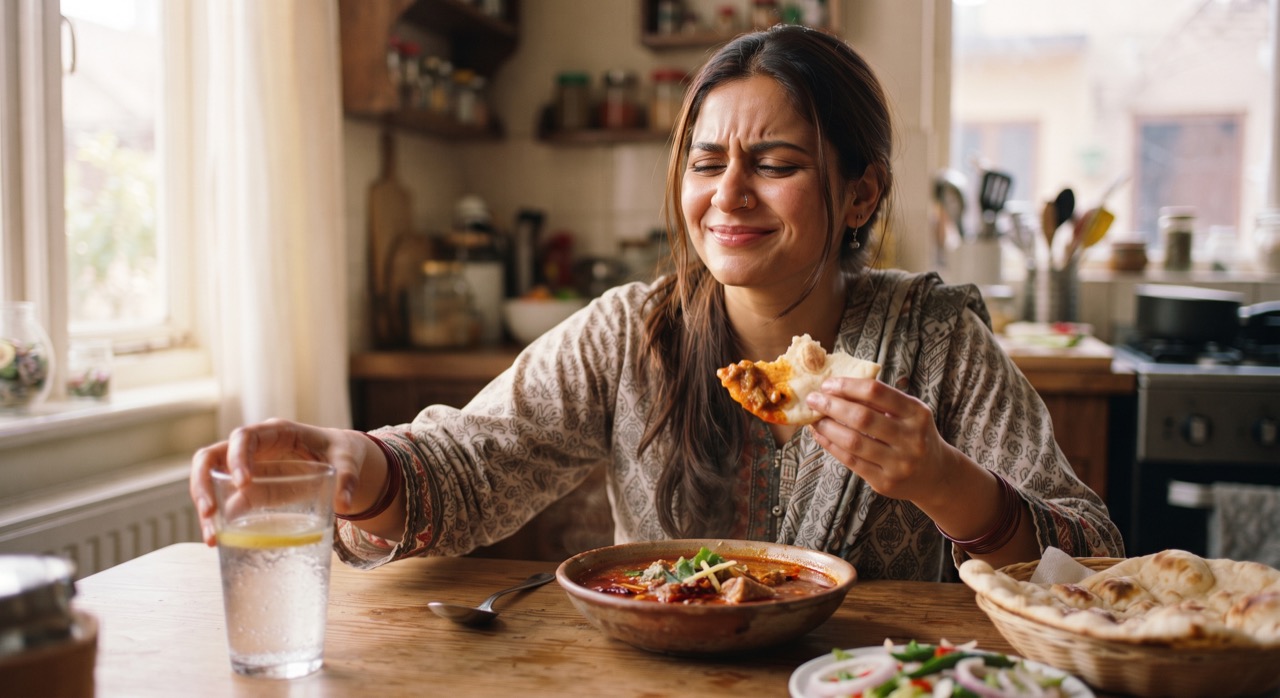
If you wake up with a burning throat after last night's biryani, or you keep a strip of antacid tablets in your bag like some people keep their phone charger, you are not alone. Pakistan runs on masalas, fried snacks, and chai — and gastroenterologists here report that acid reflux and GERD (gastroesophageal reflux disease) are some of the most common complaints they see, especially during Ramadan, wedding season, and monsoon pakora weather. The good news is that you usually do not have to choose between loving spicy food and living without a burning chest. Most chronic acidity is driven as much by how and when you eat as by what you eat, and fixing the habits around meals often does more than any antacid ever will.
Why Antacids Alone Don't Fix the Problem
Antacids and PPIs (proton pump inhibitors like omeprazole) neutralise or reduce acid, which relieves the burn, but they don't address the actual mechanism behind reflux in most people: a weak or overworked lower oesophageal sphincter (LES), the muscular valve that should keep stomach contents from splashing back up. Relying on medication daily for months without changing habits can mask a problem that keeps getting worse, and long-term PPI use has its own downsides (nutrient absorption issues, rebound acidity when you stop). Medication has its place for flare-ups and doctor-prescribed courses — this guide is about cutting how often you need it.
Eating Habits That Actually Move the Needle
- Smaller, more frequent meals. One massive dawat-style plate stretches the stomach and pushes acid upward. Try 4-5 smaller meals instead of 2-3 huge ones.
- Don't lie down after eating. Stay upright for at least 2-3 hours after dinner. The common desi habit of eating a heavy meal then immediately watching TV lying down is almost custom-built to cause reflux.
- Eat dinner earlier. Late-night heavy meals (common during Ramadan sehri/iftar or wedding season) combined with sleeping soon after are a major trigger.
- Chew slowly. Eating fast means swallowing air and overloading the stomach before it signals "full."
- Cut back gradually on the real triggers: excess oil/ghee, deep-fried items, very acidic foods like extra-sour achar or citrus on an empty stomach, carbonated drinks, and excessive chai/coffee — especially on an empty stomach.
- Spice itself is often not the main villain — the oil and fried preparation usually are. You may be able to keep the mirchi and reduce the tel.
Lifestyle Changes With Real Evidence Behind Them
- Raise the head of your bed by 15-20 cm (use a wedge pillow or blocks under the bed legs, not just extra pillows) — this uses gravity to keep acid down while you sleep.
- Lose excess abdominal weight if you're carrying it. Belly fat directly increases pressure on the stomach and LES; even a modest reduction helps significantly.
- Loosen tight clothing around the waist after meals — tight shalwar nala or belts increase abdominal pressure.
- Cut smoking and paan/gutka. Nicotine relaxes the LES, making reflux worse; this is one of the biggest single fixes for many patients.
- Manage stress. Anxiety and stress increase acid production and gut sensitivity — even short daily walks or namaz-timed breathing pauses help measurably.
- Stay upright and hydrated, but avoid gulping large amounts of water right with meals, which can dilute digestive enzymes and increase bloating.
Reflux is rarely a "just take a Gaviscon and move on" problem — it's usually your body telling you something about portion size, timing, or posture, not just about the mirchi on your plate.
When to See a Doctor
See a gastroenterologist if you have heartburn more than twice a week for several weeks, difficulty swallowing, unexplained weight loss, or if symptoms wake you at night regularly. These can signal GERD complications that need proper evaluation, sometimes including an endoscopy. For general reference on symptoms and red flags, the NHS guide to heartburn and acid reflux and the Mayo Clinic overview of GERD are solid, doctor-reviewed starting points — though nothing replaces an in-person consultation with a local physician who knows your history.
Roman Urdu
Agar aap raat ko biryani ya karahi khane ke baad seene mein jalan lekar uthte hain, ya bag mein hamesha Gaviscon ya ENO rakhte hain, to aap akele nahi hain. Pakistan mein tez masalay, fried khana aur chai ka culture hai, is liye acidity aur GERD bohot aam hai — khas kar Ramadan, shaadiyon ke season aur baarish ke mausam mein jab pakoray zyada khaye jate hain. Achi baat yeh hai ke sirf antacid par chalna zaroori nahi — zyada tar waqt problem yeh hoti hai ke hum kaise aur kab khate hain, sirf kya khate hain yeh masla nahi hota.
Antacid ya PPI (jaisay omeprazole) acid ko kam to kar dete hain lekin asal wajah — kamzor lower oesophageal sphincter (wo valve jo acid ko upar aane se rokta hai) — theek nahi karte. Mahinon tak roz dawai lena aur habits change na karna problem ko aur barha sakta hai.
Kuch practical tabdeeliyan jo waqai farq dalti hain: thoda thoda kha kar 4-5 halki meals lein bajaye ek bhari plate ke; khane ke foran baad na leiten, kam az kam 2-3 ghante upright rahein; raat ka khana jald khayein khas kar sehri/iftar mein; ahista ahista khayein; talay hue aur ziyada tel wale khane, khaali pet chai/coffee, aur carbonated drinks kam karein. Mirchi khud itni buri nahi jitna zyada tel — tel kam karein, mirchi thodi rakh sakte hain. Sone ke waqt takiye ki jagah bed ke sirhaane ko 15-20 cm upar uthayein taake gravity acid ko neeche rakhe. Agar pet par zyada wazan hai to thoda kam karein — is se seedha farq padta hai. Tight kapre, sigarette aur paan/gutka LES ko kamzor karte hain, in ko chorna bohot fayda deta hai. Stress bhi acid barhata hai, is liye halki walk ya sukoon ke lamhe nikalna madadgar hai. Agar hafte mein do se zyada dafa jalan ho, nigalne mein takleef ho, ya wazan bina wajah kam ho raha ho, to gastroenterologist se milein — khud ilaj karne ki bajaye proper checkup zaroori hai.