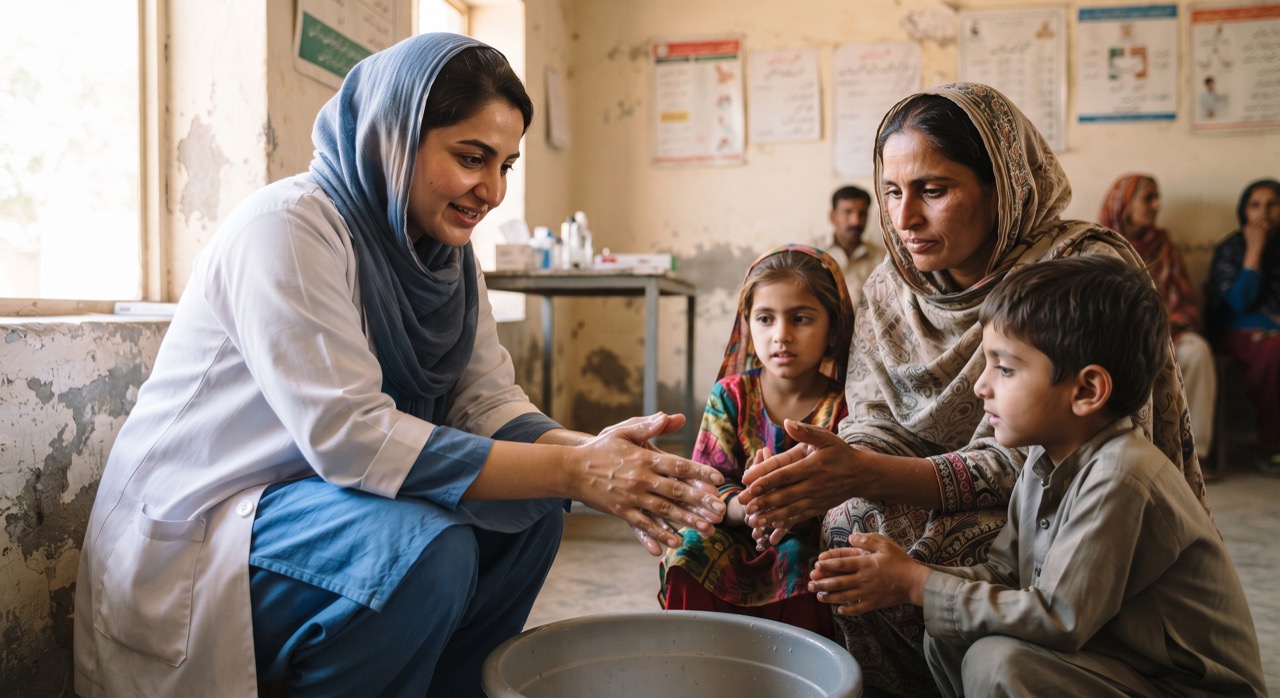
Accidents rarely announce themselves. A pot of hot tea tips over, a child swallows a marble while laughing, a grandparent stands up too fast in the summer heat — these small emergencies happen in almost every Pakistani home sooner or later. The good news is that most of them are manageable if someone in the house knows what to do in the first two or three minutes. This isn't about replacing a doctor or a hospital; it's about buying time safely and avoiding the common mistakes that make injuries worse. Below is a practical, no-nonsense guide to the four situations every household should be ready for.
Burns and Scalds
Kitchen burns from stoves, hot oil, and boiling water are among the most common household injuries. What you do in the first sixty seconds matters more than anything that comes after.
- Cool it immediately. Hold the burned area under cool (not ice-cold) running water for 10-20 minutes. This is the single most effective thing you can do — it stops the burn from going deeper into the skin.
- Never apply ice, toothpaste, butter, or ghee. These are common home remedies in Pakistani households, but they trap heat, invite infection, and can damage the skin further. Plain cool water is enough.
- Remove tight items like rings, bangles, or sleeves near the burn before swelling starts, but don't pull off clothing that has stuck to the skin.
- Cover loosely with a clean, non-fluffy cloth or plastic wrap once cooled. Don't wrap tightly.
- Go to a hospital if the burn is larger than the palm of the hand, on the face, hands, or genitals, or if the skin blisters heavily or looks white and leathery.
Cuts and Bleeding
Most household cuts — from kitchen knives, glass, or a child's fall — look more frightening than they are, but controlling bleeding correctly prevents complications.
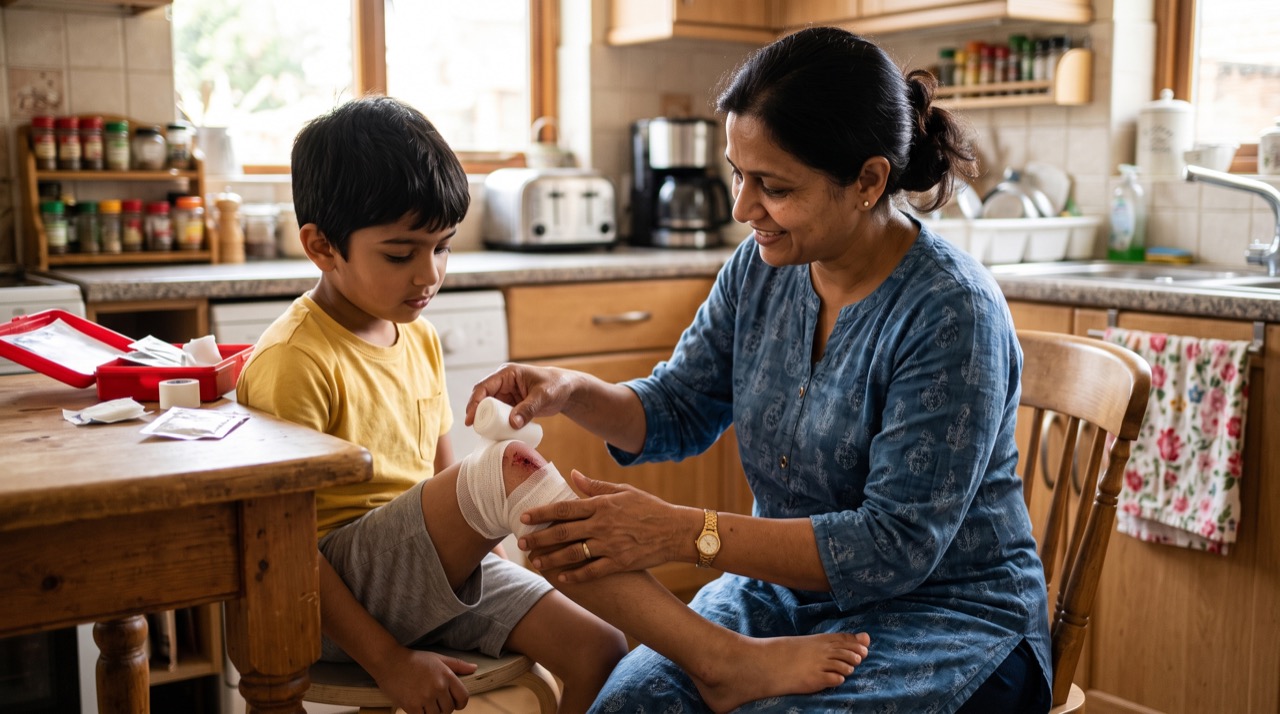
- Apply firm, direct pressure with a clean cloth or gauze for at least 5-10 minutes without lifting it to check. Constantly peeking restarts the bleeding.
- Raise the injured limb above heart level if possible, which naturally slows blood flow.
- Clean only after bleeding stops — rinse with clean water, not spirit or antiseptic poured directly into an open wound, which stings and can damage tissue.
- Watch for red flags: bleeding that won't stop after 10-15 minutes of pressure, a wound that's deep enough to see fat or muscle, or a cut from a rusty or dirty object — all need a doctor, and a tetanus shot may be required if the person hasn't had one recently.
Choking
Choking is especially common with young children and elderly family members at mealtimes. Acting fast and correctly is critical because brain damage from lack of oxygen can begin within minutes.
- If the person can cough, talk, or breathe — even weakly — let them keep coughing. Don't slap their back or interfere; this can push the object deeper.
- If they cannot breathe, cough, or make sound, stand behind them and give 5 firm back blows between the shoulder blades with the heel of your hand, then 5 abdominal thrusts (the Heimlich maneuver) — a fist just above the navel, pulled sharply inward and upward. Alternate between the two.
- For infants under one year, never do abdominal thrusts. Lay the baby face-down along your forearm and give 5 gentle back blows, then flip and give 5 chest thrusts with two fingers.
- Call for emergency help while this is happening if another person is available, and continue until the object comes out or the person can breathe on their own.
Fainting
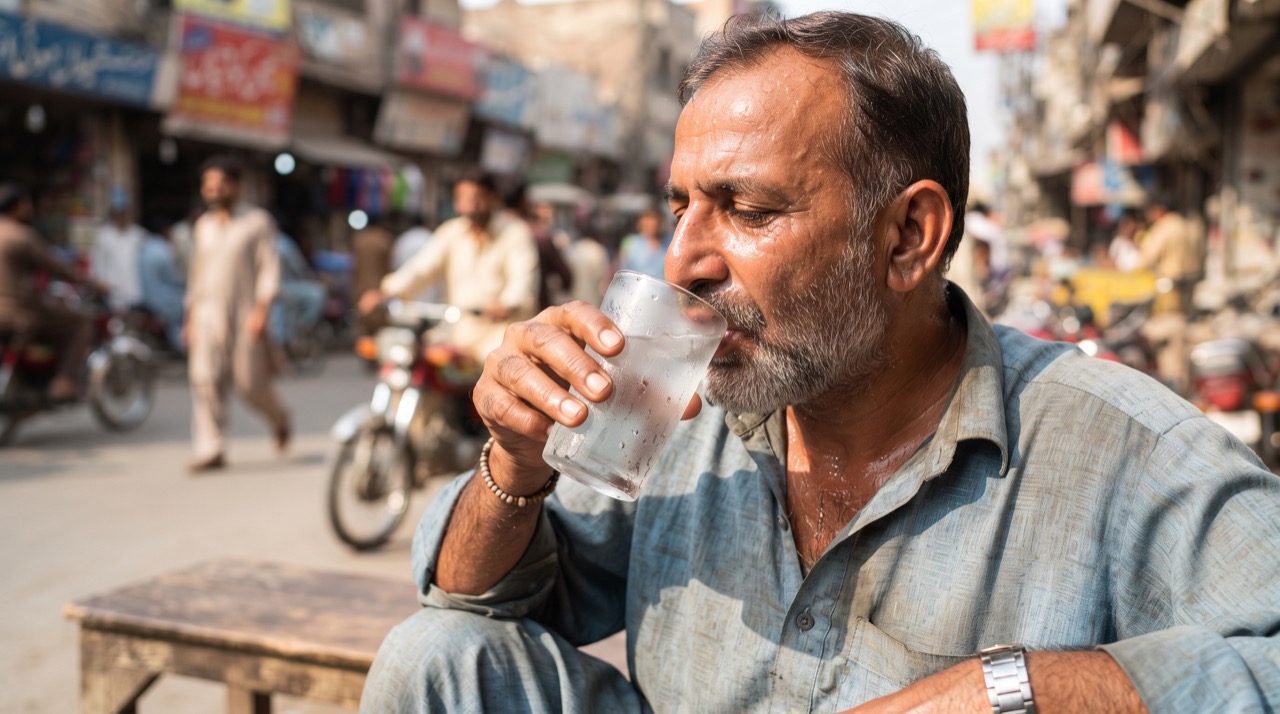
Fainting is very common in Pakistan's heat, especially during Ramzan fasting hours, long queues, or crowded weddings — it's usually caused by a brief drop in blood flow to the brain.
- Lay the person flat and raise their legs about 12 inches to help blood return to the brain. Don't prop them up in a chair.
- Loosen tight clothing around the neck and waist, and make sure they have air — don't crowd around them.
- Don't force water or food into their mouth while they are still unconscious; this risks choking. Wait until they are alert and can swallow safely.
- If they don't regain consciousness within a minute, or if fainting is accompanied by chest pain, confusion, or a fall injury, treat it as an emergency and get medical help right away.
A well-stocked first aid box and one calm, informed person in the house can make the difference between a scare and a tragedy — knowing what to do in the first few minutes is a skill worth teaching every family member, including older children.
It's worth keeping a basic first aid kit at home — sterile gauze, adhesive tape, antiseptic solution, a digital thermometer, and a printed emergency contact list including the nearest hospital. Organizations like the Pakistan Red Crescent Society and international guidance from the World Health Organization offer free basic first aid training resources that are worth exploring, especially for parents, teachers, and household helpers who are often the first responders at home.
Roman Urdu
Ghar mein chhoti moti emergencies kabhi bhi ho sakti hain — chai ka garam bartan girna, bachay ka kisi cheez pe choking hona, ya garmi mein kisi buzurg ka chakkar kha kar girna. Agar ghar ka koi banda pehle do teen minute mein sahi kadam utha le, to bohat farq pad sakta hai.
Jalna (Burns): Jali hui jagah ko foran 10-20 minute thande (barf wale nahi) paani ke neeche rakhein. Toothpaste, makhan ya ghee bilkul na lagayein — ye infection ka khatra barhate hain. Agar jalne wali jagah hath ki hatheli se bari ho, chehre ya haathon pe ho, ya chalta paani bhi na ho to foran hospital jayein.
Kata lagna (Cuts): Saaf kapde ya gauze se 5-10 minute tak seedha dabaao dein, baar baar utha kar na dekhein. Zakhm ko upar uthayein. Khoon rukne ke baad hi saaf paani se dhoyein — spirit seedha zakhm mein na daalein. Agar khoon na ruke ya zakhm gehra ho to doctor ke paas jayein, tetanus shot ki bhi zaroorat ho sakti hai.
Gala band hona (Choking): Agar banda khaans sakta hai ya saans le sakta hai to use khaansne dein, peeth pe na maarein. Agar bilkul saans na aa rahi ho to peeche khade ho kar 5 baar peeth pe zor se thapki dein, phir 5 baar pait pe (naabhi ke upar) andar aur upar ki taraf zor se dabaayein — dono ko baari baari karein. Chhotay bachon (1 saal se kam) ke liye pait pe dabaav na dein, sirf peeth aur seene pe halki thapki dein.
Behosh hona (Fainting): Banday ko seedha lita dein aur taangein thodi upar uthayein. Gale aur kamar ke tang kapde dheele karein. Jab tak wo hosh mein na aaye, paani ya khana mooh mein na daalein — choking ka khatra hota hai. Agar ek minute mein hosh na aaye ya seene mein dard ho to foran hospital le jayein.
Ghar mein first aid box rakhna zaroori hai — gauze, tape, antiseptic, thermometer aur emergency numbers ki list. Pakistan Red Crescent Society jaisi organizations se basic training bhi li ja sakti hai, khaas kar walidain aur teachers ke liye jo aksar sabse pehle madad karte hain.