Your CV got you through the door — now the interview decides everything. For most first-time job seekers in Pakistan, the interview is the most nerve-wracking part of the whole process: unfamiliar office, unfamiliar faces, and a handful of questions that feel harder than they actually are. The good news is that almost every interview, whether it's for a bank in Karachi, a call centre in Lahore, or a government post in Islamabad, draws from the same small pool of questions. Prepare for those properly and you walk in calm instead of guessing.
The Questions You Will Almost Certainly Be Asked
Interviewers in Pakistan tend to follow a predictable structure. Prepare a short, honest answer for each of these and you have covered 80% of any interview:
- "Tell me about yourself." Keep it to 60-90 seconds. Structure: your education, one or two relevant experiences or projects, and why you're interested in this role. Don't recite your entire life story — this isn't a biodata form.
- "Why do you want to work here?" Shows whether you researched the company. Mention something specific — their products, their reputation, a project they're known for — not just "I need a job."
- "What are your strengths and weaknesses?" Pick a real weakness and pair it with what you're doing to fix it. "I used to struggle with public speaking, so I joined my university's debating society" lands far better than a fake humble-brag like "I work too hard."
- "Where do you see yourself in five years?" Show ambition tied to the company or field, not a vague dream unrelated to the job.
- "Why should we hire you?" This is your closing pitch — connect your specific skills directly to the job description in one or two sentences.
- "Do you have any questions for us?" Always say yes. Ask about the team you'd work with, growth opportunities, or what success looks like in the first six months. Never ask about salary first — save that for when it's raised or for a second round.
Sample Answer: "Tell Me About Yourself"
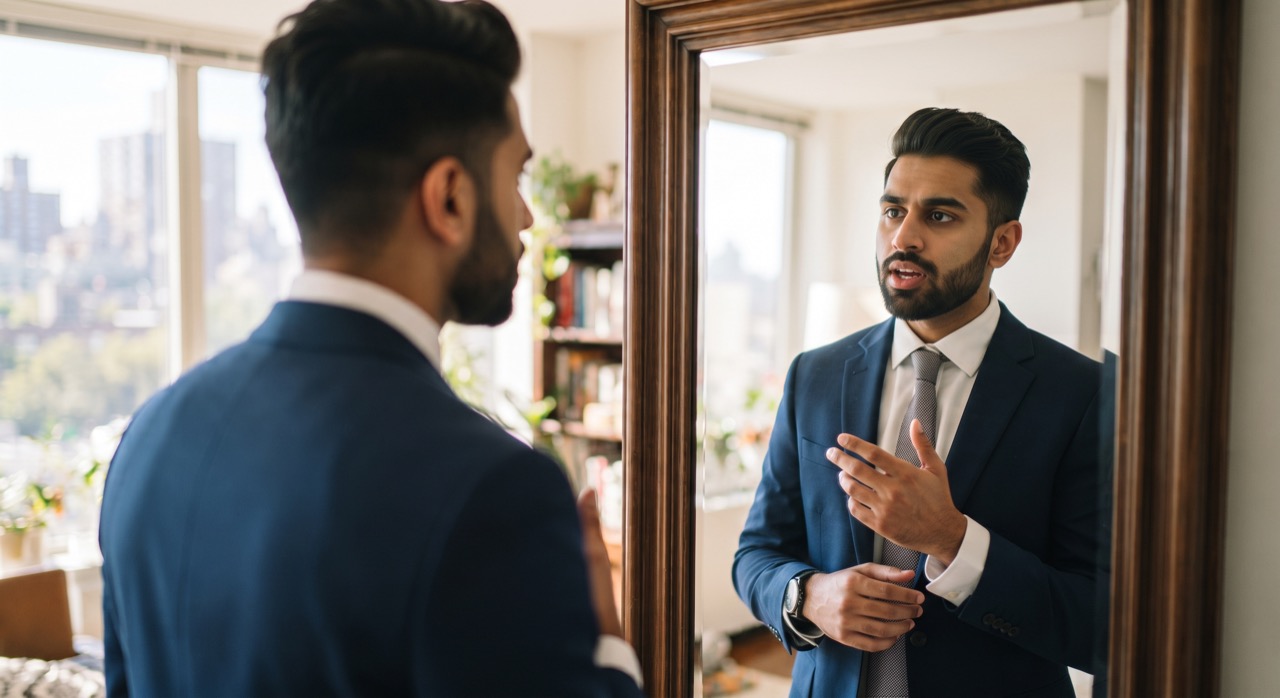
"I recently completed my BBA from [university], where I focused on marketing and led a student society's social media team, growing our followers by 40% in one semester. After graduating, I did a three-month internship at a digital agency handling client reporting and content calendars. I'm now looking for a role where I can apply that experience in a full-time marketing position, and this opening caught my attention because of your recent work with local retail brands."
Notice the pattern: education, one concrete achievement with a number, relevant experience, and a direct link to the job. Adapt this template to your own background rather than memorising someone else's story word for word — interviewers can tell.
Body Language That Builds Trust
- Handshake and greeting: A firm handshake (if offered) and a clear "Assalam-o-Alaikum" or "Good morning" sets the right tone immediately.
- Sit upright, don't slouch: Lean slightly forward when answering — it signals engagement, not stiffness.
- Eye contact: Look at the interviewer, not the table or your hands. If there's a panel, glance around the group, not just the person who asked.
- Hands stay visible and calm: Rest them on your lap or the table. Avoid tapping, clicking pens, or crossing arms — it reads as defensive or bored.
- Pace of speech: Nervous candidates rush. Slow down, take a breath before answering, and it's completely fine to pause for two seconds to think.
Practical Preparation Checklist
- Research the company's website and recent news the night before — one specific detail mentioned in the interview shows genuine interest.
- Print two extra copies of your CV, even if you emailed it already.
- Dress one level more formal than the office's everyday dress code — a collared shirt or shalwar kameez with a blazer is rarely wrong.
- Arrive 15 minutes early, not 45 — camping in the reception can make everyone, including you, more anxious.
- Prepare two or three questions to ask at the end; it's the easiest way to leave a strong final impression.
Interviews aren't a test you either pass or fail overnight — they're a skill, and like any skill it improves with repetition. Each one, successful or not, makes the next one easier.
Roman Urdu
Job interview kisi bhi career ka sabse nervous karne wala hissa hota hai, khaas kar un logon ke liye jo pehli dafa interview de rahe hain. Lekin achi baat yeh hai ke Pakistan mein zyada tar interviews mein wohi common sawal poochay jate hain, aur agar aap in ka sahi jawab tayar rakhein to confidence khud ba khud aa jata hai.
Sabse pehla sawal hota hai "apne baray mein bataiye" — is mein apni education, ek do relevant experience ya achievement, aur is job mein interest ki wajah short mein batayein, poori zindagi ki kahani na sunayein. Phir "aap yahan kyun kaam karna chahte hain" jaisa sawal aata hai, jis mein company ke baray mein thoda research karke jawab dena chahiye — sirf "mujhe job chahiye" kehna kaafi nahi hota.
"Apni strengths aur weaknesses batayein" wale sawal mein ek asli weakness batayein aur saath mein yeh bhi batayein ke aap usay improve karne ke liye kya kar rahe hain. Aur "hum aapko kyun hire karein" ka jawab dete waqt apni skills ko seedha us job ki requirement se jorein.
Interview ke dauran body language bhi utni hi zaroori hai jitne jawabat. Seedhe baithein, thoda aage jhuk kar baat karein, aur interviewer ki aankhon mein dekh kar baat karein — table ya apne haathon ko mat dekhein. Haath shant rakhein, pen na click karein aur haath cross na karein, kyun ke yeh defensive lagta hai. Ghabrahat mein log jaldi bolte hain — dheere bolein, aur jawab dene se pehle do second ruk kar sochna bilkul theek hai.
Interview se pehle raat ko company ki website zaroor dekhein taake ek khaas baat interview mein mention kar sakein. Apni CV ki do extra copies print karke le jayein, office ke dress code se thoda formal kapre pehnein, aur 15 minute pehle pohanch jayein — bohat jaldi pohanchna bhi acha nahi hota. Akhir mein interviewer se do teen sawal zaroor poochein, jaise team ke baray mein ya pehle chhe mahine mein kya expect kiya jata hai — lekin salary ka sawal khud se na uthayein.
Yaad rakhein, interview koi aik dafa ka test nahi hai jismein pass ya fail hona hai — yeh ek skill hai jo practice se behtar hoti hai. Har interview, chahe result kuch bhi ho, agle interview ko asaan bana deta hai.