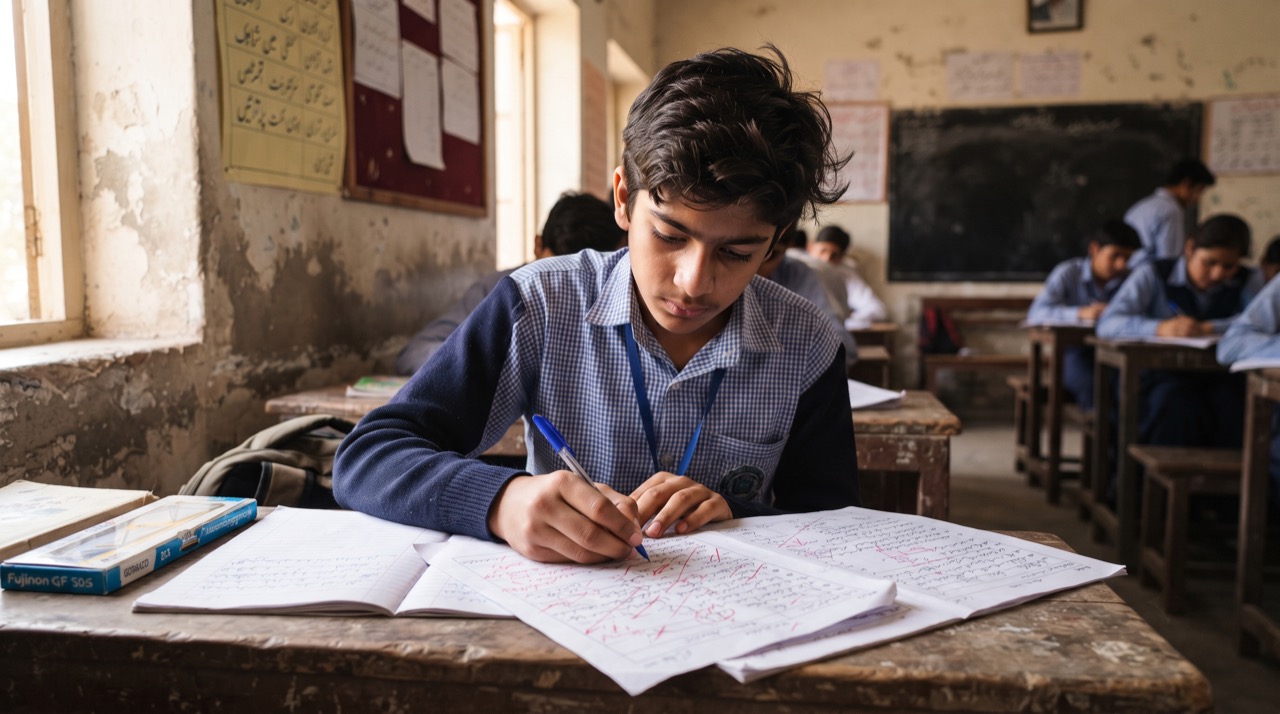
If you have ever sat in a family gathering rehearsing a sentence ten times before saying it out loud, or stayed quiet in a class meeting because your heart was pounding too fast to trust your own voice, you are not broken and you are not alone. Shyness is one of the most common struggles among students and young professionals across Pakistan, especially in settings where elders, teachers, or seniors dominate the conversation. The good news is that confidence is not a fixed trait you either have or don't — it is a skill built through small, repeatable actions. Here is a practical roadmap.
Understand What Is Actually Happening
Shyness is your nervous system reading a social situation as a threat, the same way it would read a sudden loud noise. Your palms sweat, your throat tightens, your mind goes blank — this is biology, not a character flaw. Once you know this, you can stop fighting the feeling and start managing it.
- Before speaking, take one slow breath in for four counts and out for six — this alone lowers the physical panic response.
- Remind yourself: "This is my body preparing me, not warning me to stay silent."
- Stop labelling yourself as "a shy person." Say instead, "I feel nervous in this moment" — it is temporary, not identity.
Use the Ladder Method: Start Small, Climb Daily
Nobody goes from silent to fearless overnight. Confidence is built the same way strength is built at the gym — through small, consistent reps that are slightly uncomfortable but never overwhelming.
- Week 1: Say one sentence out loud in a small group — a greeting, an opinion on food, anything low-stakes.
- Week 2: Ask one question in class or a meeting, even if you already know the answer.
- Week 3: Disagree politely with someone once — "I see it a bit differently, actually..."
- Week 4: Volunteer to speak first in a group discussion, before anyone else sets the tone.
Each small win rewires your brain to associate speaking up with safety instead of danger.
What to Do in the Moment You Freeze
Even with practice, there will be moments your mind goes blank mid-sentence. Have a few tools ready so you never have to fully rely on willpower alone.
- Slow down deliberately — most people who feel shy speak too fast to escape the discomfort, which makes them harder to follow.
- Use a bridge phrase like "Let me think about that for a second" instead of staying silent — it buys you time without losing the floor.
- Keep eye contact with one friendly face in the room rather than scanning everyone at once.
- If you lose your train of thought, simply say "let me restart that point" — nobody remembers small stumbles the way you do.
Confidence is not the absence of nervousness — it is speaking anyway while the nervousness is still there.
Build Confidence That Lasts
Long-term change comes from consistency, not a single big moment of courage.
- Keep a small "wins" note on your phone — every time you speak up, write one line. Reviewing it on hard days reminds you of real proof, not just hope.
- Practice out loud, alone, before big conversations — rehearsing a difficult message to your reflection or while walking reduces the shock of hearing your own voice later.
- Choose one low-risk room to practice in regularly — a tuition group, a mosque committee, a college society — so confidence has a steady place to grow before you carry it into higher-pressure rooms.
- Accept that some awkwardness is part of the process, not proof that you are failing at it.
Shyness fades not because fear disappears, but because you collect enough small proofs that speaking up did not end badly. Start with one sentence today — the room will not remember your nervousness nearly as much as it will remember that you spoke.
Roman Urdu
Agar aap family gatherings mein baar baar sentence zehn mein rehearse karte hain phir bhi bol nahi patay, ya class ya meeting mein chup reh jatay hain kyunke dil zor se dhadakta hai — to aap akele nahi hain. Sharmilapan ek fixed cheez nahi, ye ek skill hai jo thori thori practice se banti hai.
Jism Ko Samjhein
Nervousness dimagh ka natural response hai, koi kami nahi. Bolnay se pehle 4 count saans andar, 6 count bahar lein — is se ghabrahat kam hoti hai. Apne aap ko "main sharmila hoon" kehne ki jagah kahein "abhi is waqt nervous feel kar raha hoon" — ye temporary hai, permanent identity nahi.
Chhote Kadam Se Shuru Karein
Pehle hafte kisi chhoti group mein sirf ek sentence bolein. Dusray hafte class ya office meeting mein ek sawal poochein. Teesray hafte kisi se politely ikhtelaf karein — "mera khayal thora mukhtalif hai." Chothay hafte group discussion mein sab se pehle apni baat rakhein. Har chhoti koshish dimagh ko sikhati hai ke bolna khatarnak nahi hai.
Jab Zehn Khali Ho Jaye
Agar beech mein baat bhool jayen to ruk kar keh dein "ek second, main sochta hoon" — is se waqt mil jata hai. Aahista bolein, tez bolne se ghabrahat aur zyada nazar aati hai. Poori room ki bajaye kisi ek friendly chehre par nazar rakhein.
Confidence ka matlab ye nahi ke dar khatam ho jaye — matlab ye hai ke dar ke sath bhi bol dein.
Mustaqil Confidence Banayein
Roz apni chhoti kamyabiyon ki ek note banayein — jab bhi bolein, ek line likh lein. Mushkil dinon mein yehi note aapko yaad dilayega ke aap kar chuke hain. Kisi ek safe jagah — tuition group, mosque committee, ya college society — mein regular practice karein taake confidence dheere dheere mazboot ho. Thori awkwardness normal hai, iska matlab nakami nahi. Aaj hi ek sentence se shuru karein — room ko aapki nervousness utni yaad nahi rahegi jitna ye yaad rahega ke aap ne baat ki.