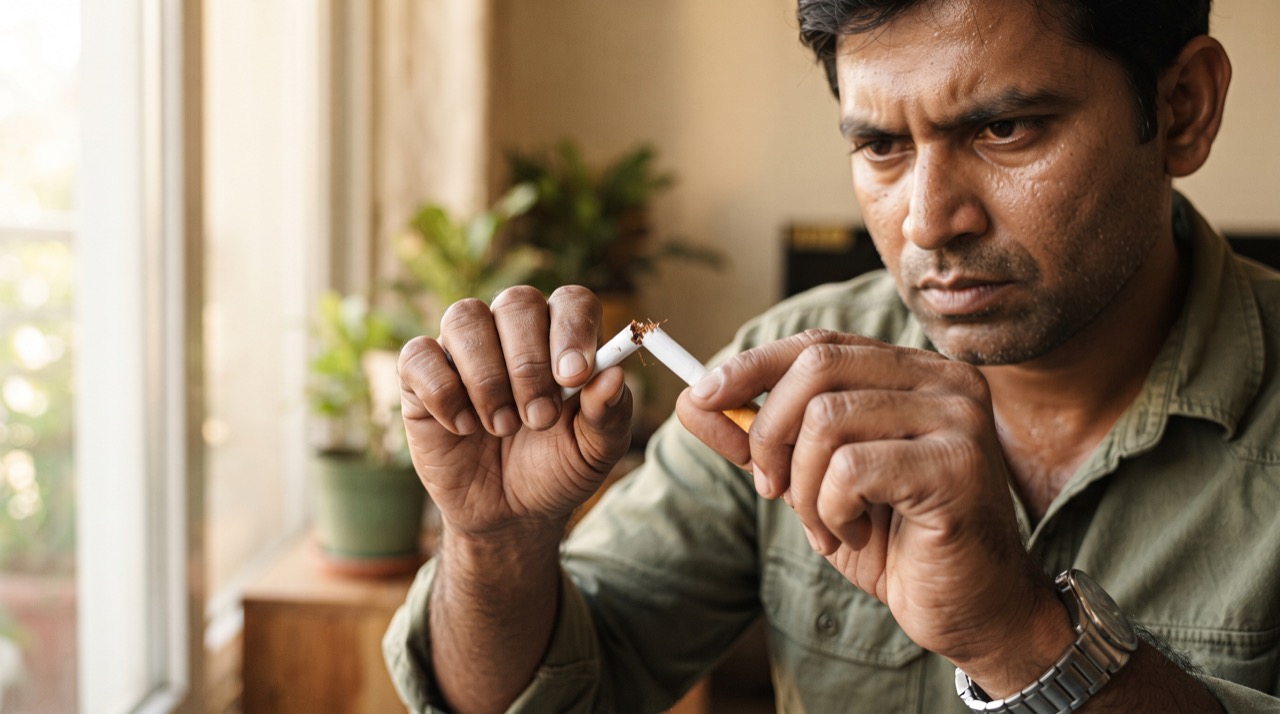
If you have tried to quit smoking before and gone back to it, you are not weak and you are not alone. Nicotine is one of the most addictive substances there is, and most successful quitters needed several attempts before it finally stuck. What actually works is not willpower alone — it is a plan: knowing your triggers, having a substitute ready before the craving hits, and having a specific way to recover if you slip. This guide walks through all three, with details suited to daily life in Pakistan, from chai breaks to family gatherings.
Step 1: Set a Quit Date and Know Your "Why"
Pick a date within the next two weeks — close enough to stay motivated, far enough to prepare. Write down your real reason for quitting on a card you can see daily: your children, your health, the money spent monthly on cigarettes, or a health scare. According to the World Health Organization, tobacco kills more than 8 million people every year, and quitting at any age brings measurable health benefits almost immediately. Before your quit date, do two things:
- Tell close family or a friend so you have accountability and support.
- Remove cigarettes, lighters, and ashtrays from your home, car, and office desk.
- List your top 5 daily smoking triggers (see below) so nothing catches you off guard.
Step 2: Identify and Defuse Your Triggers
Smoking is rarely about the cigarette itself — it is a habit chained to specific moments in your day. The most common triggers reported by smokers in Pakistan include:
- After meals or with chai — the classic pairing. Try switching to a different drink temporarily, or step outside for fresh air instead of sitting at the same spot.
- Stress at work or traffic jams — replace the cigarette-reach reflex with 4-7-8 breathing (inhale 4 seconds, hold 7, exhale 8) or squeezing a stress ball.
- Socializing with smoker friends — for the first few weeks, suggest meeting at places where smoking isn't convenient, like a gym or a family gathering.
- Boredom or long phone calls — keep your hands busy with a pen, tasbeeh, or sunflower seeds.
- Alcohol or late-night gatherings — if this applies to you, avoid these settings entirely during your first month.
Write each trigger down next to a specific substitute action. A plan you can picture in advance is far more effective than "just resisting" in the moment.
Step 3: Use Real Substitutes for the Physical Craving
A craving typically peaks and fades within 3 to 5 minutes. Your job is just to survive that window. Effective substitutes include:
- Drinking a full glass of cold water slowly.
- Chewing sugar-free gum or eating roasted chana.
- Going for a brisk 5-minute walk, even indoors or on a rooftop.
- Nicotine replacement options like patches, gum, or lozenges (available at most pharmacies) if cravings are intense — these roughly double quit success rates and are worth discussing with a doctor or pharmacist.
- Keeping your hands and mouth occupied with something else entirely, so the physical ritual is replaced, not just denied.
Step 4: Plan for Relapse Before It Happens
Most people who quit successfully slipped at least once along the way. One cigarette is a slip, not a failure — treat it as data, not defeat. If it happens:
- Do not spiral into "I've ruined it, might as well keep smoking." That thought is the actual danger, not the single cigarette.
- Write down exactly what triggered it, so you can plan around that specific situation next time.
- Restart your quit clock immediately — the next hour, not "next Monday."
- Tell your support person. Hiding a slip makes shame grow; saying it out loud shrinks it.
Quitting smoking is not one decision made once — it is the same decision, made again, every time a craving passes and you're still smoke-free.
Give yourself credit for every smoke-free day, no matter how small the streak. Within 20 minutes your heart rate drops; within a year your risk of heart disease is cut roughly in half. The plan does not need to be perfect — it just needs to be followed one craving at a time.
Roman Urdu
Agar aap ne pehle bhi cigarette chhorne ki koshish ki hai aur wapas shuru ho gaye, to aap akele nahi hain. Nicotine ki lat bohat strong hoti hai, aur zyada tar log kai baar koshish karne ke baad hi kamyab hotay hain. Sirf willpower kaafi nahi — asal cheez ek plan hai: apne triggers pehchanna, craving ke waqt ke liye substitute tayyar rakhna, aur agar slip ho jaye to wapas aane ka tareeqa maloom hona.
Sab se pehle apni quit date tay karein — agle do hafton ke andar. Apni wajah likh lein: bachay, sehat, ya har mahine cigarette pe kharch hone wala paisa. WHO ke mutabiq tobacco har saal 8 million se zyada logon ki jaan leta hai, lekin quit karne ke fawaide foran shuru ho jate hain.
Apne triggers pehchanein — chai ke saath cigarette, traffic ka stress, doston ki mehfil, ya boriyat. Har trigger ke liye ek alag substitute soch lein: chai ke bajaye kuch aur piyen, stress mein 4-7-8 saans lein, ya haath mein tasbeeh ya pen rakhein.
Craving zyada se zyada 3 se 5 minute tak rehti hai — bas is waqt ko guzarna hai. Thanda pani piyen, sugar-free gum chabayein, chana khayen, ya 5 minute ki walk pe nikal jayen. Agar craving bohat strong ho to pharmacy se nicotine patch ya gum ke baare mein doctor se poochh sakte hain.
- Ek cigarette peena "slip" hai, "failure" nahi — is pe sharminda hone ke bajaye seekhein ke kya trigger hua.
- Foran dobara quit karna shuru karein — "agle Monday se" nahi, abhi se.
- Apne support person ko bata dein — chupana sharminda ko barhata hai, bolna usay kam karta hai.
Cigarette chhorna ek dafa ka faisla nahi — yeh wohi faisla hai jo har craving ke baad dobara karna parta hai.
Har smoke-free din ka credit apne aap ko dein, chahe streak choti hi kyun na ho. 20 minute mein dil ki dhadkan normal hone lagti hai, aur ek saal mein dil ki bimari ka khatra taqreeban aadha reh jata hai. Plan perfect hona zaroori nahi — bas har craving ke waqt usay follow karna zaroori hai.