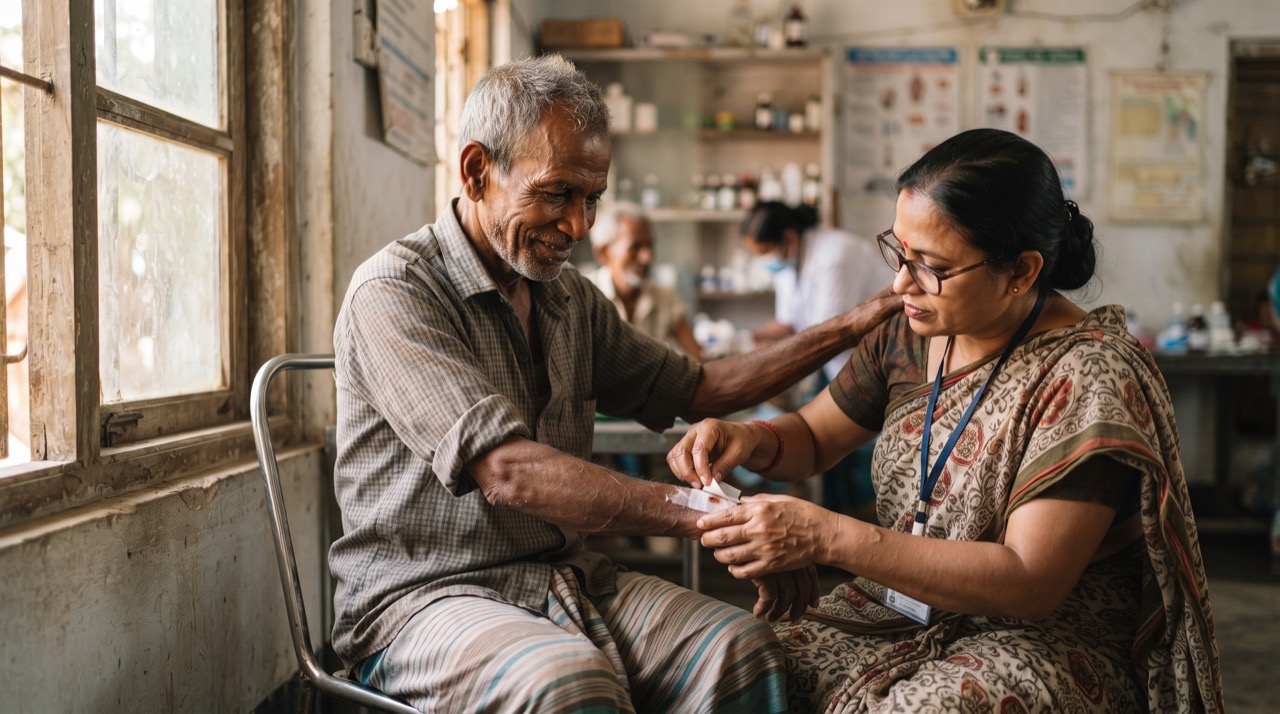
Long before "social impact" became a buzzword, a poor migrant from Bantva who arrived in Karachi in 1947 with almost nothing began sitting on a wooden bench on a footpath, collecting coins to buy a single second-hand ambulance. That man, Abdul Sattar Edhi, went on to build the world's largest volunteer-run ambulance service and a welfare network that has quietly touched nearly every Pakistani family, directly or indirectly. His life is not a fairy tale of luck — it is a working manual for what disciplined, unglamorous compassion can achieve over decades.
Who Was Abdul Sattar Edhi?
Edhi's own mother's illness and the lack of proper care available to her in his youth shaped his life's mission. After settling in Karachi, he started with a small free dispensary in 1951, then expanded into a maternity home, a morgue service for unidentified bodies, orphanages, shelters for the elderly and mentally ill, and eventually a fleet of ambulances that now respond across the country. The Edhi Foundation he founded with his wife, Bilquis Edhi, still operates on the same principles he laid down: help anyone, ask no questions, and take no salary from the work.
The Principles Behind His Work
What made Edhi different was not the scale of his charity but the discipline behind it. A few principles run through everything he did:
- No discrimination. He served people regardless of religion, sect, ethnicity, or nationality — a rare stance in a region often divided along exactly those lines.
- Radical transparency. He kept meticulous accounts of donations and spending, which is a major reason the public trusted him with money for over six decades.
- Personal frugality. He famously owned two sets of clothes and lived in a small room attached to his office, so that donors could see their money went to the cause, not to him.
- Refusing strings-attached help. He turned down foreign aid and government positions when they came with conditions that could compromise his independence.
- Showing up in person. Edhi personally washed unclaimed bodies and drove ambulances into flood zones and riot areas well into old age, rather than only directing from an office.
Practical Lessons You Can Apply Today
You do not need Edhi's scale of resources to apply his approach to your own life or community work. Some lessons translate directly:
- Start absurdly small. Edhi began with a single bench and a collection box, not a five-year plan. Waiting for the "right" resources before helping anyone is usually just an excuse.
- Build one trustworthy habit before scaling. His foundation grew because each small service — the dispensary, then one ambulance — worked reliably before the next was added.
- Keep your overheads honest. If you're raising money for any cause, track and disclose spending the way Edhi did; trust compounds faster than any marketing campaign.
- Separate your ego from the work. He turned down state medals and named nothing after himself for years, which is part of why people still believe his name over most institutions.
- Serve the person in front of you, not just the "worthy" cases. The Edhi Foundation famously placed cradles outside its centers so mothers unable to care for a newborn could leave the baby safely rather than abandon it elsewhere — help offered without judgment, not conditional on circumstance.
Why His Legacy Still Matters
When Edhi died in 2016, he was given a state funeral, yet he had spent his life avoiding exactly that kind of recognition. That contradiction is the lesson: real purpose is usually built quietly, one unglamorous task at a time, and the recognition — if it comes — is a side effect, not the goal. For a Pakistani audience navigating everyday hardship, his example is a reminder that meaningful change rarely needs permission, funding, or a perfect plan to begin. It needs someone willing to start.
"No religion is higher than humanity." — the guiding motto Abdul Sattar Edhi lived and worked by, and which still appears on Edhi Foundation ambulances and centers today.
Roman Urdu
Abdul Sattar Edhi 1947 mein Karachi aaye thay, aur unke paas kuch khaas nahi tha. Unhon ne ek lakri ke bench par baith kar chanda jama karna shuru kiya, taake ek purani ambulance khareed sakein. Wahin se shuru hokar unhon ne duniya ka sab se bara volunteer ambulance network banaya, jo aaj bhi lakhon Pakistaniyon ki madad kar raha hai.
Unki kahani se kai zaroori sabaq milte hain jo hum apni zindagi mein apply kar sakte hain:
- Chhoti shuruaat se na daren. Edhi Sahab ne ek bench aur ek dabbay se kaam shuru kiya, kisi bade plan ka intezar nahi kiya.
- Har kaam mein imaandari rakhein. Unhon ne har paisay ka hisaab rakha, isi wajah se log unhe barson tak apna chanda dete rahe.
- Sadgi ko apnayein. Unke paas sirf do jorray kapron ke thay, taake logon ko yaqeen ho ke paisa unke apne aish par nahi, madad par kharch ho raha hai.
- Bina kisi shart ke madad karein. Unhon ne mazhab, zaat ya qaumiyat dekhe baghair har zaroorat mand ki madad ki.
- Khud maidan mein utren. Woh khud ambulance chalate thay aur laashein tak apne haathon se ghusul karte thay, sirf daftar se hukum nahi dete thay.
Jab Edhi Sahab 2016 mein wafaat pa gaye, to unhe state funeral diya gaya — lekin unhon ne apni poori zindagi isi tarha ki shohrat se bachne ki koshish ki. Yehi asal sabaq hai: sacha maqsad khamoshi se, ek waqt mein ek kaam se banta hai. Izzat agar milti hai to woh sirf ek natija hoti hai, manzil nahi. Hum sab ke liye yeh ek yaad dahani hai ke bari tabdeeli shuru karne ke liye na paise ki zaroorat hoti hai, na kisi ki ijazat ki — sirf ek shakhs chahiye jo shuru karne ko tayyar ho. Zyada maloomat ke liye Edhi Foundation ki website dekhi ja sakti hai.